Clear Sky Science · en
A multi strategy optimization framework using AI digital twins for smart grid carbon emission reduction
Why cleaner power needs smarter control
Solar panels on rooftops and wind turbines on hillsides are now common sights, but keeping the lights on with weather-dependent power is trickier than it looks. When the sun shines and the wind blows at the “wrong” times, clean electricity is often wasted and fossil-fuel plants still jump in to fill gaps. This paper explores how a virtual replica of the grid—an AI-powered “digital twin”—can juggle several kinds of energy storage at once to cut both emissions and costs in a realistic community power system.
A virtual mirror for the modern power grid
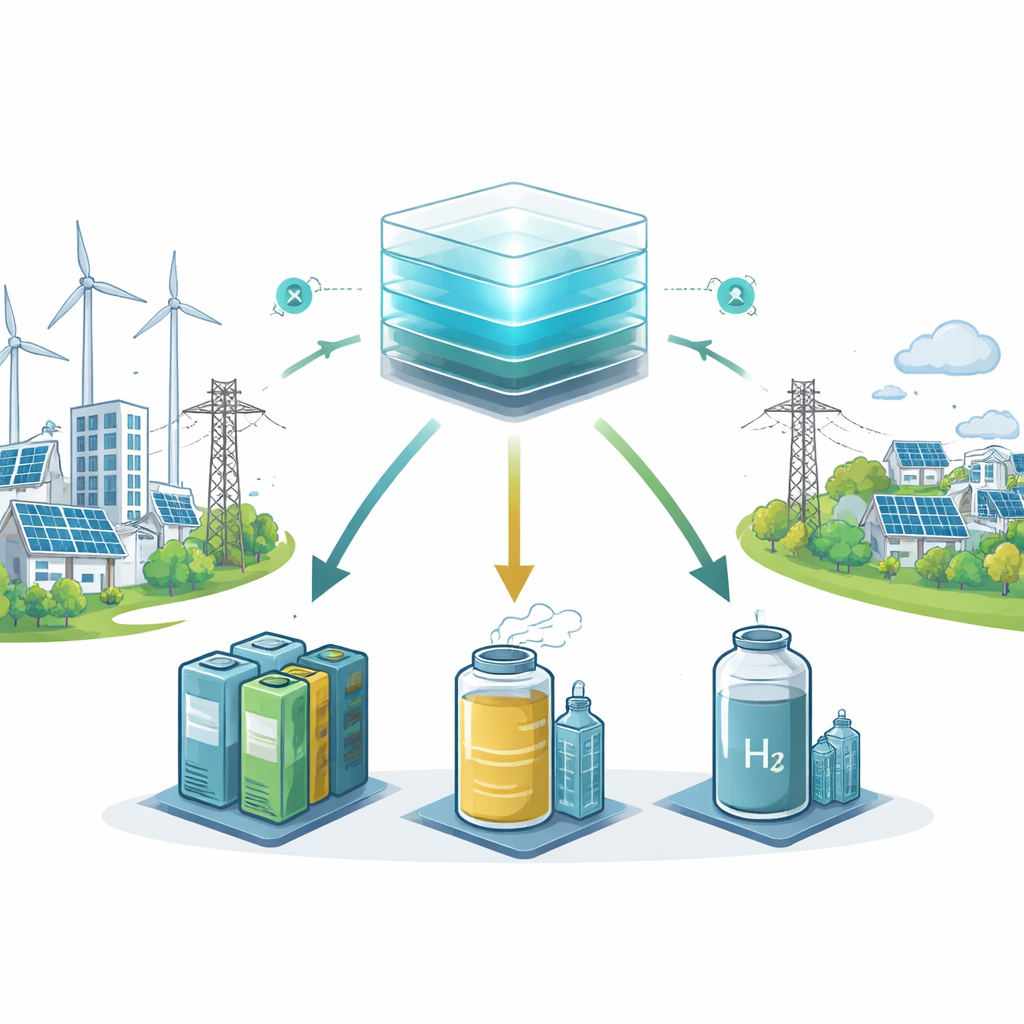
The researchers build a detailed digital copy of a smart grid that serves a mixed residential–commercial neighborhood. On the ground, this grid includes solar panels, wind turbines, conventional power lines, homes and businesses, plus three different storage technologies: batteries for quick response, hot/cold thermal tanks for managing heat, and hydrogen equipment for storing energy over long periods. In the computer, the digital twin continuously receives data from sensors and smart meters, forecasts tomorrow’s sun, wind, and demand using neural networks, and simulates how each storage device will behave. Because the twin runs faster than real time, it can test many possible control decisions before sending the best set-points back to the physical grid.
Three ways to tell storage what to do
At the heart of the study is a head‑to‑head comparison of three control strategies that decide when to charge or discharge each storage unit. The simplest is a rule-based scheme, built from “if–then” rules such as “discharge the battery when demand is high.” A more advanced method, called model predictive control, constantly looks a few hours ahead using the twin’s forecasts to plan an optimal charging and discharging pattern, but only applies the first step before re-planning. The third method, a genetic algorithm, treats the 24‑hour schedule like a population of candidate solutions and “evolves” better ones over many generations. All three approaches work inside the same digital twin and face the same prices, carbon penalties, and device limitations, allowing a fair comparison of performance, computing effort, and practicality.
What happens in a realistic day on the grid
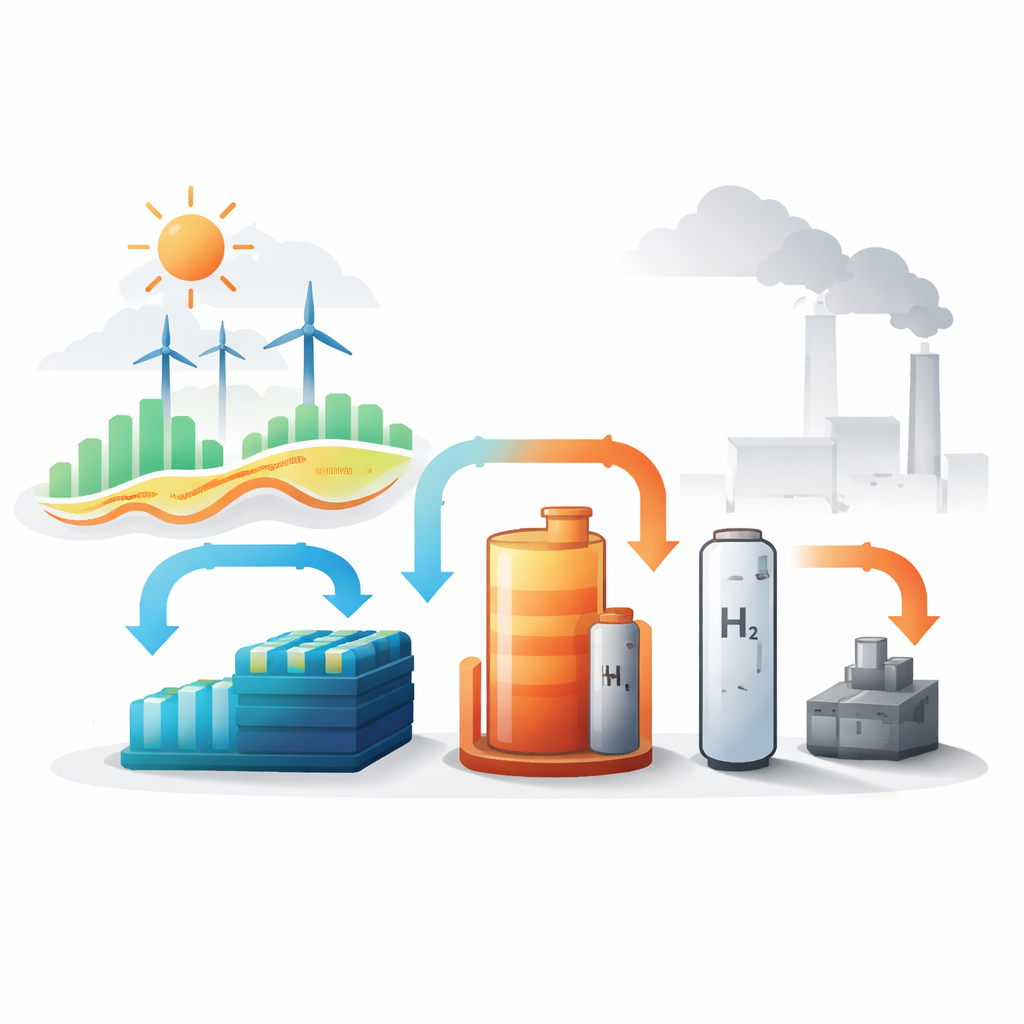
The team tests their framework on a community-scale microgrid with a full day of realistic demand and renewable generation. Without any storage, the grid must import large amounts of electricity from an assumed fossil-heavy power system, leading to high carbon emissions and moderate costs. Once the coordinated storage portfolio is activated, the picture changes: surplus midday solar is soaked up by batteries, thermal tanks, and hydrogen, then released later to cover the evening peak. Compared to the no‑storage baseline, the best strategy—model predictive control—cuts emissions by about 64 percent and lowers operating costs by nearly 16 percent. The genetic algorithm delivers almost the same reductions, but at much higher computing time, while the rule-based approach still slashes emissions by roughly half yet actually increases costs because it cannot time grid imports as cleverly.
Choosing the right level of smartness
Beyond raw numbers, the study highlights important trade-offs. Rule-based control is extremely fast and simple, making it a reliable safety net when computers or forecasts are limited, but it leaves a lot of clean-energy potential unused. The genetic algorithm can explore very complex schedules and handle messy details, but it takes around two minutes of heavy computation to plan a single day—too slow for frequent re-planning in a live grid. Model predictive control lands in the sweet spot: it explicitly respects all the device constraints, uses short-term forecasts to anticipate solar surpluses and demand spikes, and typically solves its optimization problem in only a few seconds on standard hardware. This balance of foresight, precision, and speed makes it attractive for real-world control rooms.
What this means for the clean energy transition
For a non-specialist, the main takeaway is that hitting climate targets is not just about building more solar panels and batteries; it is equally about how intelligently we operate what we already have. This work shows that an AI-enabled digital twin, supervising a mix of storage technologies, can turn a conventional community grid into one that relies far less on polluting power while also saving money. Among the options studied, a look‑ahead control strategy stands out as the most practical way to coordinate batteries, heat storage, and hydrogen at once. With further refinement and real-world testing, such digital twins could become everyday tools for utilities, quietly running in the background to keep our power both reliable and low‑carbon.
Citation: Sakthivel, S., Arivukarasi, M., Charulatha, G. et al. A multi strategy optimization framework using AI digital twins for smart grid carbon emission reduction. Sci Rep 16, 8570 (2026). https://doi.org/10.1038/s41598-026-38720-3
Keywords: smart grid, digital twin, energy storage, carbon emissions, AI optimization