Clear Sky Science · en
Fish (Alaska Pollock) protein intake attenuates age-related short-term memory decline through gut microbiota modulation
Why a Simple Fish Dinner May Matter for Your Memory
As populations age, many people worry about losing their memory or developing dementia. We often hear that “eating more fish is good for the brain,” but the reasons behind this advice are usually pinned on fish oil or omega‑3 fats. This study asks a different question: could the protein from a common white fish, Alaska pollock, help protect aging brains by working through the microbes that live in our gut?
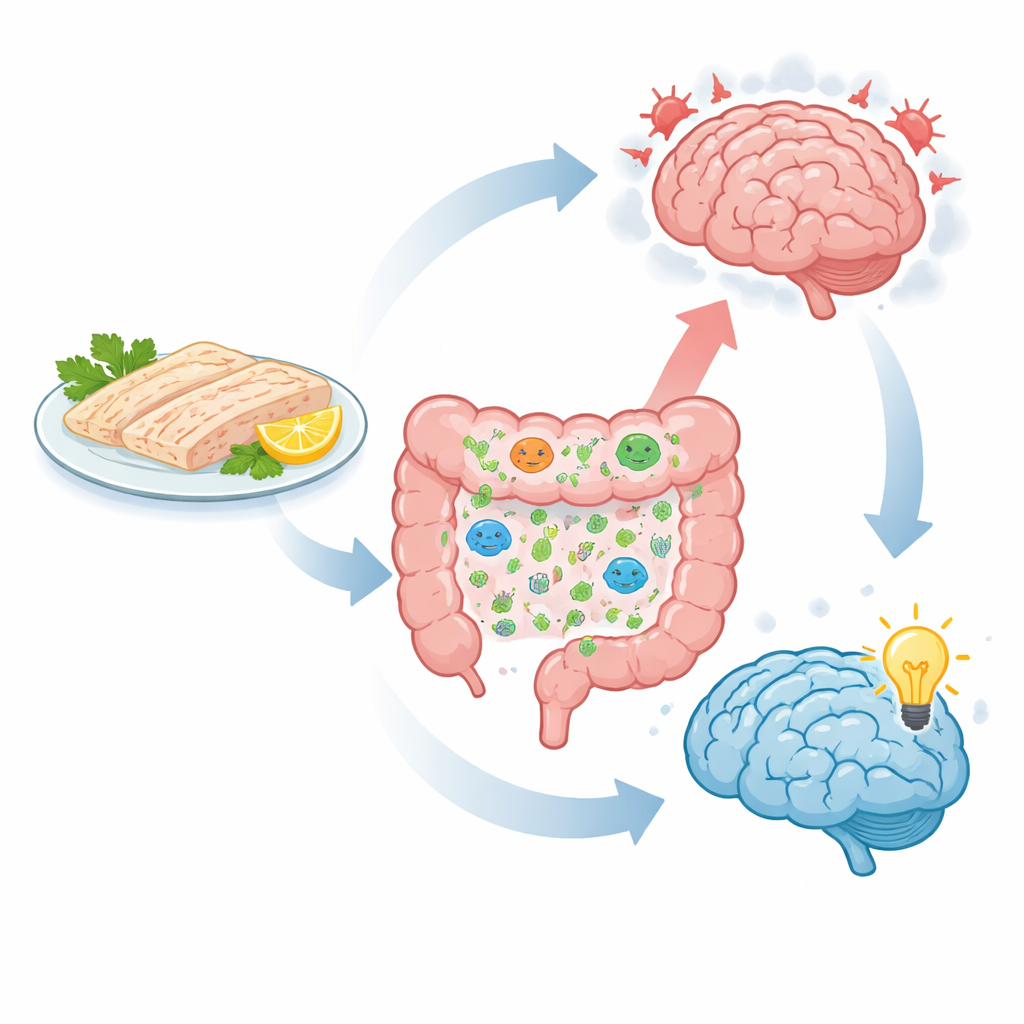
Looking at Aging, the Gut, and the Brain Together
The researchers focused on a biological highway called the gut–brain axis, the two‑way communication system between intestinal microbes and the brain. In Alzheimer’s disease and age‑related memory loss, gut microbes often shift toward patterns linked with inflammation, while the gut wall itself can become “leaky,” allowing irritating molecules into the bloodstream. These circulating signals can fan the flames of inflammation in the brain, which in turn damages nerve connections important for thinking and memory. The team set out to see whether long‑term intake of Alaska pollock protein could nudge this entire system toward a healthier balance.
Testing Fish Protein in Fast‑Aging Mice
To explore this, the scientists used two strains of mice: a normal strain that ages slowly and a “fast‑aging” strain that develops early memory problems and brain changes resembling those seen in Alzheimer’s disease. For five months—equivalent to several human years—mice were fed diets in which the main protein came either from standard milk protein (casein) or from Alaska pollock. The animals then took part in memory tests that measure how well they remember recently visited places, a form of short‑term or working memory. Blood, gut tissue, and brain samples were examined to track changes in metabolism, gut microbes, gut barrier strength, and signs of inflammation in the brain.
What Changed in the Gut When Fish Was on the Menu
Mice that ate fish protein showed healthier sugar handling: their blood sugar rose and fell more smoothly on a glucose tolerance test, and their fat stores shifted in a way suggestive of better metabolism. In both normal and fast‑aging mice, fish protein reshaped the gut community. Helpful groups, such as Lactobacillus in the normal mice and a family of fiber‑fermenting bacteria called Lachnospiraceae in the fast‑aging mice, became more abundant, while a family linked to nervous system inflammation grew more prominent only in animals on the milk‑protein diet. The fish‑protein diet also boosted the production of acetate, one of several small fatty acids made by gut microbes that can influence immune cells and brain function, while lowering other, less desirable fermentation products. At the same time, fish‑fed mice developed more mucus‑producing goblet cells in the intestine and shed more protective mucus into their stool, suggesting a thicker, more resilient barrier between gut contents and the bloodstream.
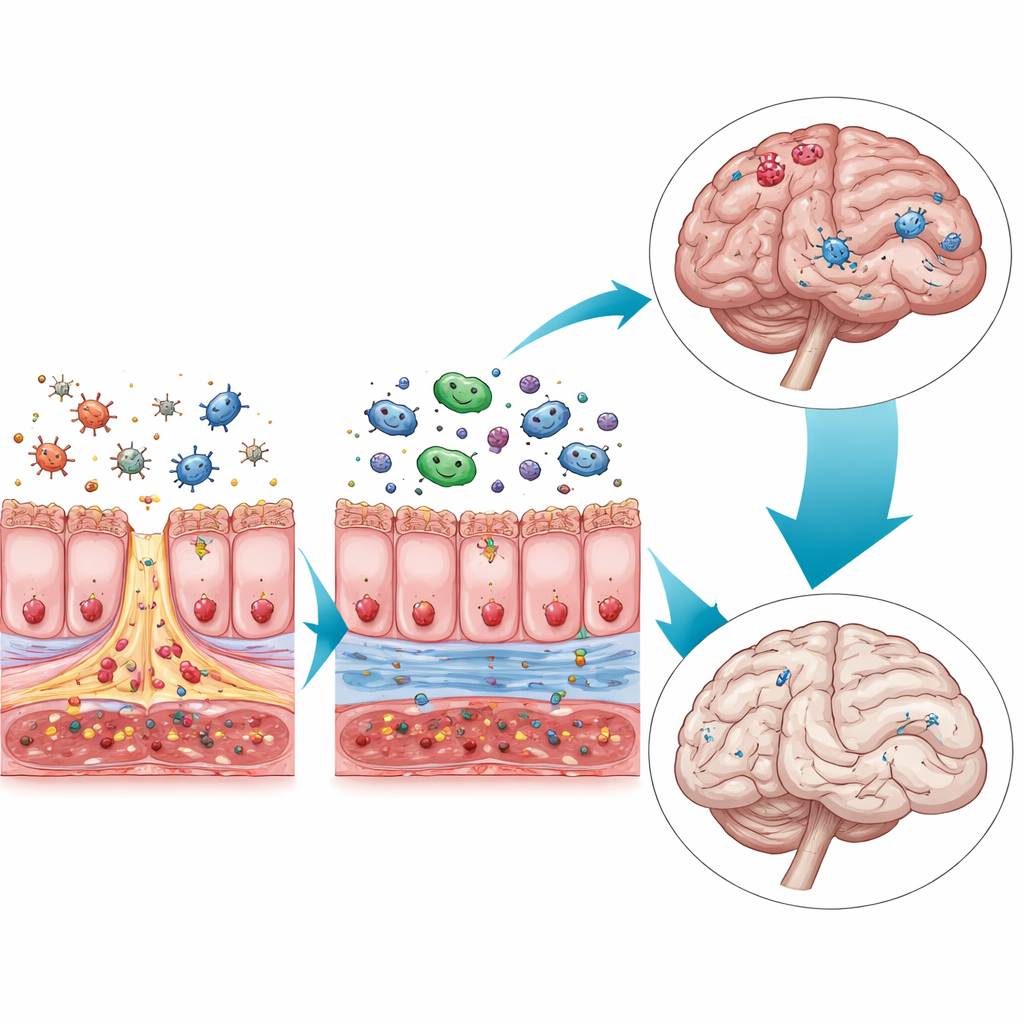
How a Calmer Gut Echoed in the Brain
These changes in the gut were mirrored by a quieter immune landscape in the brain, especially in the memory‑critical hippocampus of the fast‑aging mice. Animals on the fish‑protein diet showed reduced activity of genes that drive inflammation, and key brain support cells—microglia and astrocytes—appeared less activated under the microscope. Moreover, structures that insulate nerve fibers, known as myelin sheaths, were better preserved in fish‑fed mice, hinting that nerve circuits remained more intact. Together, these biological shifts aligned with behavior: fast‑aging mice that ate Alaska pollock protein performed significantly better on short‑term memory tasks than their counterparts who ate milk protein, even though their long‑term memory in another maze test did not clearly improve.
What This Could Mean for Everyday Eating
For a lay reader, the message of this work is that the benefits of fish may extend beyond well‑known fish oils. In this mouse model of accelerated aging, the protein from Alaska pollock helped reshape gut microbes, strengthen the gut’s protective lining, lower inflammatory signals reaching the brain, and preserve short‑term memory. Although mice are not people and the study cannot yet tell us which exact bacteria or protein fragments are responsible—nor whether all fish have similar effects—it reinforces the idea that what we eat can tune the gut–brain conversation. Including lean fish as a protein source may someday prove to be one practical way, alongside other healthy habits, to help the aging brain stay clearer for longer.
Citation: Murakami, Y., Hosomi, R., Tanaka, G. et al. Fish (Alaska Pollock) protein intake attenuates age-related short-term memory decline through gut microbiota modulation. Sci Rep 16, 8606 (2026). https://doi.org/10.1038/s41598-026-38717-y
Keywords: gut-brain axis, fish protein, aging memory, gut microbiota, neuroinflammation