Clear Sky Science · en
First detection of Diplodia bulgarica, a new pathogen causing black canker of apple trees in Poland
A Silent Threat to Poland’s Favorite Fruit
Apples are a staple on Polish tables and a major export, so anything that kills apple trees can quickly ripple through farms, markets, and household budgets. This study reports the first appearance in Poland of a destructive fungus, Diplodia bulgarica, which causes a disease known as black canker. By tracking how this micro‑invader damages bark and wood and confirming exactly which organism is responsible, the researchers warn growers and gardeners about an emerging threat that current pesticides cannot control.
Strange Wounds in a Historic Orchard
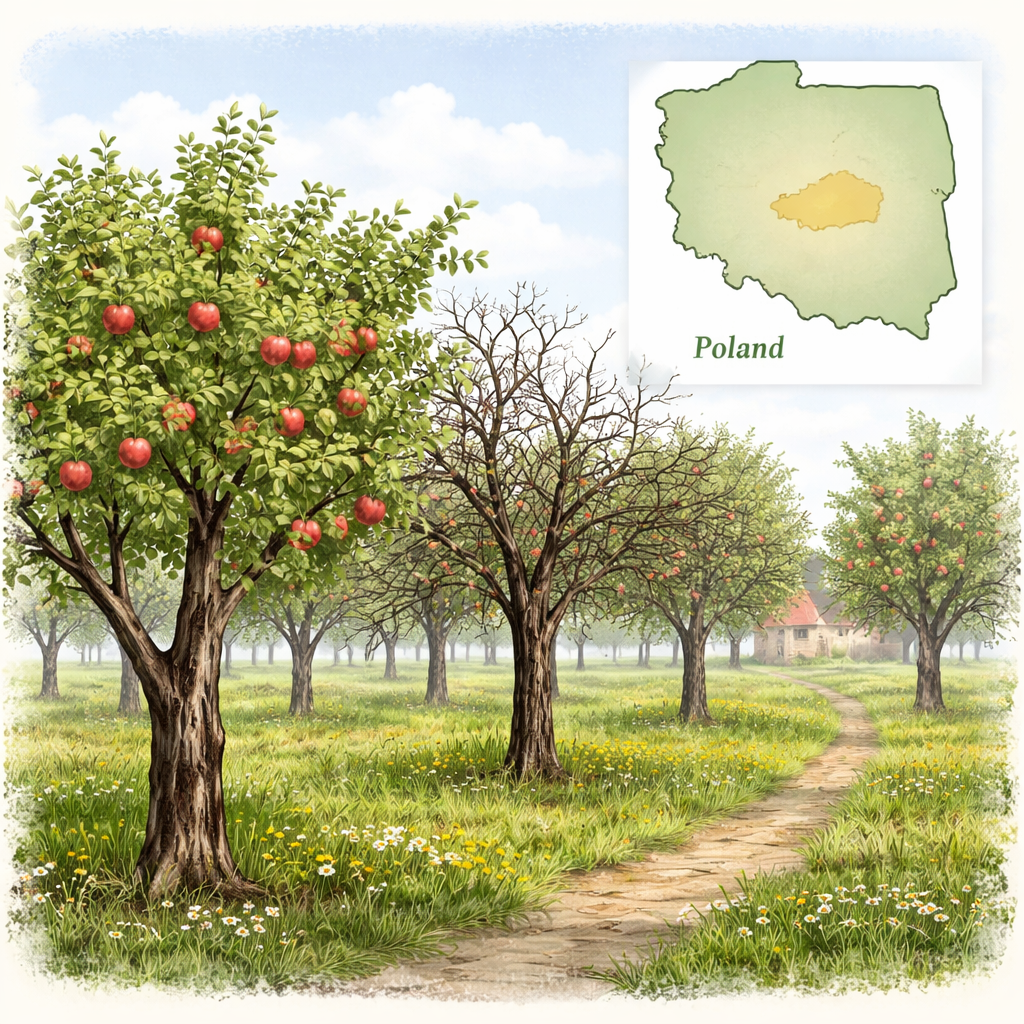
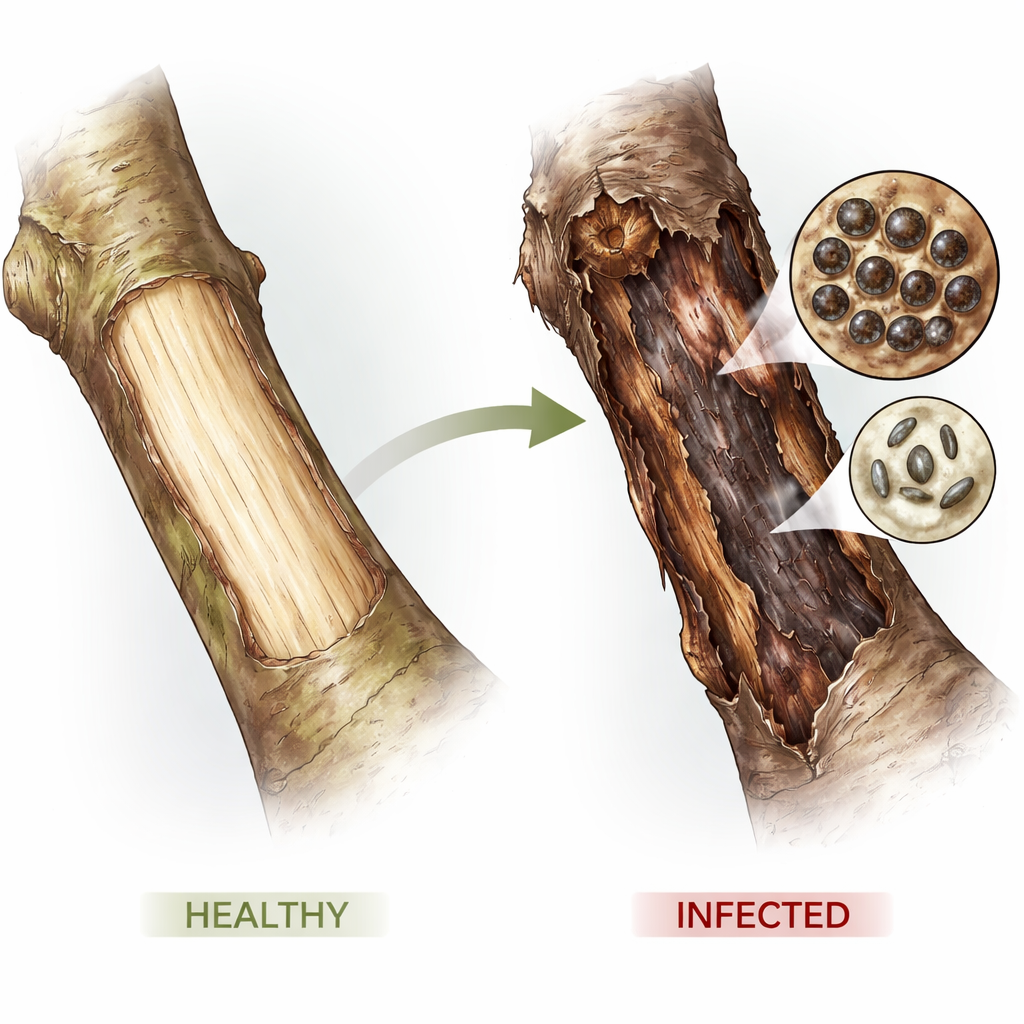
In the summer of 2024, scientists inspecting a historic garden in Nieborów, central Poland, noticed worrying changes in 24‑ and 60‑year‑old apple trees. Branches and trunks showed dark, sunken patches, and the bark around these areas peeled easily away, revealing wood that had turned dark brown to nearly black. Many affected trees had paler leaves and smaller fruits than their neighbors. Over 40 percent of the trees in the one‑hectare plot showed these signs, suggesting that the problem was not a rare curiosity but a sizable outbreak. Because similar symptoms had recently been linked to the fungus Diplodia bulgarica in other countries, the team set out to see whether the same culprit had reached Poland.
Hunting for the Hidden Culprit
To uncover the cause, the researchers cut small pieces of wood from the border between healthy and diseased tissue on damaged branches. After surface‑cleaning these samples, they placed tiny fragments onto nutrient gels and let any resident fungi grow. Within a week, 15 cultures developed that shared a distinctive look: dark centers with fluffy gray‑white edges. When the fungus was encouraged to form spores on special media, it produced black, globe‑shaped structures and oval, thick‑walled spores whose size and color matched descriptions of Diplodia bulgarica from earlier studies. The same type of fungus was also found in neighboring 60‑year‑old trees, hinting that older plantings may be acting as a long‑term reservoir of infection.
Proving It Can Kill Young Trees
Appearance alone is not enough to prove guilt, so the team carried out a classic test of disease causation. They grew the suspect fungus in the lab, cut shallow slits into the main stems of young potted apple trees, and inserted small plugs of the fungal growth. Within two weeks, dark lesions appeared around the wounds; by three weeks, these dead zones stretched up to 17 centimeters along the stem. After six weeks, every inoculated tree had died. When the scientists re‑isolated fungi from the dead wood, they recovered the same organism they had used for the initial infection, satisfying the standard Koch’s postulates used to demonstrate that a microbe truly causes a disease.
Reading the Fungus’s Genetic Barcode
To confirm the identity of the pathogen beyond doubt, the researchers turned to DNA analysis. They extracted genetic material from seven representative fungal cultures and amplified two widely used marker regions—one from ribosomal DNA and another from a gene called translation elongation factor 1‑alpha, which together act like a barcode for fungal species. Comparing these sequences with a global database showed near‑perfect matches to known Diplodia bulgarica strains: 100 percent identity in one region and 99.8 percent in the other. This tight genetic fit, combined with the matching spore shape and disease symptoms, left little room for alternative explanations.
What This Means for Growers and Gardeners
This work documents the first confirmed case of Diplodia bulgarica on apple trees in Poland, firmly linking the black canker symptoms to a specific fungus through field observations, infection tests, and DNA “fingerprinting.” Because the disease can kill young trees within weeks and because there are currently no approved chemicals in Poland that directly target such bark and wood pathogens, the findings carry a clear message: monitoring orchards, promptly removing infected wood, and understanding how this fungus spreads will be crucial to protect both historic plantings and commercial apple production.
Citation: Głos, H., Michalecka, M. First detection of Diplodia bulgarica, a new pathogen causing black canker of apple trees in Poland. Sci Rep 16, 7433 (2026). https://doi.org/10.1038/s41598-026-38714-1
Keywords: apple tree disease, black canker, Diplodia bulgarica, orchard pathology, plant fungal pathogen