Clear Sky Science · en
Association of 25-hydroxyvitamin D levels and vitamin D receptor gene polymorphisms with breast cancer risk in Bangladeshi women
Why This Study Matters
Breast cancer is now the most commonly diagnosed cancer in women worldwide, and its toll is particularly heavy in low- and middle-income countries such as Bangladesh. At the same time, vitamin D deficiency is widespread, especially among people who get limited sun exposure. This study asks a simple but important question with big public health implications: do low vitamin D levels and tiny inherited differences in the body’s vitamin D "docking station" help shape a woman’s risk of developing breast cancer?
The Big Question Behind the Research
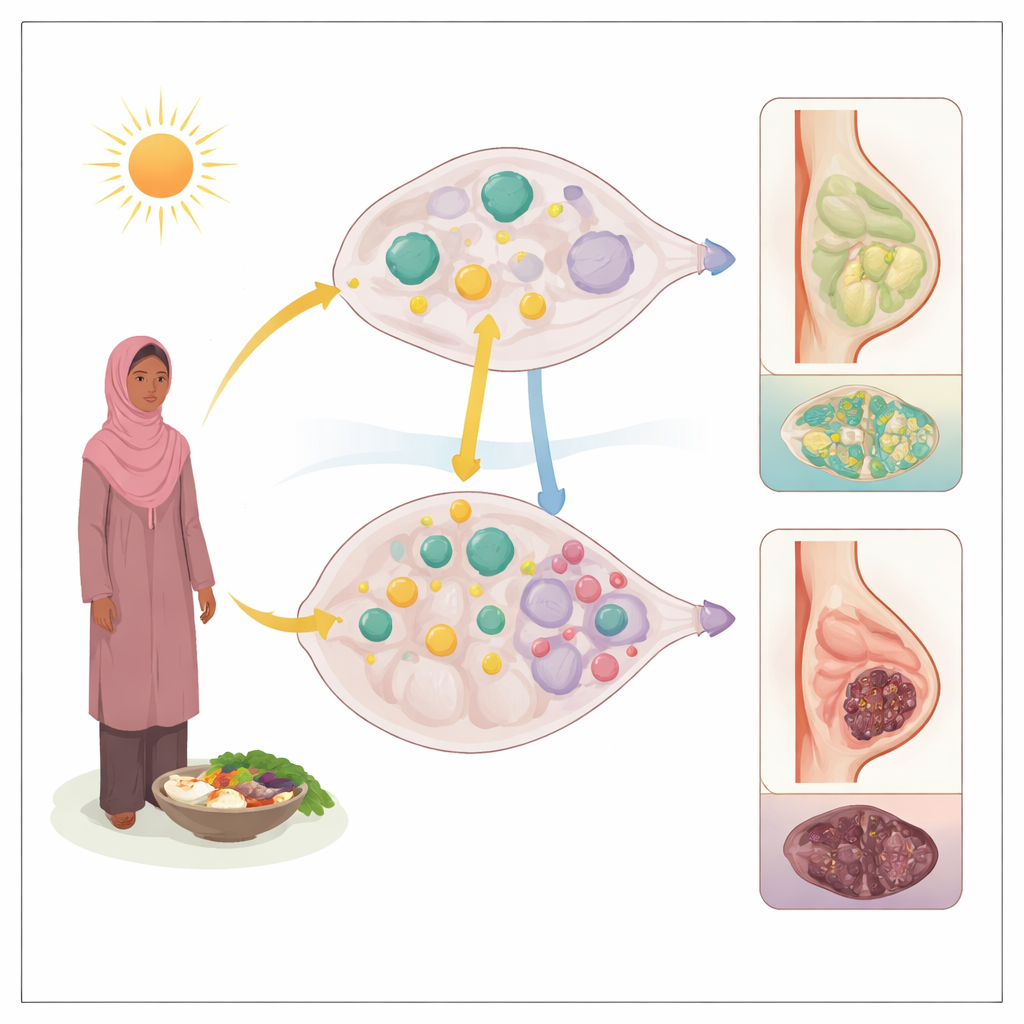
The researchers focused on two main pieces of the puzzle. First, they measured blood levels of 25-hydroxyvitamin D, the standard marker of vitamin D status. Second, they examined four common genetic variants in the vitamin D receptor (VDR) gene, which produces the protein that binds active vitamin D and turns on protective signals inside cells. By studying 400 Bangladeshi women with breast cancer and 400 similar women without the disease, they aimed to find out whether vitamin D levels, these VDR gene variants, or both were linked to cancer risk.
How the Study Was Done
This was a case–control study, a design often used to explore risk factors for disease. Women with confirmed breast cancer were recruited from cancer hospitals, while healthy women of similar ages were enrolled as controls. All participants gave blood samples. The team measured vitamin D in a subset of 150 patients and 50 controls, classifying levels as either "normal" (at or above 30 nanograms per milliliter) or "low" (below 30, combining insufficient and deficient levels). For genetics, they extracted DNA from all 800 women and tested four well-known VDR variants, called FokI, BsmI, TaqI and ApaI. Statistical models were then used to see how vitamin D levels and these variants were associated with breast cancer, while checking that the genetic data followed expected patterns in the population.
What They Found About Vitamin D Levels
The contrast in vitamin D status between women with and without breast cancer was striking. Among patients, more than four out of five had low vitamin D, compared with a little over two-thirds of the healthy women. Only about one in five patients had normal levels, versus nearly one in three controls. When the numbers were analyzed, women with low vitamin D had roughly double the odds of having breast cancer compared with those whose levels were in the normal range. This pattern remained even after considering the uncertainty in the data, supporting the idea that vitamin D sufficiency may offer some protection.
What They Found About Vitamin D Genes
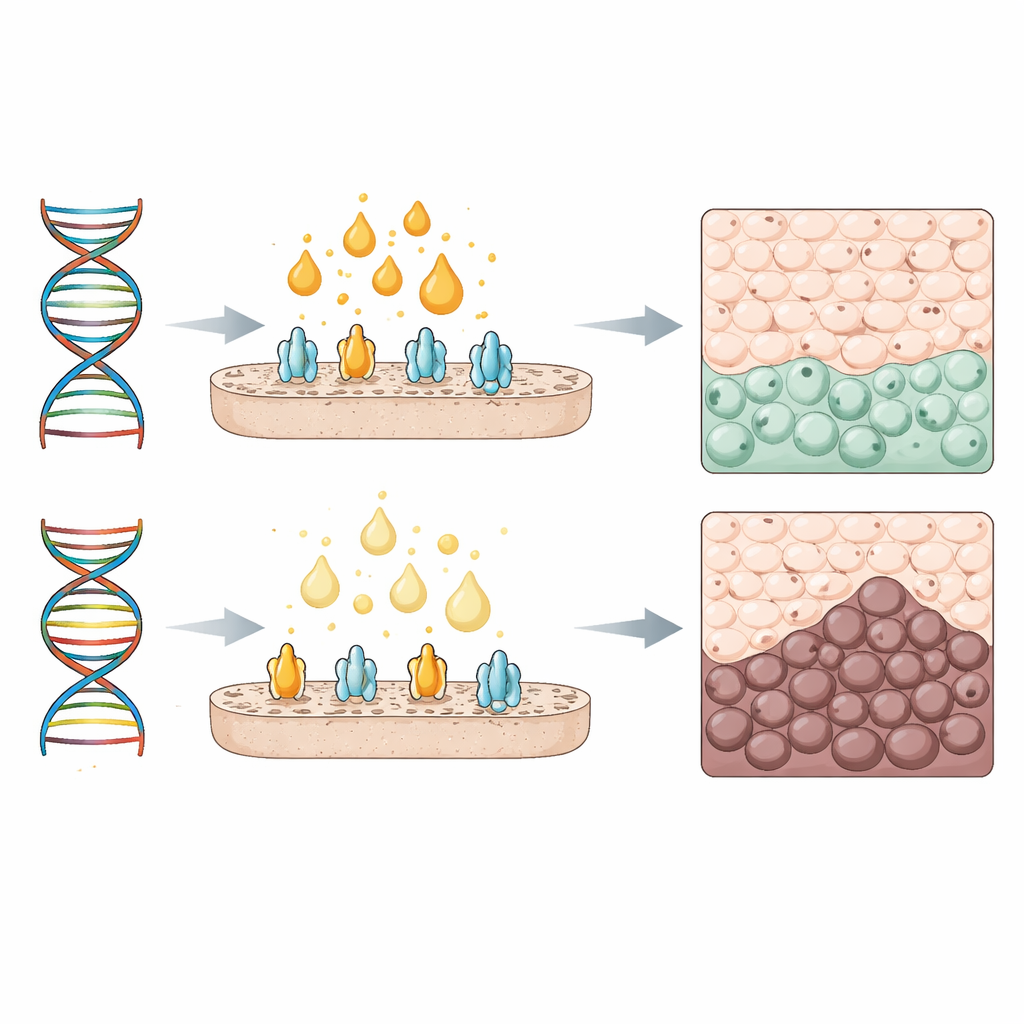
The genetic results revealed that not all VDR variants are equal. Two of them, FokI and BsmI, were clearly associated with higher breast cancer risk. Women carrying the risk versions of these variants had about 1.5 times the odds of breast cancer compared with women without them. In contrast, the other two variants, TaqI and ApaI, showed no meaningful link to the disease in this Bangladeshi group. Interestingly, when the researchers looked within the patient group to see whether any of these gene variants were tied to vitamin D levels themselves, they found no strong evidence of such a connection. There were only weak hints that some variants might slightly shift vitamin D levels, and these did not reach the usual thresholds for statistical certainty.
Putting the Pieces Together
Taken together, the findings suggest that vitamin D and the VDR gene may each influence breast cancer risk through partly separate routes. Low vitamin D levels were clearly more common in women with cancer, and two specific VDR variants—FokI and BsmI—were also linked to higher risk, even though the variants did not strongly change measured vitamin D levels. This means the gene differences may affect how cells respond to vitamin D, rather than how much vitamin D circulates in the blood. For the general reader, the takeaway is straightforward: in this Bangladeshi population, both poor vitamin D status and certain inherited changes in the vitamin D receptor appear to raise breast cancer risk. The study underscores the potential value of improving vitamin D levels through safe sun exposure, diet or supplements, and hints that, in the future, simple genetic tests might help identify women who would benefit most from targeted screening and prevention.
Citation: Akter, R., Islam, M.S., Mosaddek, A.S.M. et al. Association of 25-hydroxyvitamin D levels and vitamin D receptor gene polymorphisms with breast cancer risk in Bangladeshi women. Sci Rep 16, 8176 (2026). https://doi.org/10.1038/s41598-026-38710-5
Keywords: vitamin D, breast cancer, genetic variants, Bangladeshi women, vitamin D receptor