Clear Sky Science · en
Influence of SNVs on adverse reactions and survival in gefitinib-treated lung cancer patients from a preliminary study
Why some cancer drugs affect people so differently
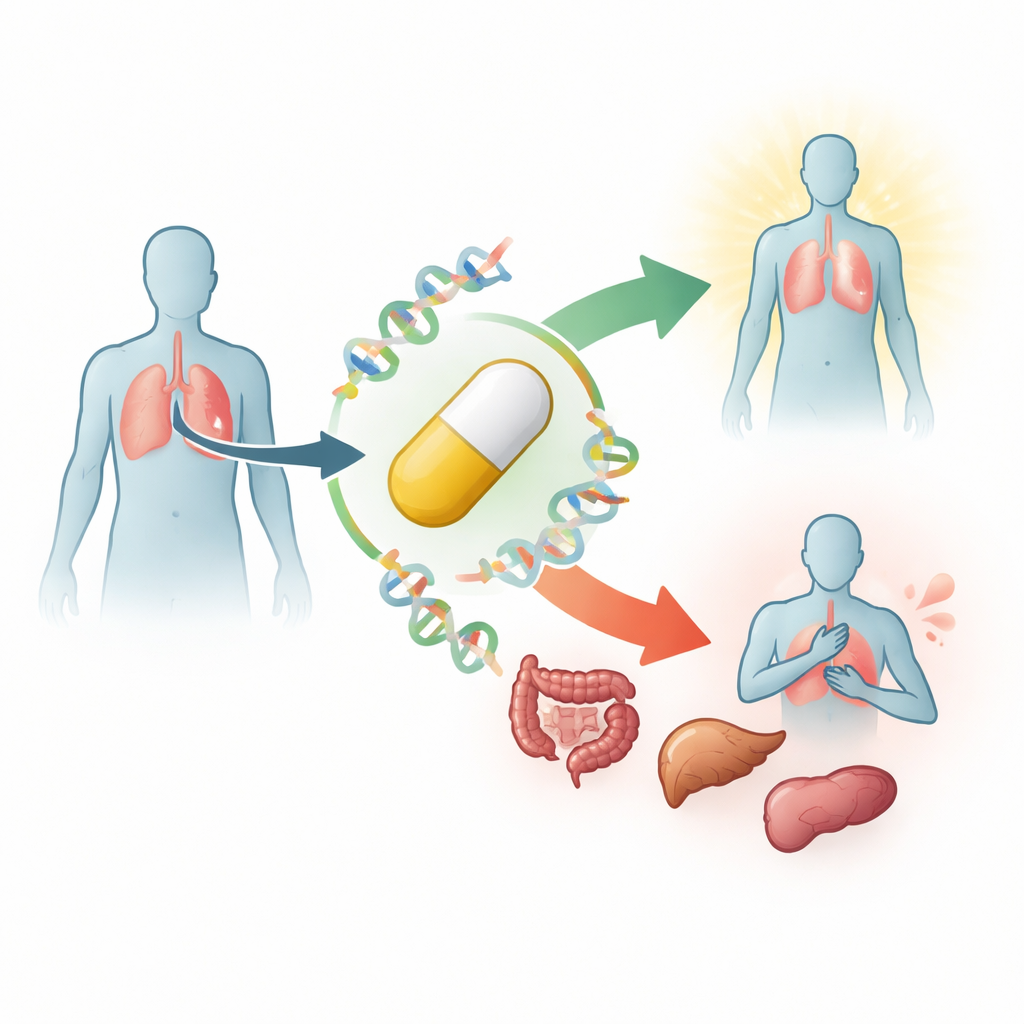
For people with advanced lung cancer, targeted pills like gefitinib can offer years of extra life with fewer side effects than traditional chemotherapy. Yet some patients tolerate the drug well, while others struggle with rashes, diarrhea, or liver problems, and survival times vary widely. This study asks a simple but powerful question: can tiny inherited differences in our genes help explain who suffers more side effects and who lives longer on gefitinib?
A closer look at a common lung cancer treatment
Non-small cell lung cancer is the most common form of lung cancer worldwide. Many tumors carry changes in a gene called EGFR that make them vulnerable to drugs like gefitinib, which block a key growth signal inside cancer cells. Gefitinib is taken once a day as a pill and is widely used, especially in countries where newer drugs may be harder to access. Although it is generally easier to tolerate than older chemotherapies, many patients still experience troublesome skin, gut, and liver reactions that can interfere with daily life and even force doctors to interrupt or stop treatment.
Tiny genetic changes with big practical consequences
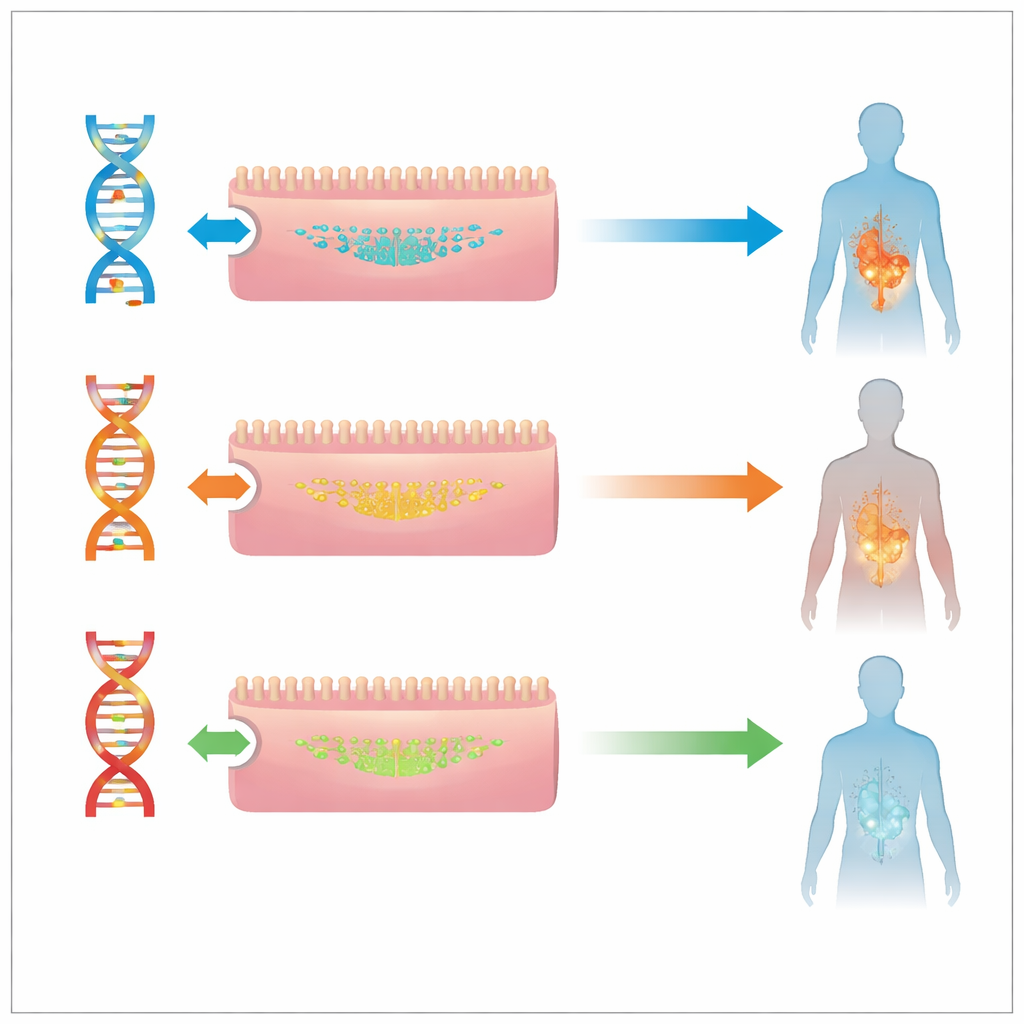
The researchers followed 36 Brazilian patients with EGFR-mutated lung cancer who were treated with standard doses of gefitinib. They collected detailed information on age, sex, smoking, other illnesses, and prior treatments, and carefully graded any side effects. They also analyzed small genetic differences called single-nucleotide variants in several genes: EGFR itself and two drug transporter genes, ABCB1 and ABCG2. These transporters sit in cell membranes, including in the gut and liver, and act like pumps that can push drugs out of cells, affecting how much of the medicine actually reaches the rest of the body.
Who gets more diarrhea and who lives longer
Most patients in the study experienced at least one side effect, especially liver-related changes and gastrointestinal problems such as diarrhea. When the team compared side effects with clinical characteristics, they found that people who already had other health conditions were more likely to develop gut problems, and those whose tumors carried a particular EGFR mutation (an exon 19 deletion) were less likely to have diarrhea. The most striking pattern, however, involved a specific variant in the ABCB1 gene. Patients with a “non-CC” version of this variant had a much higher chance of experiencing diarrhea of any severity compared with those carrying the CC version, suggesting that their drug transport pumps handle gefitinib differently.
Genetic clues linked to survival
The researchers also examined how long patients lived after their diagnosis. On average, overall survival was just over three years. Most clinical factors and side effects did not clearly predict survival in this small group. But again, the ABCB1 variant stood out: patients with the rare AA form of this variant had a much higher risk of death compared with those carrying other forms. This finding hints that the same genetic change that alters how much drug stays in the gut and causes diarrhea might also influence how much drug reaches the tumor, with possible consequences for treatment success. Because only a few patients had this rare genotype, the authors stress that this observation is preliminary and needs to be tested in larger groups.
What this could mean for future care
Although this was a small exploratory study, its message is clear for non-specialists: our inherited DNA can shape not only how well a cancer drug works, but also how harshly it treats the rest of the body. Variants in the ABCB1 drug-pump gene, in particular, seem to influence the risk of diarrhea and may be tied to survival in people with EGFR-mutated lung cancer taking gefitinib. If these results are confirmed in larger, more diverse populations, simple genetic tests could one day help doctors choose doses more safely, anticipate side effects, and personalize treatment plans so that patients get the most benefit from targeted lung cancer therapies with the least possible harm.
Citation: Morau, M.V., Seguin, C.S., Perroud, M.W. et al. Influence of SNVs on adverse reactions and survival in gefitinib-treated lung cancer patients from a preliminary study. Sci Rep 16, 8342 (2026). https://doi.org/10.1038/s41598-026-38707-0
Keywords: gefitinib, non-small cell lung cancer, pharmacogenetics, drug side effects, ABCB1 transporter