Clear Sky Science · en
The role of leadership in shaping psychological safety: a qualitative study from Slovakia
Why feeling safe at work matters
Most of us know what it is like to hesitate before saying what we really think at work—whether it is pointing out a problem, questioning a decision, or admitting a mistake. This study from Slovakia looks closely at that everyday moment of doubt. It asks: what makes people feel safe enough to speak up, and how do leaders shape that feeling of safety or danger? The answers help explain why some workplaces feel open and energizing, while others feel tense, silent, or emotionally drained.
Three kinds of workplace climates
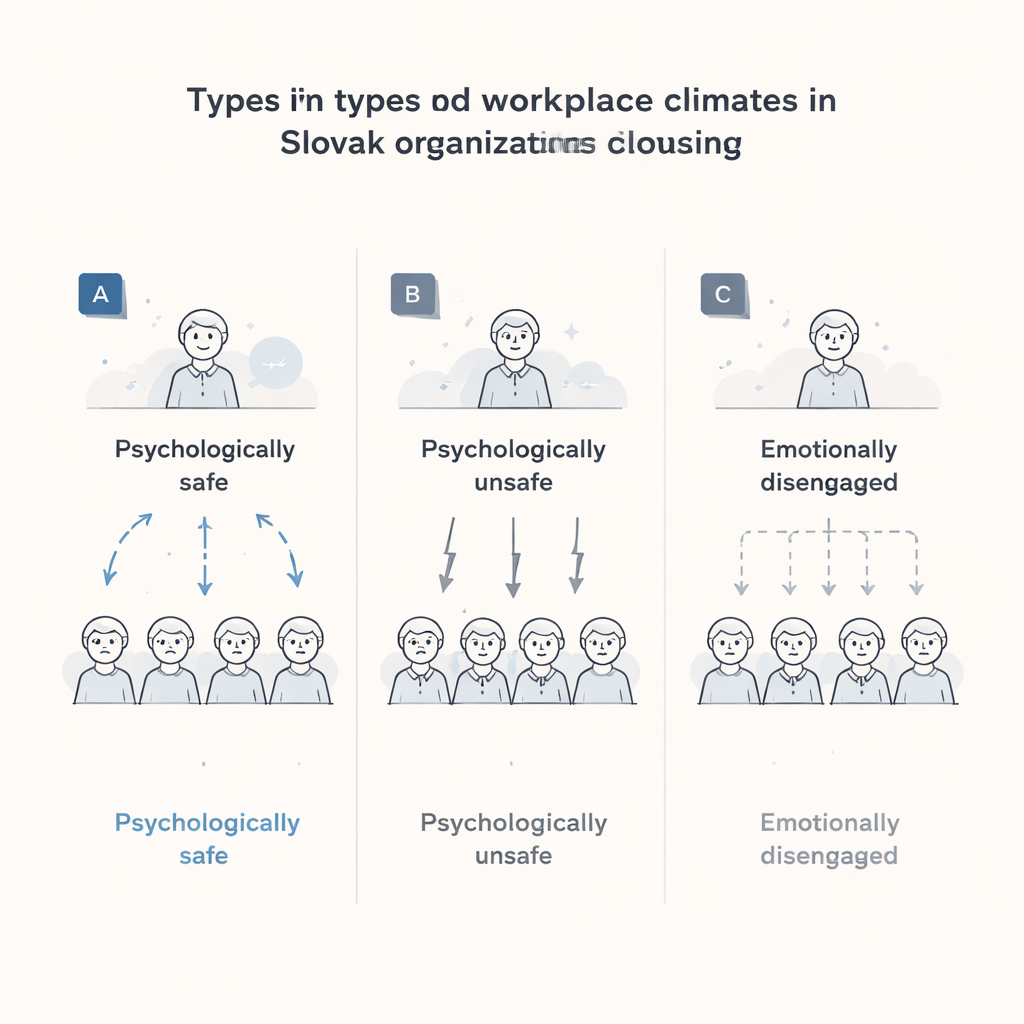
Interviewing 11 employees from different Slovak organizations, the researchers identified three broad “climates” that describe how safe people feel. In a psychologically safe climate (Type A), employees experience open dialogue, mutual trust, and leaders who genuinely invite and act on feedback. People feel free to raise concerns, propose changes, and negotiate solutions together. In a psychologically unsafe climate (Type B), speaking up is risky: critical comments can bring ridicule, unfair treatment, or closer surveillance. Finally, in an emotionally disengaged climate (Type C), employees see little point in voicing concerns because nothing changes; leaders are distant or unresponsive, and people gradually withdraw. These types are not rigid boxes, but a way to capture real differences in how workplaces feel from the inside.
What it feels like to speak up
Across these climates, the same basic act—expressing an opinion—carries very different emotional weight. In safe settings, employees describe their suggestions being heard and implemented, such as introducing flexible work arrangements. This reinforces their sense of value and encourages further openness. In unsafe settings, people tell stories of being mocked for health issues, given pointless tasks, or singled out after raising concerns. In disengaged workplaces, staff are allowed to talk, but their ideas rarely affect decisions; the result is frustration, burnout, and a growing belief that “nothing will change anyway.” The study shows that silence is not just laziness or indifference—it is often a learned response to punishment, dismissal, or indifference from those in charge.
Everyday barriers that shut people down
The researchers mapped eight common barriers that erode psychological safety. These include fear and stress from constant demands, rigid hierarchies where the boss has the final word, and weak relationships with managers who are rarely present or show little real interest. Older workers, in particular, sometimes choose to “keep quiet” rather than risk conflict. Lack of feedback sends the message that input does not matter, while unclear roles, unfair workloads, and missing support systems—such as team-building activities or well-being programs—add to the pressure. Taken together, these factors create workplaces where people protect themselves by staying silent, even when they see problems that need attention.
The kind of leadership that builds safety
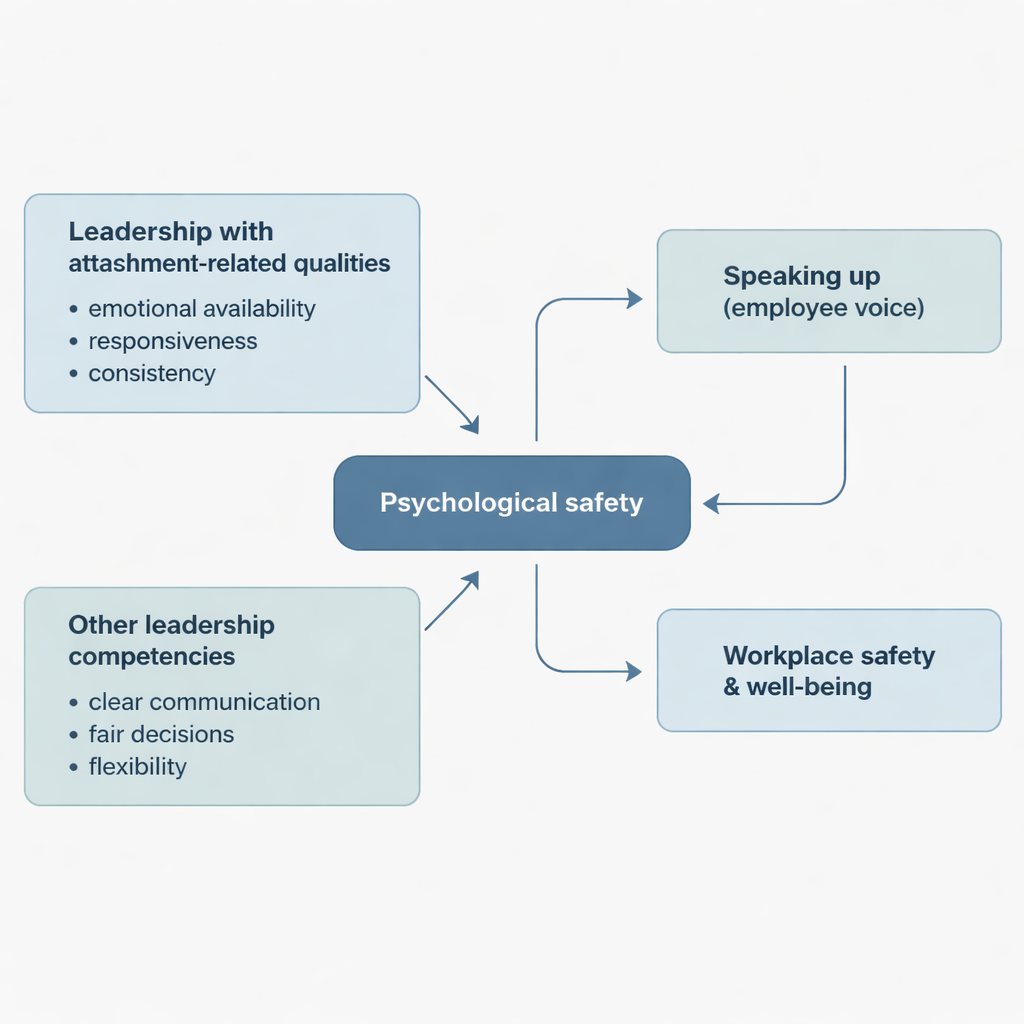
A central finding is that psychological safety is not mainly created by policies or slogans, but by the daily behavior of leaders. Employees described two clusters of leader skills. The first is relational: leaders who are approachable, emotionally available, consistent, and responsive. Borrowing ideas from attachment theory—the study of how close relationships provide a “secure base”—the authors argue that such leaders act as “safe havens,” giving employees the confidence to take interpersonal risks like questioning a decision or admitting an error. The second cluster is more functional: clear communication of decisions, transparent and fair processes, reasonable workloads, and flexible, well-organized work. Both clusters work together: even a kind leader cannot create safety if the system is chaotic and unfair, and even well-designed procedures will not help if leaders seem cold, punitive, or unpredictable.
Practical ways to make work feel safer
Participants offered concrete ideas for change. On the relational side, they called for more direct, honest communication from managers, stable leadership instead of rapid turnover, and visible support for employees’ rights—such as an internal ombudsman to handle bullying or abuse without retaliation. On the functional side, they recommended better organization of tasks, fairer distribution of work, clearer job expectations, and more flexible arrangements like remote work or adjusted hours. Anonymous suggestion boxes, regular meetings where staff can question decisions, and simple well-being measures (from ergonomic equipment to small benefits that “bring people a bit of joy”) were also seen as ways to signal that employees’ voices and health truly matter.
What this means for everyday workers
For a lay reader, the message is straightforward: feeling safe to speak up at work is not a luxury—it is part of basic workplace safety. The study shows that this safety grows out of relationships in which leaders are emotionally reliable, fair, and open, and from structures that back up their words with clear processes and support. In Slovak workplaces—and likely far beyond—employees thrive when they trust that raising a concern will lead to problem-solving, not punishment or indifference. As organizations grapple with stress, remote work, and mental health challenges, the authors argue that the real question is no longer whether psychological safety matters, but how leaders and institutions can deliberately build it into everyday practice.
Citation: Konečná, L., Lisá, E. & Čiriková, V. The role of leadership in shaping psychological safety: a qualitative study from Slovakia. Sci Rep 16, 7249 (2026). https://doi.org/10.1038/s41598-026-38706-1
Keywords: psychological safety, leadership, employee voice, workplace well-being, organizational culture