Clear Sky Science · en
Modelling the association of rainfall and temperature with malaria incidence in Adamawa State, Nigeria
Why Weather Matters for a Tropical Disease
In many parts of Africa, malaria cases seem to rise and fall with the seasons, but health workers often lack precise tools to anticipate when the worst months will hit. This study focuses on Adamawa State in northeastern Nigeria and asks a simple question with big consequences: can patterns in rainfall and temperature be used to forecast malaria cases months in advance? By turning nearly a decade of health and weather records into a forecasting model, the researchers show how climate information can help authorities prepare before hospital wards begin to fill.
Watching Malaria Through Time
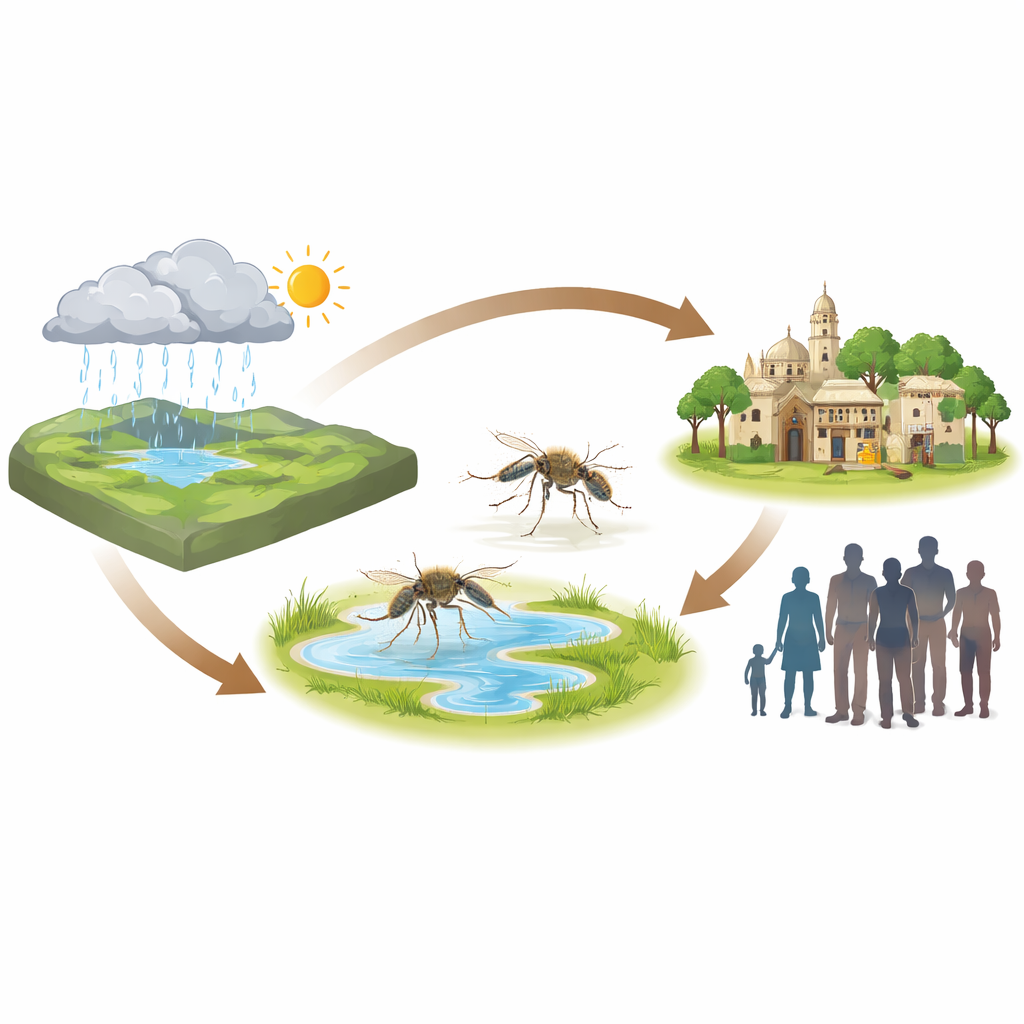
The team gathered monthly data on confirmed malaria cases, average temperature, and total rainfall in Adamawa State from January 2015 to April 2024. Plotting these numbers over time revealed a striking rhythm: malaria surges each year during and just after the rainy season, when standing water creates countless breeding pools for Anopheles mosquitoes and warm air speeds up parasite development. The analysis confirmed that malaria does not simply rise or fall in a straight line; instead, it moves in strong, repeated yearly waves shaped by the local climate.
Turning Patterns into a Forecast
To transform these patterns into practical predictions, the researchers used a family of statistical tools designed specifically for data that come in sequence over time. After checking that the series behaved in a way suitable for modelling, they compared several versions of seasonal forecasting models. Some relied only on past malaria numbers, while others also fed in rainfall and temperature with a delay of one to two months, reflecting the time it takes for weather changes to influence mosquito populations and human infections.
How Rain and Heat Feed the Model
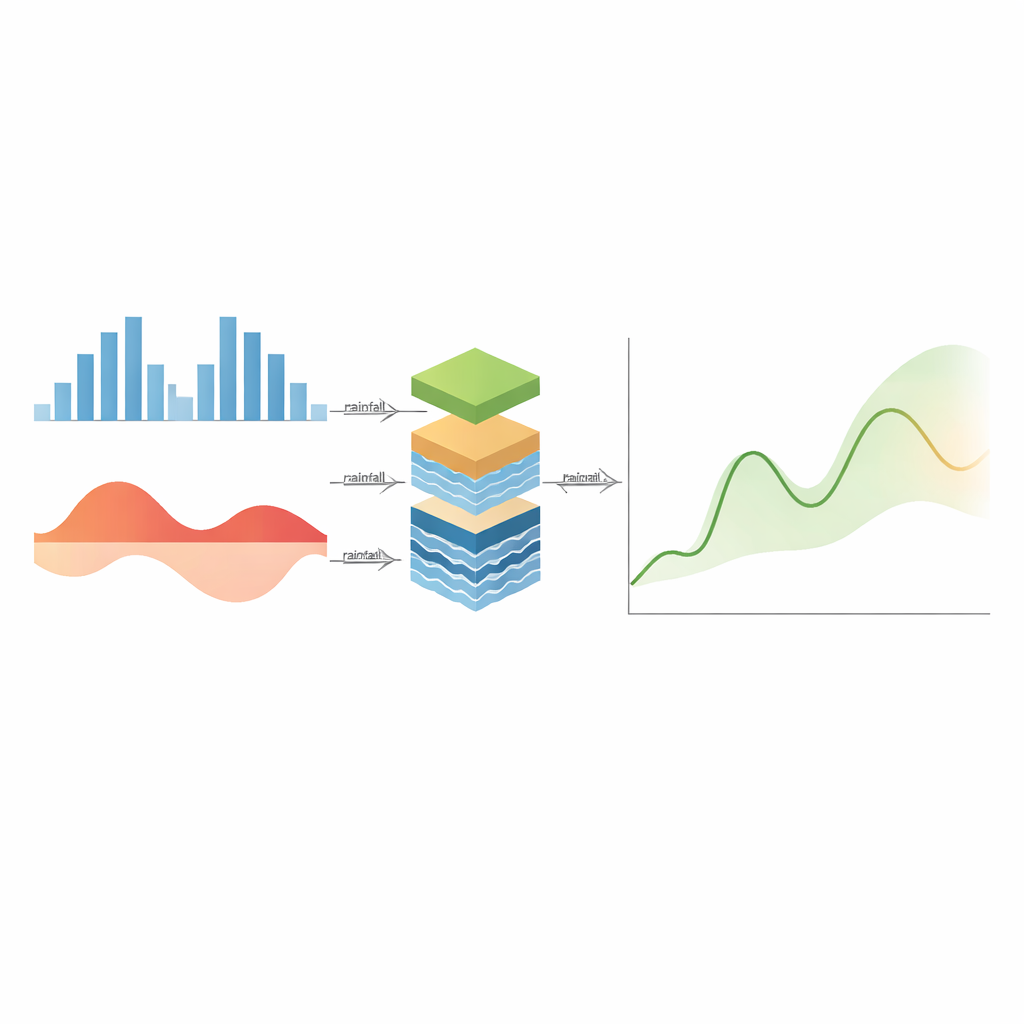
By testing different combinations and scoring them on how closely they reproduced known data, the study found that a model called SARIMAX performed best. This approach treats malaria cases as a repeating seasonal signal but allows rainfall and temperature from previous months to nudge that signal up or down. The chosen version gave the smallest prediction errors and passed a battery of technical checks, suggesting that it successfully captured both the yearly cycle of malaria and the extra push provided by wetter or warmer conditions.
What the Next Seasons Are Likely to Bring
Armed with this tuned model, the authors projected malaria trends from May 2024 through December 2025. The forecast shows sharp increases in cases during each rainy season, with numbers climbing steeply from June to October. In August 2024, monthly cases are expected to exceed sixty thousand, and an even higher peak is projected for October 2025. The forecast also shows that early months are predicted more precisely, while estimates further into the future are surrounded by wider bands of uncertainty—a normal feature of any long-range prediction that reminds planners to use these numbers as guides rather than guarantees.
Putting Forecasts to Work for People
For a lay reader, the key message is clear: in Adamawa State, malaria behaves like a seasonal tide closely tied to rain and heat, and these ties are strong enough to be turned into an advance warning system. By combining routine health data with simple weather records, officials can estimate when the heaviest burden is likely to strike and stock clinics, schedule indoor spraying, and roll out bed nets and vaccines ahead of time. While the model does not replace ongoing surveillance or broader efforts to fight malaria, it offers a powerful way to move from reacting to outbreaks to anticipating them, potentially saving lives and easing pressure on already stretched health services.
Citation: Bakare, E.A., Dukundane, D., Salako, K.V. et al. Modelling the association of rainfall and temperature with malaria incidence in Adamawa State, Nigeria. Sci Rep 16, 8761 (2026). https://doi.org/10.1038/s41598-026-38705-2
Keywords: malaria forecasting, climate and health, rainfall and temperature, Nigeria Adamawa State, time series modelling