Clear Sky Science · en
Biopolymer-based multilayer capsules for protection and controlled release of Pseudomonas fluorescens T17-4 and Bacillus velezensis VRU1
Friendly microbes for healthier crops
Modern farming depends heavily on chemical fertilizers and pesticides, which can be costly and harmful to the environment. An appealing alternative is to use helpful soil bacteria that naturally feed and protect plants, much like probiotics support our gut. This paper explores a way to package such “good” bacteria in tiny, edible capsules made from food-grade materials so they stay alive longer in the field and are released slowly around plant roots, boosting sustainable agriculture.
Why helpful bacteria need a protective home
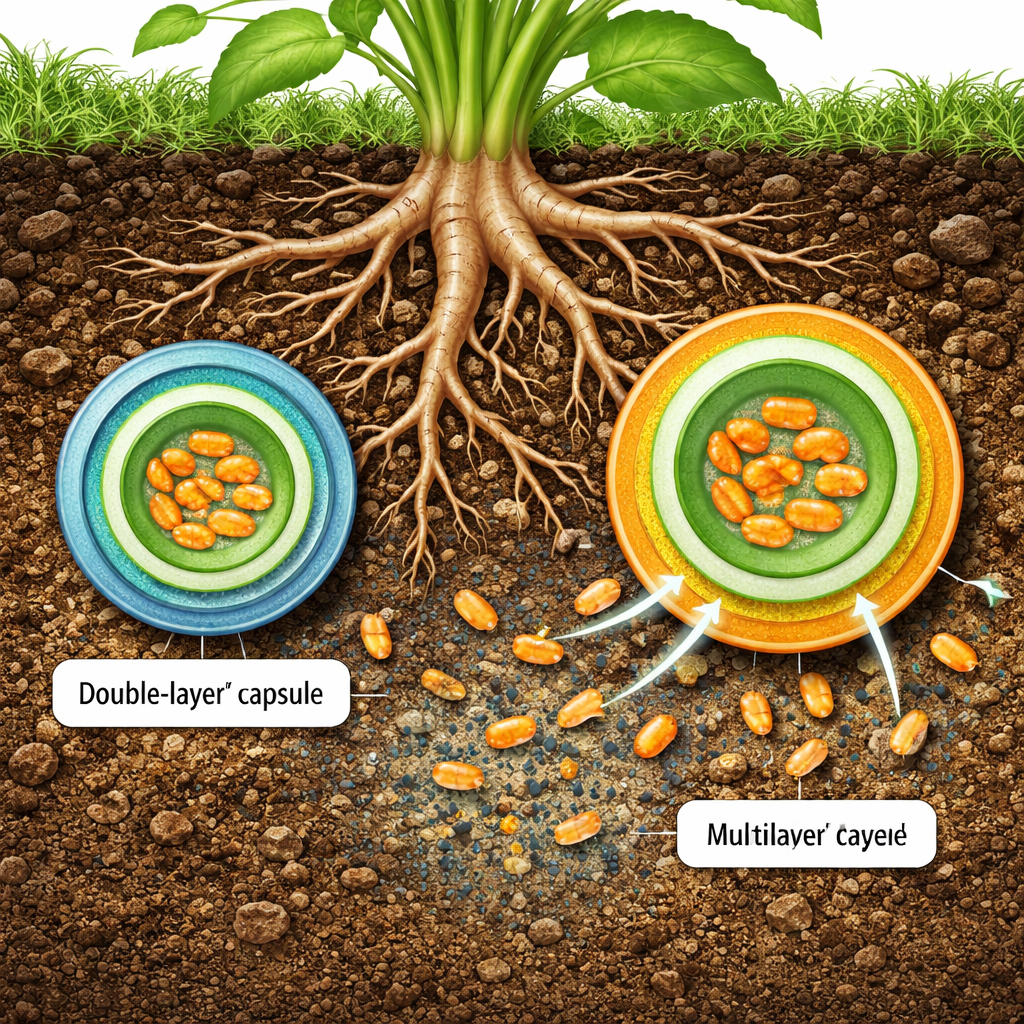
Plant growth–promoting rhizobacteria are microscopic allies that live near roots and help crops in several ways. The two strains studied here, Pseudomonas fluorescens T17-4 and Bacillus velezensis VRU1, can break down complex substances with enzymes, free up phosphorus from soil minerals, make plant hormones that stimulate roots, and produce natural antibiotics that suppress disease-causing microbes. In the lab, these talents are clear, but in real fields the bacteria quickly lose strength because they are exposed to drying, heat and cold, sunlight, and fierce competition from native microbes. Without protection, their numbers crash and their benefits fade long before the crop can fully take advantage.
Building tiny shields from kitchen-style ingredients
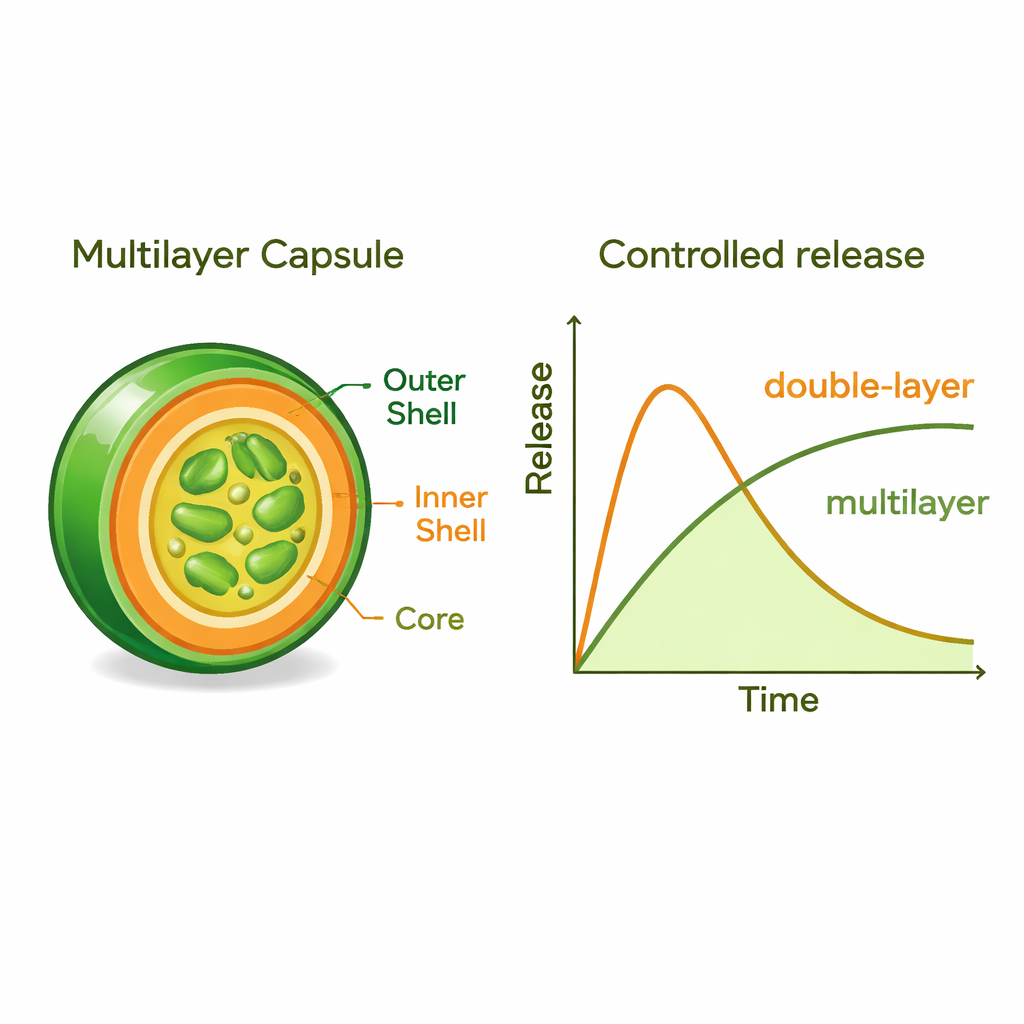
To solve this, the researchers created microscopic capsules using safe, natural materials similar to those used in foods. The heart of each capsule was a gel made from alginate (a seaweed extract) and whey protein (from milk), loaded with the living bacteria and reinforced with hollow silica nanoparticles that act like a sturdy scaffold. Around this core they added layers of plant-based gums: apricot gum and, for the more advanced design, an extra outer skin of pectin, the same gelling agent that thickens jam. One version had two layers (a “double-layer capsule”), while the other had three (a “multilayer capsule”). These soft shells are designed to shield the microbes from harsh conditions while slowly letting them escape into the soil over time.
Putting the capsules to the test
The team compared how well the two capsule designs worked. Using imaging techniques, they found that double-layer capsules had rough, more porous surfaces, whereas multilayer capsules were smoother and denser, suggesting a stronger barrier. When they counted how many bacteria were actually trapped, the multilayer design held more than 90 percent of the starting cells, while the simpler version lost more along the way. The scientists also dipped the capsules in a liquid that mimics soil moisture and tracked how many bacteria emerged over two months. Double-layer capsules released a burst of microbes early on and then tapered off, while multilayer capsules leaked much more slowly at first and then provided a steadier supply over the long term.
Staying alive for the long haul
A key question for any commercial biofertilizer is shelf life: do the bacteria remain alive while the product sits in storage or on a farm shelf? The researchers stored both kinds of capsules at room temperature for six months and then measured bacterial survival. In the double-layer capsules, around four out of five bacteria remained alive. In the multilayer capsules, more than nine out of ten survived. The outer pectin layer, which holds water well and forms a tight film, appears to help maintain a gentle, moist microenvironment and block oxygen and other damaging factors that would otherwise stress or kill the bacteria.
What this means for greener farming
For non-specialists, the core message is straightforward: by wrapping beneficial soil bacteria in several thin, natural coatings, we can keep them alive longer and release them more gradually where plants need them most—the root zone. The multilayer capsules described in this study outperform simpler shells by capturing more bacteria, protecting them better during storage, and delivering them over an extended period rather than in a quick burst. If scaled up and tested in real fields, this gentle encapsulation approach could make microbe-based fertilizers more reliable and practical, helping farmers reduce chemical inputs while maintaining healthy, productive crops.
Citation: Saberi Riseh, R., Fathi, F. Biopolymer-based multilayer capsules for protection and controlled release of Pseudomonas fluorescens T17-4 and Bacillus velezensis VRU1. Sci Rep 16, 7338 (2026). https://doi.org/10.1038/s41598-026-38691-5
Keywords: biofertilizers, plant probiotic bacteria, microencapsulation, sustainable agriculture, soil health