Clear Sky Science · en
Replacing soil with waste gangue for the ecological remediation of mining areas facilitated by plant-promoting microorganisms and porous materials
Turning Mine Waste into Living Soil
Across the world, coal and oil shale mines leave behind mountains of broken rock that look dead and useless. Yet these heaps of waste, called gangue, cover huge areas and quietly leak salts and metals into surrounding land and water. This study explores a surprisingly hopeful idea: instead of hauling in fresh topsoil, can we transform this waste itself into a rich growing bed using farm manure, friendly microbes, and porous mineral materials? If so, vast scarred mine landscapes could be greened at low cost, using what is already on site.
From Rocky Heaps to Potential Farmland
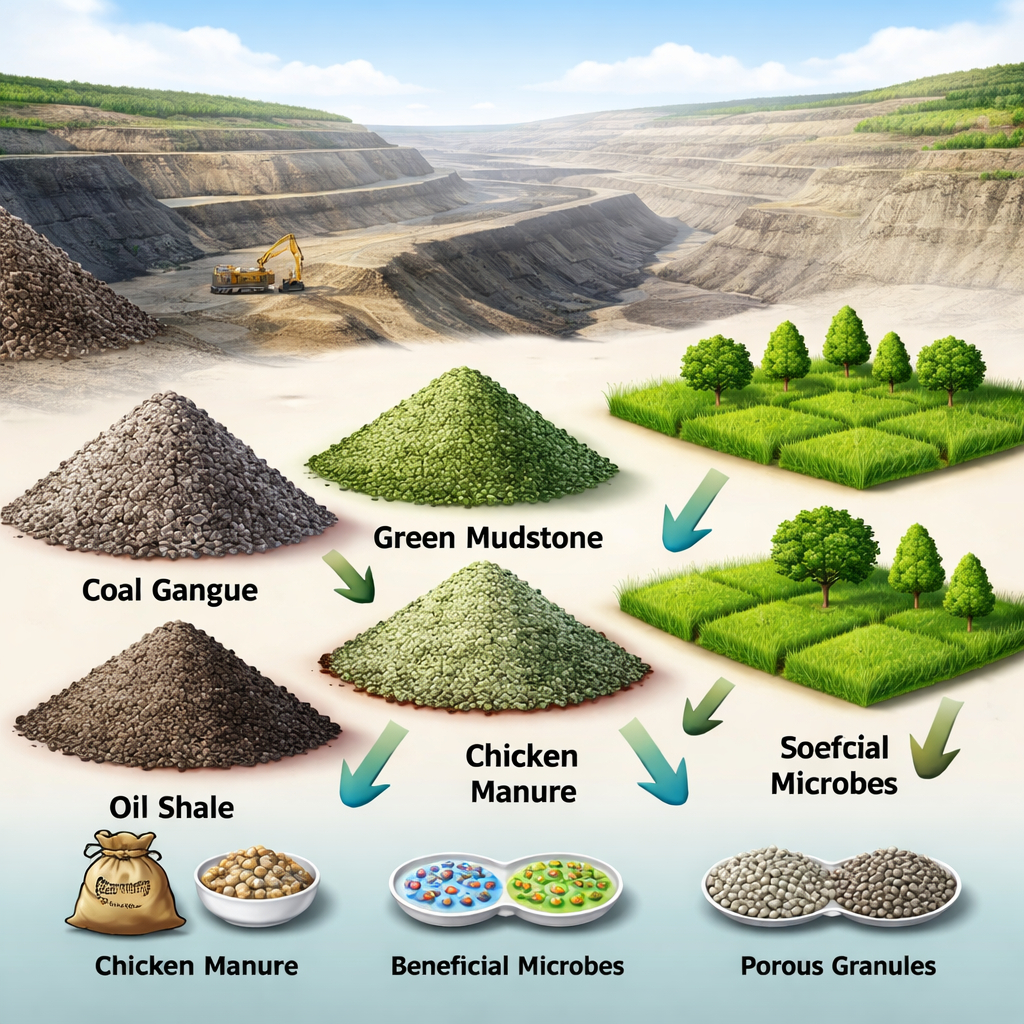
The researchers focused on three common types of mine waste from a large open-pit mine in northeast China: coal gangue, green mudstone, and oil shale. Normally, these coarse, salty, alkaline materials are poor at holding water and nutrients, and their loose structure makes it hard for roots and soil life to take hold. Instead of covering them with imported soil, the team ground and screened the waste, then blended it in different ways with chicken manure, plant-friendly microbes, and a specially made porous mineral additive. They planted ryegrass (Lolium), a fast-growing pasture grass, into these mixtures in pots and compared them with ordinary campus soil.
Building a Friendlier Home for Plants
Adding the exogenous “helpers” dramatically changed the basic soil-like properties of the gangue. Organic matter and key nutrients such as nitrogen and phosphorus rose sharply—up to several-fold higher than in raw waste, and in many cases even better than the natural soil used as a control. At the same time, the very high alkalinity of the waste dropped toward a more moderate pH range that plant roots prefer. The porous material acted like a sponge and scaffold: it helped the mixtures retain more water, increased electrical conductivity (a sign that more nutrients were dissolved and available), and created tiny channels that roots and microbes could occupy. However, the authors note that too much porous material can push salt levels too high, which can again stress plants, so careful tuning of the recipe is needed.
Grass Growth as a Health Check
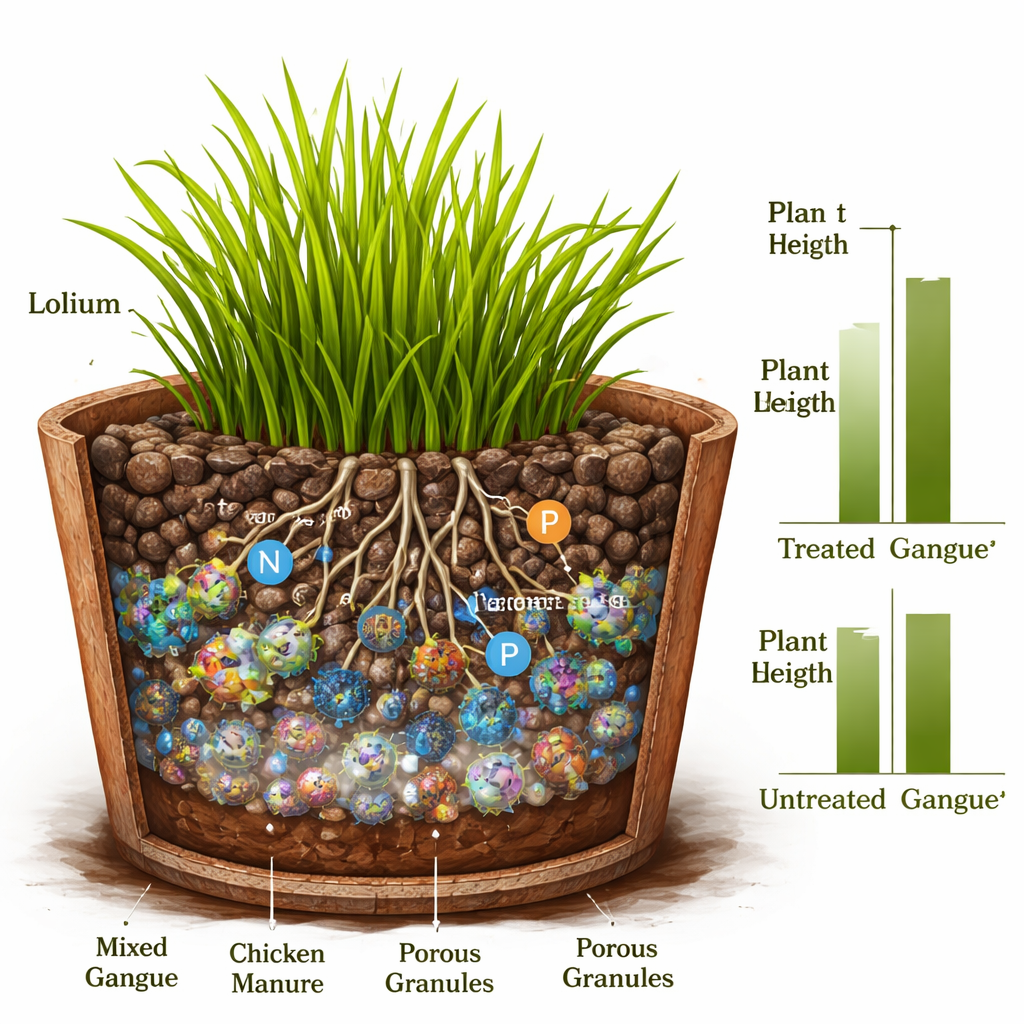
Ryegrass performance revealed how well the new substrates actually worked. Coal gangue on its own supported grass about as well as the natural soil, but green mudstone and oil shale sharply reduced plant size and biomass. Once chicken manure, growth-promoting microbes, and porous material were added, grass growth improved across all waste types. On treated coal gangue, plant height, root length, stem thickness, branching, and fresh weight all increased noticeably, in some cases approaching or surpassing the control soil. Green mudstone and oil shale remained more challenging—high alkalinity and salinity still limited growth even after improvement—but the trend was clearly upward. The authors suggest either further lowering pH and salt levels or blending these harsher wastes with coal gangue before treatment.
Invisible Soil Engineers at Work
Beneath the surface, the microbial world shifted just as dramatically. Raw gangue hosted sparse and often problematic bacteria; for example, plant-pathogenic Ralstonia was abundant in untreated samples. After adding manure, beneficial microbes, and porous materials, overall microbial richness and diversity rose, while disease-causing groups declined sharply. New key players appeared, including bacteria known to fix nitrogen, dissolve phosphorus, tolerate salt, and break down organic contaminants. Network analyses showed that in treated coal gangue especially, these organisms formed dense, cooperative webs closely tied to improved pH, nutrients, and moisture. Gene-based predictions indicated that microbial communities in the amended wastes became more capable of fixing carbon, cycling nitrogen, and unlocking phosphorus—fundamental engines of a self-sustaining soil ecosystem.
What This Means for Healing Mine Lands
For a non-specialist, the takeaway is straightforward: the waste piles around mines do not have to remain barren scars. By mixing them with farmyard manure, selected beneficial microbes, and well-designed porous minerals, it is possible to turn much of this rubble into a living growth medium that holds water, feeds plants, and supports complex microbial life. Coal gangue responded best in this study, while green mudstone and oil shale will need further tweaking, but the principle is clear. With thoughtful engineering of both chemistry and biology, mine waste can be converted from a long-term liability into a resource for revegetation and even future agriculture, helping restore damaged landscapes without relying on scarce natural topsoil.
Citation: Zhang, B., Ma, D., Zhou, X. et al. Replacing soil with waste gangue for the ecological remediation of mining areas facilitated by plant-promoting microorganisms and porous materials. Sci Rep 16, 7806 (2026). https://doi.org/10.1038/s41598-026-38682-6
Keywords: mine land restoration, coal gangue, soil microbes, porous amendments, waste reuse