Clear Sky Science · en
Eco-friendly synthesis of gold nanoparticles using Gracilaria gracilis with antioxidant potential and biocompatibility
Turning Seaweed into Tiny Gold Helpers
Imagine if a common red seaweed could help make medicine safer and more sustainable. This study explores exactly that: scientists used the marine alga Gracilaria gracilis to create ultra-small gold particles in a clean, low-cost way. These particles act as powerful shields against harmful molecules in the body while remaining gentle to human cells, opening doors to greener cosmetics, foods, and future treatments.
Why Gold Needs a Green Makeover
Gold nanoparticles are already stars in modern science. Because they are so small, they can slip between cells, carry drugs, and interact with key molecules in the body. But they are often made using harsh chemicals and energy-intensive steps that can leave toxic residues. At the same time, many synthetic antioxidants added to foods and products—such as BHA and BHT—are under scrutiny for possible health risks. This has pushed researchers to search for safer ways to both make useful nanoparticles and replace risky preservatives with natural, kinder alternatives.
Seaweed as a Natural Nanofactory
The researchers turned to Gracilaria gracilis, a hardy red seaweed rich in natural compounds like polyphenols, sugars, and pigments. They prepared a simple water-based extract from dried algae and then added a gold salt solution. Instead of using strong industrial chemicals, the plant molecules in the extract did double duty: they converted the dissolved gold into solid metallic nanoparticles and then wrapped around them, keeping them stable in water. By carefully adjusting the mixing ratios, the team found conditions that produced a strong, clean signal in light-absorption tests, indicating many well-formed particles with minimal clumping. 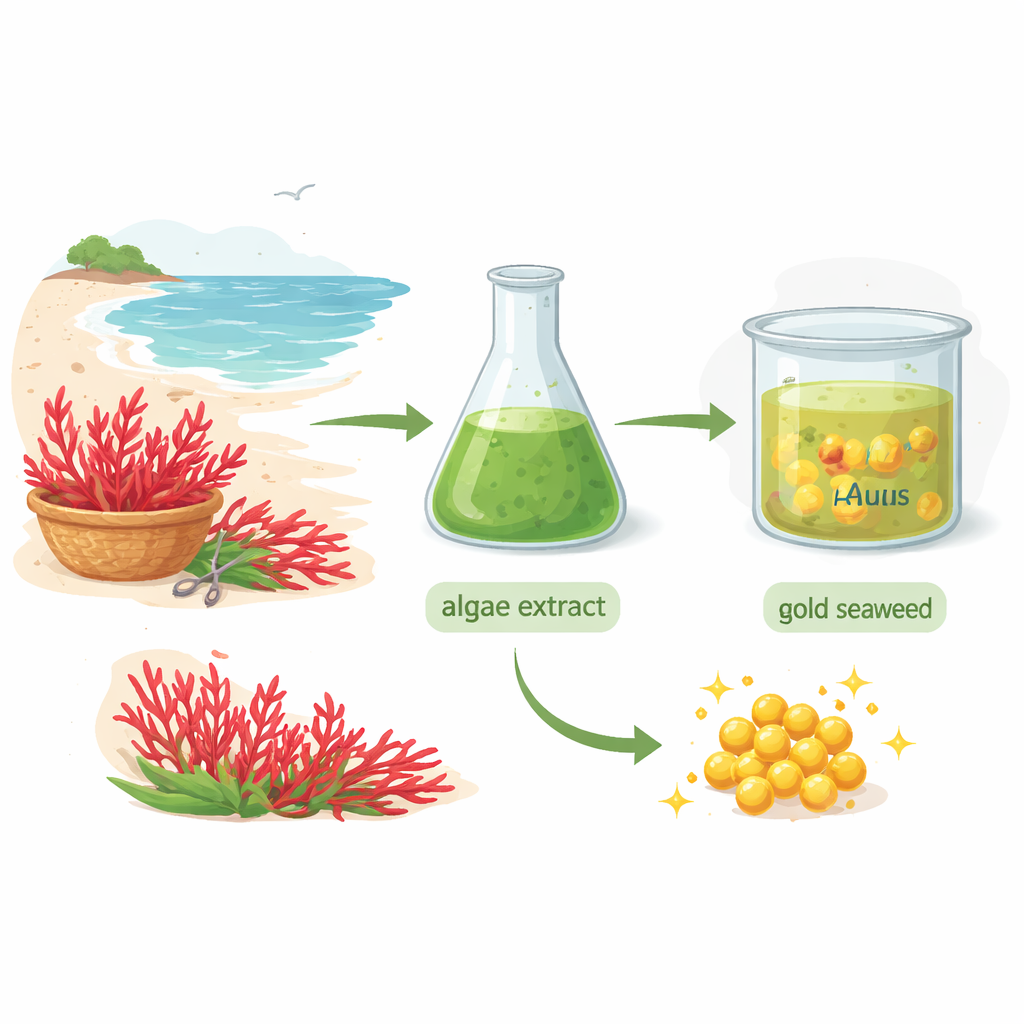
Peeking at the Shape, Size, and Surface
To understand what they had made, the team used a suite of high-tech tools. Electron microscopes showed that the seaweed-produced particles were mostly spherical or near-spherical and evenly dispersed, with an average diameter of about 10 nanometers—around 1/10,000 the width of a human hair. X-ray measurements confirmed that the particles were crystalline gold, while another test, called FTIR, revealed fingerprints of seaweed-derived molecules coating their surface. An electrical measurement known as zeta potential suggested the particles carried a small negative charge, which helps them stay suspended rather than sticking together. Overall, the data painted a picture of clean, uniform, and well-stabilized “green” gold nanoparticles.
Fighting Harmful Molecules Without Harming Cells
The real test was whether these tiny gold spheres could act as effective bodyguards against damaging free radicals—unstable molecules that contribute to aging, inflammation, and many diseases. Using a standard violet-colored test molecule that fades when neutralized, the team showed that the seaweed gold nanoparticles quenched radicals strongly and in a dose-dependent way, performing on par with a widely used industrial antioxidant, BHA. At the same time, when the particles were added to cultured human skin fibroblast cells, they did not reduce cell survival even over a wide range of concentrations. Microscopy and viability tests showed that the cells remained healthy, suggesting that these particles combine high protective power with excellent biocompatibility. 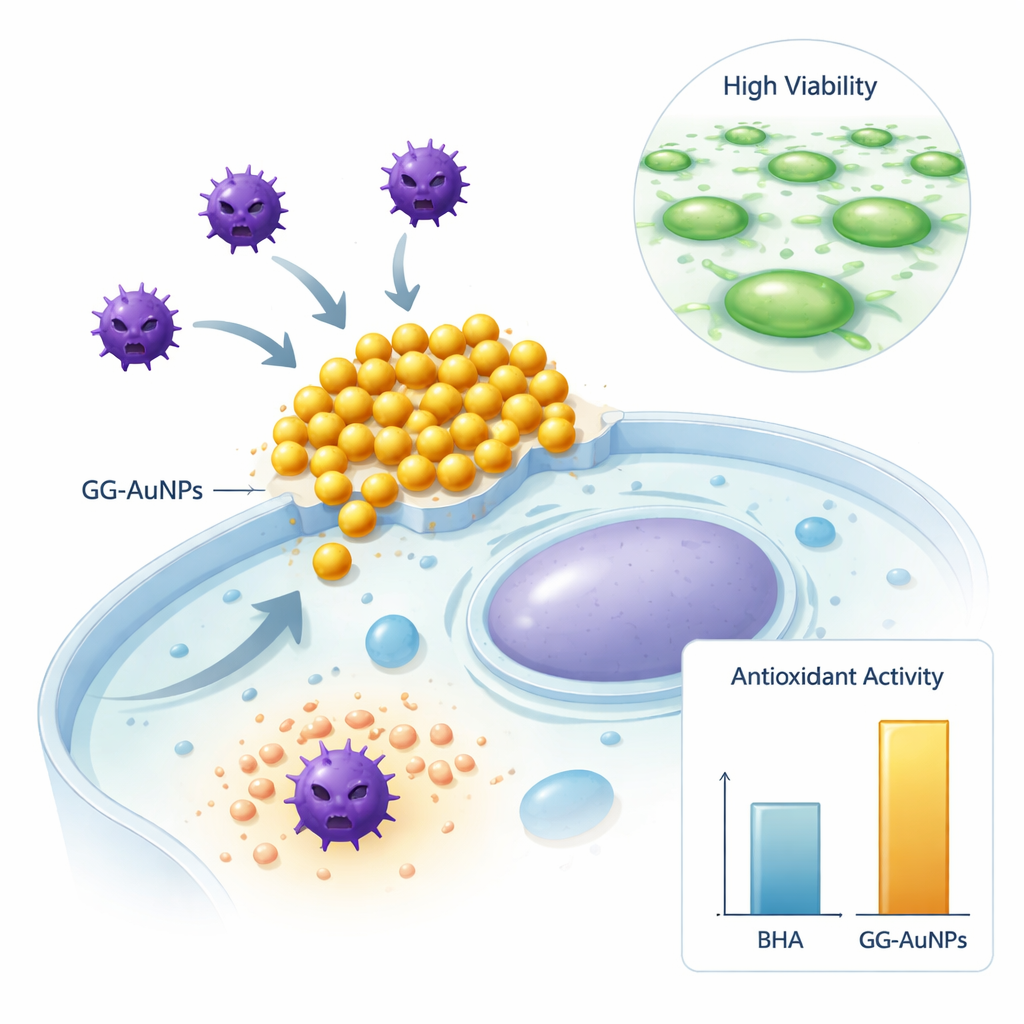
From Lab Bench to Everyday Products
In simple terms, this work shows that a common red seaweed can act as a miniature factory for making tiny gold particles that behave like strong, stable antioxidants yet appear safe for normal human cells. While these findings come from controlled lab experiments rather than tests in animals or people, they point toward future uses of such seaweed-grown gold in medicines, health products, and even food packaging, where they could help block damaging molecules without introducing new risks or environmental burdens.
Citation: Ramezani Moghadam, K., Gharbi, S., Haddad-Mashadrizeh, A. et al. Eco-friendly synthesis of gold nanoparticles using Gracilaria gracilis with antioxidant potential and biocompatibility. Sci Rep 16, 7427 (2026). https://doi.org/10.1038/s41598-026-38677-3
Keywords: gold nanoparticles, green synthesis, red algae, antioxidant, biocompatibility