Clear Sky Science · en
Identification of altered salivary microRNAs in Cavalier King Charles Spaniels affected by mitral valve disease at different ACVIM stages
Why your dog’s spit might help protect its heart
Many small dog breeds, especially Cavalier King Charles Spaniels, are prone to a common heart problem that can quietly worsen for years before symptoms appear. Today, vets rely on ultrasound scans and listening for heart murmurs to spot trouble, but these methods may miss the very earliest changes. This study explores a surprisingly simple idea: whether a quick swab of saliva could reveal tiny molecular clues that a dog’s heart valves are starting to fail, long before obvious illness sets in.
A common heart problem in a beloved breed
Myxomatous mitral valve disease is the leading cause of heart failure in dogs, and Cavaliers are especially vulnerable, often developing it at a young age. The disease slowly damages a valve between two heart chambers, allowing blood to leak backwards and gradually enlarging the heart. Vets classify dogs into stages from A (at risk but normal) through B1 and B2 (increasing structural changes) to later stages with clear heart failure. The challenge is finding safe, simple tests that flag dogs as they move from healthy to early disease, when treatment and monitoring could be most helpful.
Tiny signals in an easy-to-collect fluid
The researchers focused on microRNAs, short strands of genetic material that help control how cells respond to stress, injury, and repair. Previous work has shown that microRNAs in blood change in dogs with valve disease, but blood draws are more invasive and can be stressful, especially for anxious or fragile animals. Saliva, in contrast, can be collected with a brief swab, and in human medicine it is increasingly used to track heart and other systemic conditions. The team asked whether microRNAs in saliva differ between Cavaliers at various early stages of valve disease, and whether these patterns point to specific biological processes in the heart.

What the saliva of 25 spaniels revealed
The study enrolled twenty-five adult Cavalier King Charles Spaniels: six healthy at-risk dogs (stage A), thirteen with a heart murmur but little structural change (stage B1), and six with clear heart enlargement but no symptoms yet (stage B2). All dogs underwent full heart examinations, including ultrasound and X‑rays, and provided a saliva sample via a simple mouth swab. Using next‑generation sequencing, the scientists measured hundreds of different microRNAs in the saliva and compared their levels between the groups. They found that 25 microRNAs were increased in stage B1 dogs compared with healthy dogs, and 35 changed between B1 and B2, showing that the salivary microRNA “signature” shifts as the disease progresses even before clinical heart failure develops.
Molecular hints of early protection and later strain
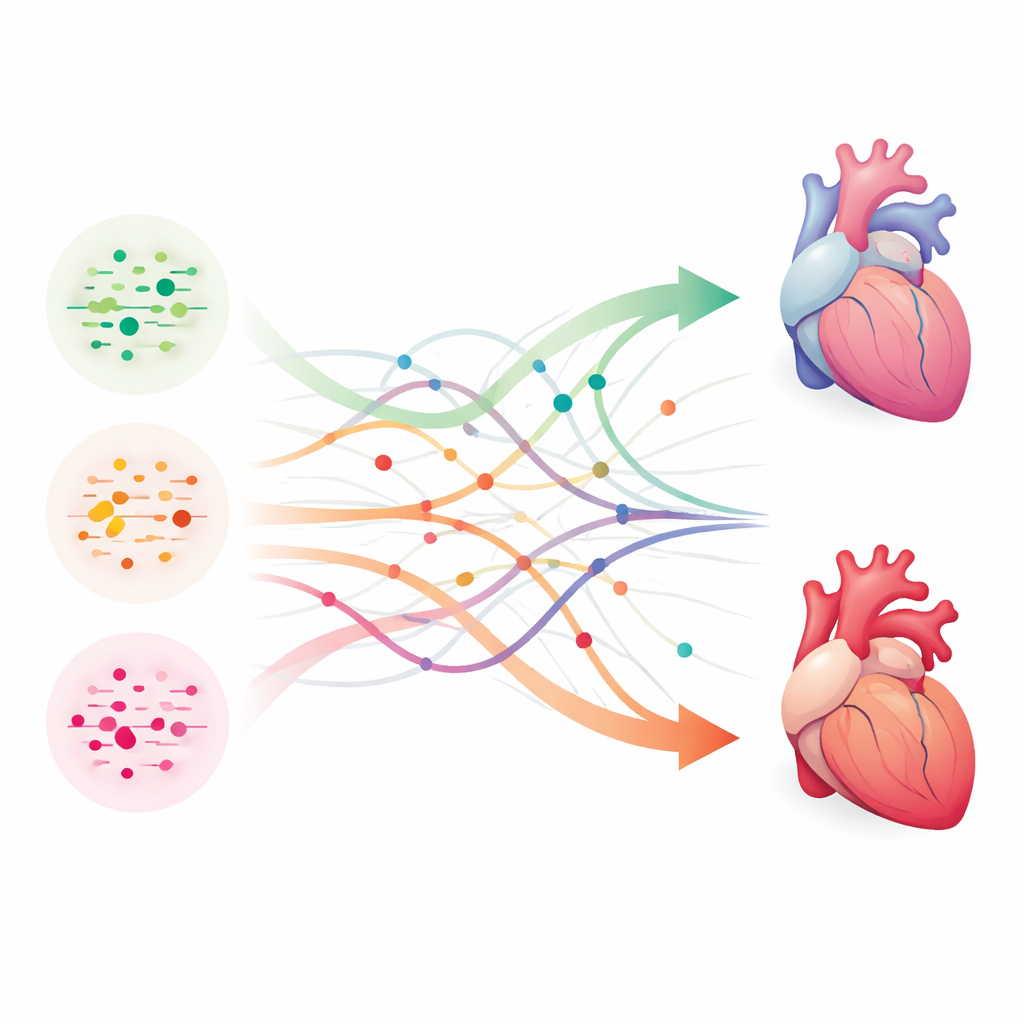
By using bioinformatics tools, the team linked these altered microRNAs to sets of genes and signaling pathways. In dogs at the earliest disease stage (B1), the changed microRNAs were tied to processes that generally support cell survival and energy balance—such as pathways that help heart cells handle metabolic demands and stress. In contrast, when comparing B1 to the more advanced B2 stage, other microRNA changes pointed toward inflammation, tissue remodeling, and cellular aging, all hallmarks of a heart beginning to struggle. Four particular microRNAs stood out: they were higher in stage B1 than in both healthy (A) and more enlarged (B2) hearts, and were linked to pathways involved in longevity, repair, and protective responses, hinting at a core early‑disease pattern in this breed.
What this could mean for dogs and their vets
This work shows that it is technically feasible to measure microRNAs in dog saliva and that their patterns differ across early heart disease stages in Cavalier King Charles Spaniels. However, the study was small, limited to one breed, and captured only a snapshot in time. The authors stress that these microRNAs are promising candidates, not ready‑to‑use diagnostic tests. Larger, long‑term studies in more dogs and breeds, and follow‑up testing with simpler laboratory methods, will be needed. If future research confirms these findings, a quick, non‑invasive saliva test could one day help vets identify at‑risk dogs earlier, track disease progression more comfortably, and tailor monitoring and treatment to protect canine hearts more effectively.
Citation: Ghilardi, S., Salvi, G., Bagardi, M. et al. Identification of altered salivary microRNAs in Cavalier King Charles Spaniels affected by mitral valve disease at different ACVIM stages. Sci Rep 16, 10023 (2026). https://doi.org/10.1038/s41598-026-38660-y
Keywords: canine heart disease, salivary biomarkers, microRNA, Cavalier King Charles Spaniel, mitral valve disease