Clear Sky Science · en
Performance emission and combustion characteristics of TIO₂ and CEO₂ nanoparticle enhanced Mahua biodiesel diesel blends using experimental and machine learning approaches
Cleaner Power from Plants and Tiny Particles
Diesel engines power buses, tractors, and generators around the world, but they also emit soot, smog-forming gases, and climate-warming carbon dioxide. This study explores a way to make existing diesel engines cleaner and more efficient without redesigning them, by blending a non-edible plant oil called Mahua biodiesel with regular diesel and adding ultra-fine metal particles. The researchers also used modern machine learning tools to see whether computers can reliably predict how such engines will behave under many operating conditions. 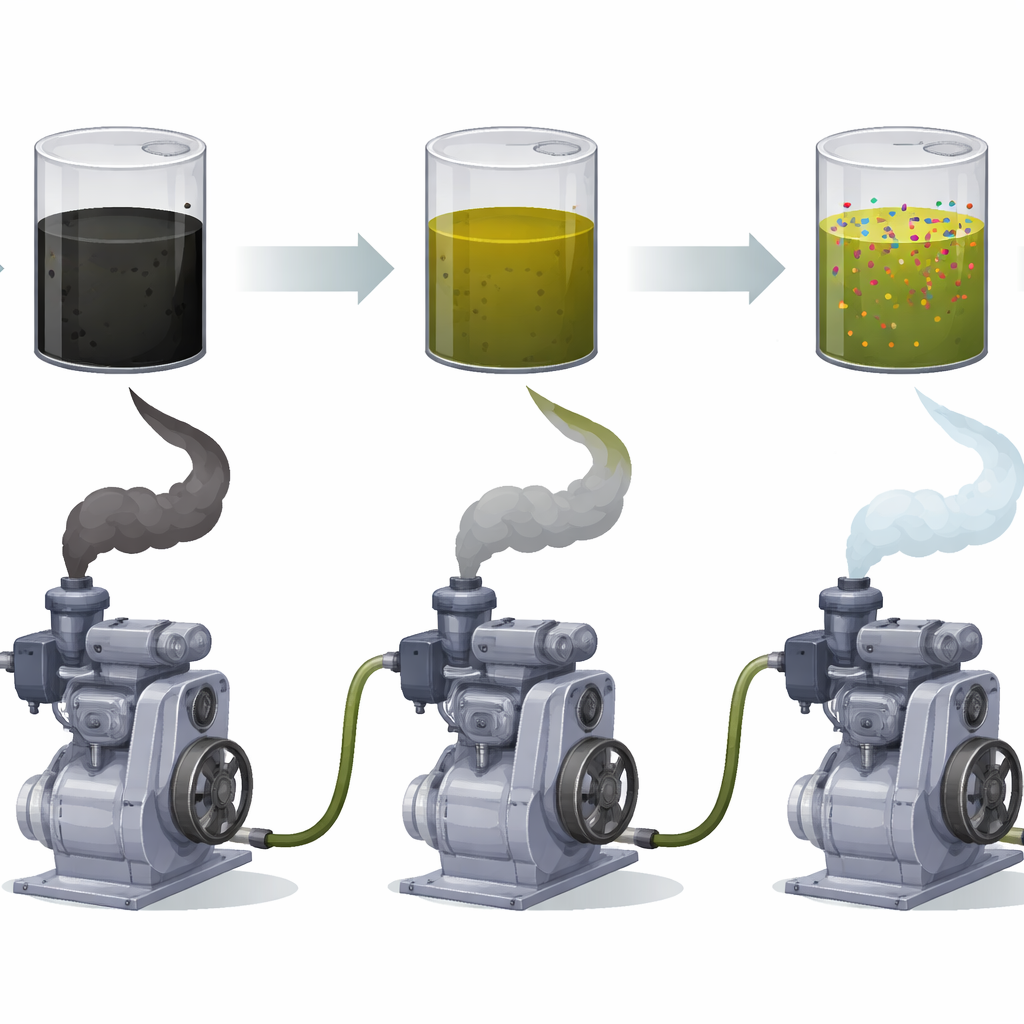
From Tree Seeds to Engine Fuel
Mahua is a tree common in India whose seeds yield an oil not used for food, making it an attractive, sustainable source for fuel. The oil is chemically processed into a biodiesel that can be mixed with regular diesel. In this work, the team focused on a practical blend containing 20% Mahua biodiesel and 80% diesel, chosen because it usually offers a good balance between engine performance and emissions. To push this blend further, they introduced trace amounts of metal oxide nanoparticles—titanium dioxide and cerium oxide—at doses of just 25 to 75 parts per million, far too little to noticeably change the bulk properties of the fuel but enough to influence how it burns inside the engine.
How Tiny Additives Help the Burn
The test bed was a standard single-cylinder diesel engine, similar to those used in small generators, operated at five different load levels from idle to full power. The researchers measured how efficiently the engine turned fuel into useful work and tracked pollutants such as carbon monoxide, unburned hydrocarbons, nitrogen oxides, smoke, and carbon dioxide. They found that simply switching from pure diesel to the Mahua blend slightly reduced efficiency, because the plant-based fuel is thicker and holds less energy per kilogram. However, when they added the nanoparticles—especially at about 50 parts per million—the picture changed. These tiny particles act like combustion helpers, promoting better fuel–air mixing and speeding up oxidation reactions. 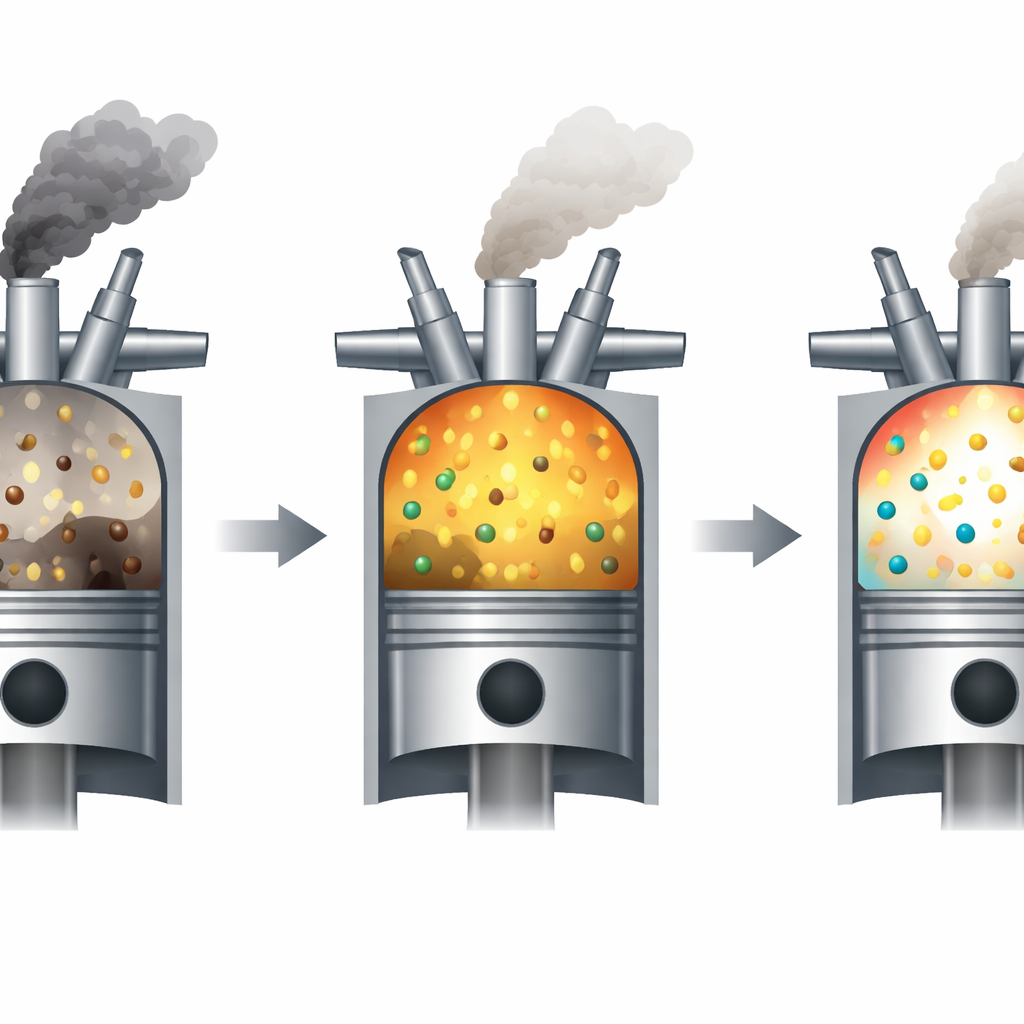
Cleaner Exhaust with a Trade-Off
With the right nanoparticle dose, the engine’s brake thermal efficiency—the share of fuel energy converted into useful power—rose by about 6–8% above pure diesel at full load, and fuel consumption per unit of power dropped by up to 7% compared with the Mahua blend alone. The exhaust also became noticeably cleaner: carbon monoxide and unburned hydrocarbons fell by roughly a quarter, and visible smoke was cut by as much as 35–40%, reflecting less soot formation and more complete burning. Carbon dioxide increased modestly, which in this context signals that carbon in the fuel is being fully oxidized instead of emerging as toxic by-products or particles. The main downside was that nitrogen oxides, a family of gases that contribute to smog, rose by about 8–12% at high loads, because the more vigorous combustion raised the peak temperature inside the cylinder.
Letting Machines Learn the Engine’s Behavior
Running many engine tests is costly and time-consuming, so the team also asked whether a computer could learn to predict engine behavior after seeing only a limited set of experiments. They trained several modern machine learning models using inputs such as engine load, fuel type, and nanoparticle level, and outputs such as efficiency, fuel consumption, and each emission. To make the most of their small dataset, they used a strict validation method in which each experimental point is in turn treated as an unseen test case. Among the tested approaches, a method called XGBoost, which combines many small decision trees, gave the most reliable overall predictions, capturing more than 97% of the variation in all measured quantities with very small errors and no obvious biases across operating conditions.
Putting It All Together for Practical Use
For non-specialists, the key message is that a carefully chosen mix of plant-based fuel and ultra-fine metal particles can make a conventional diesel engine both cleaner and more efficient, without mechanical modifications. The sweet spot in this study was a Mahua biodiesel–diesel blend containing about 50 parts per million of titanium or cerium oxide nanoparticles: enough to sharpen the burn and slash soot and other harmful gases, while only moderately increasing nitrogen oxides. At the same time, machine learning proved to be a powerful companion, accurately forecasting how the engine would respond under different loads and fuel recipes. Together, these approaches point toward a future where existing diesel engines can be tuned for lower pollution and better fuel economy while gradually replacing fossil fuel with sustainable plant-derived alternatives.
Citation: Janaki, V., Ranjit, P.S. & Balakrishna, B. Performance emission and combustion characteristics of TIO₂ and CEO₂ nanoparticle enhanced Mahua biodiesel diesel blends using experimental and machine learning approaches. Sci Rep 16, 8594 (2026). https://doi.org/10.1038/s41598-026-38657-7
Keywords: Mahua biodiesel, nanoparticle additives, diesel engine emissions, clean combustion, machine learning models