Clear Sky Science · en
Dietary protein intake in relation to metabolic syndrome reversion: findings from the Tehran lipid and glucose study
Why this research matters to everyday health
Many adults live with a cluster of problems—larger waistlines, high blood pressure, and abnormal blood sugar and fats—known together as metabolic syndrome. This condition quietly raises the risk of heart disease and diabetes. The hopeful news is that metabolic syndrome does not have to be permanent. This study from Tehran asks a practical question that concerns anyone thinking about their dinner plate: do different sources of dietary protein, such as poultry, red meat, dairy, legumes, and nuts, help or hinder a return to better metabolic health?
Looking at changes, not just first diagnosis
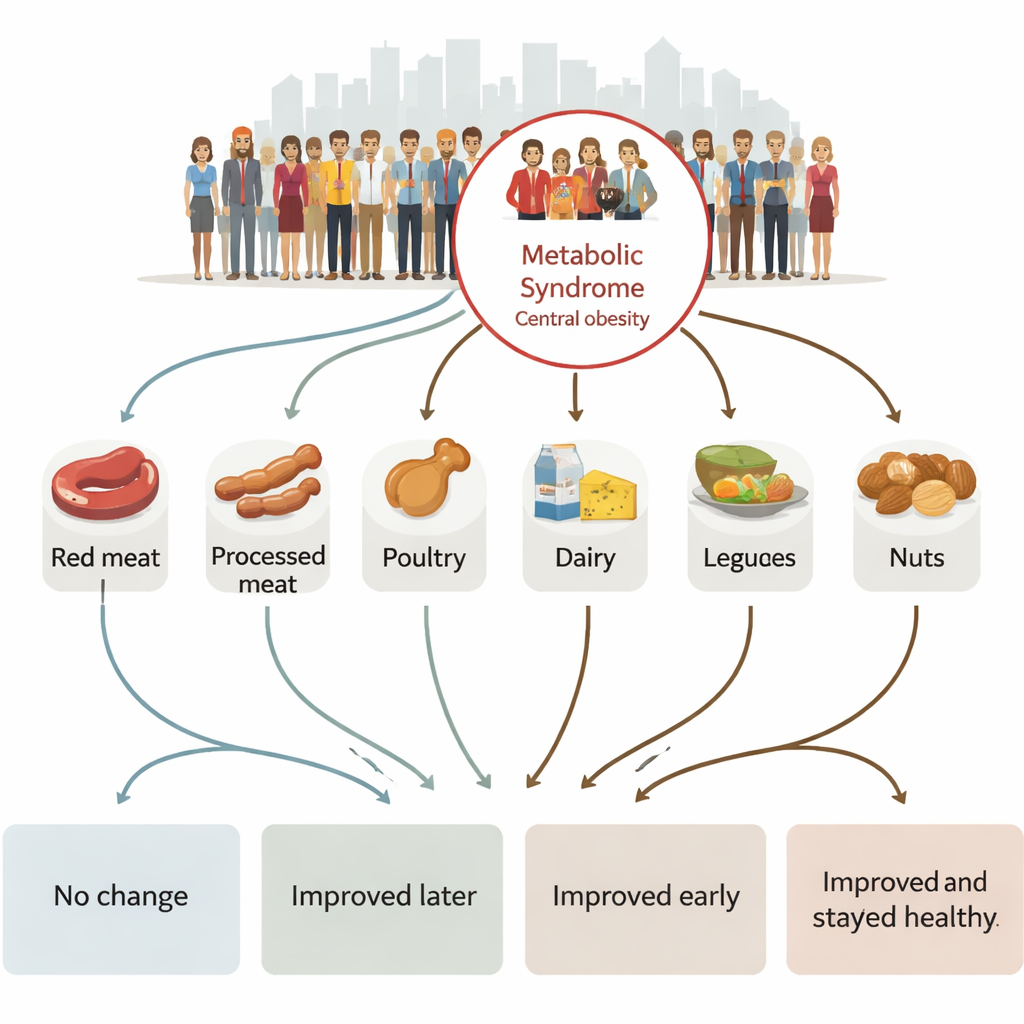
Most earlier research has focused on who develops metabolic syndrome in the first place. The authors of this study turned the question around: among people who already have metabolic syndrome, who actually gets better over time? Using data from the long-running Tehran Lipid and Glucose Study, they followed 576 adults with metabolic syndrome for about eight years. At the start, participants completed a detailed food questionnaire covering 168 common foods. Researchers then tracked who moved from an unhealthy metabolic state back to a healthier one, and when. They defined four patterns of improvement: getting better by the final follow-up, getting better at any time, getting better early, and improving early and staying healthy for the rest of the study.
Different protein foods, different patterns
Instead of just counting total protein, the researchers separated it into animal and plant protein, and then into specific food groups: red meat, processed meat, poultry, dairy products, legumes, and nuts. They divided people into three intake levels (low, medium, high) for each category and used statistical models to see how likely each group was to experience metabolic syndrome reversion. After accounting for age, sex, body weight, smoking, physical activity, and overall calorie and nutrient intake, a few patterns emerged. Medium intake of animal protein overall was linked with a lower chance of improvement at any point during follow-up, suggesting that more animal protein was not always better for reversing existing metabolic problems.
Poultry stands out, others look neutral
Poultry was the one animal protein that appeared helpful. Participants with medium poultry intake—roughly one to two modest servings per day—were more likely to see their metabolic syndrome improve, and especially more likely to improve early in the study. In contrast, red and processed meats, total plant protein, and legumes did not show clear links with getting better once other lifestyle factors were taken into account. These findings support the idea that swapping some red and processed meat for lean poultry may assist the body’s recovery from metabolic disturbance, possibly by cutting down on saturated fat and harmful compounds that accompany heavier meats.
Surprising signals for dairy and nuts
Two results ran against expectations. People with the highest intakes of dairy products and nuts were less likely to show early improvement in metabolic syndrome, even though other large studies have often tied these foods to better heart and metabolic health. The authors caution against over-interpreting this. One explanation is that people with more severe metabolic problems may have increased their intake of dairy or nuts as a self-directed “healthy change,” making it look as though these foods blocked recovery when they were actually markers of higher underlying risk. Another issue is that the study measured diet only once at the beginning; it could not capture later improvements in eating patterns that might have driven recovery.
What this means for food choices
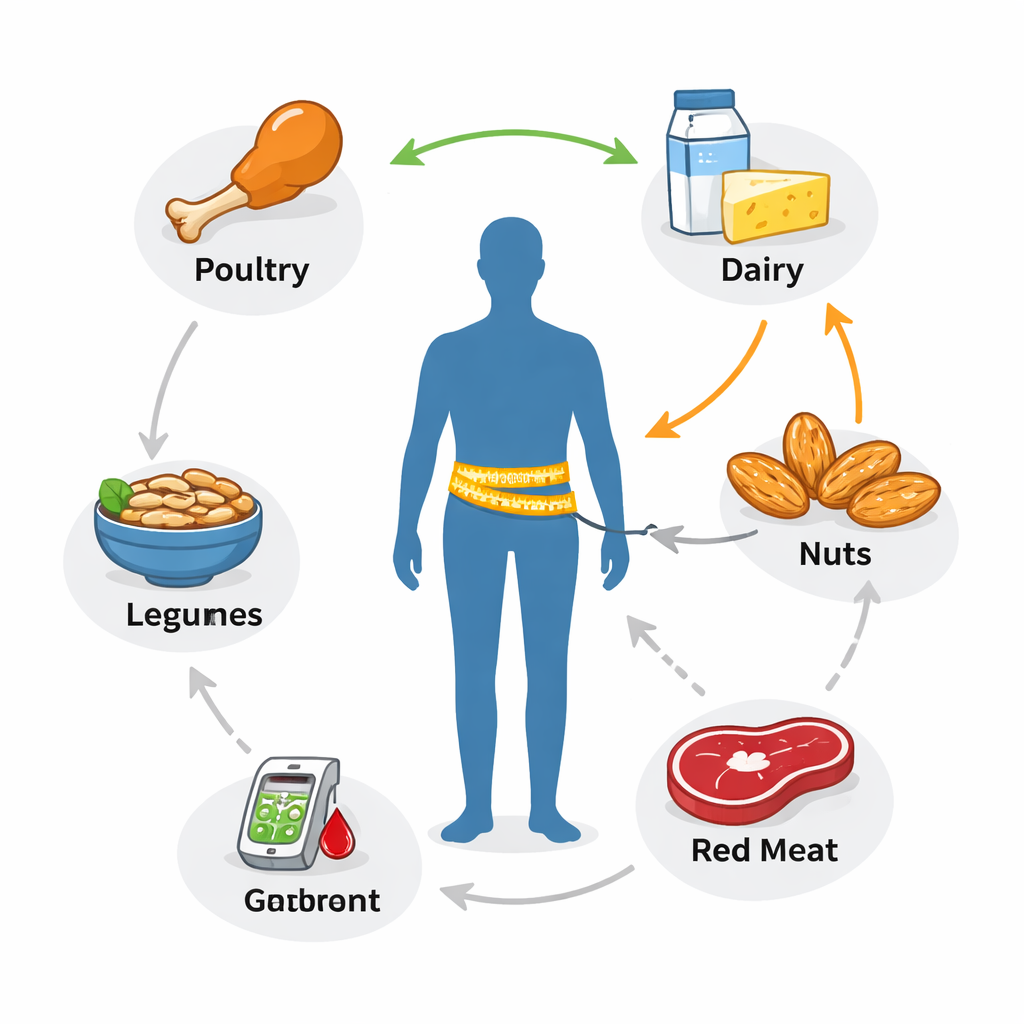
For readers wondering how to eat if they already have metabolic syndrome, this study suggests that the source of protein matters more than the sheer amount. Within this Iranian population, moderate poultry intake was consistently linked with a better chance of moving back toward metabolic health, whereas overall animal protein at moderate levels related to a lower chance of improvement. Other findings, especially those involving dairy and nuts, remain puzzling and may reflect who chose those foods rather than what the foods do by themselves. The takeaway is not to fear specific foods based on a single study, but to favor lean protein sources such as poultry within an overall healthy pattern rich in vegetables, whole grains, and minimally processed foods, while future research works out which protein choices best support long-term recovery.
Citation: Gaeini, Z., Mirzaei, S., Mirmiran, P. et al. Dietary protein intake in relation to metabolic syndrome reversion: findings from the Tehran lipid and glucose study. Sci Rep 16, 7022 (2026). https://doi.org/10.1038/s41598-026-38655-9
Keywords: metabolic syndrome, dietary protein, poultry intake, cardiometabolic health, Tehran Lipid and Glucose Study