Clear Sky Science · en
Yeast community associated with winter wheat leaves and its sensitivity to fungicides
Why the invisible life on wheat leaves matters
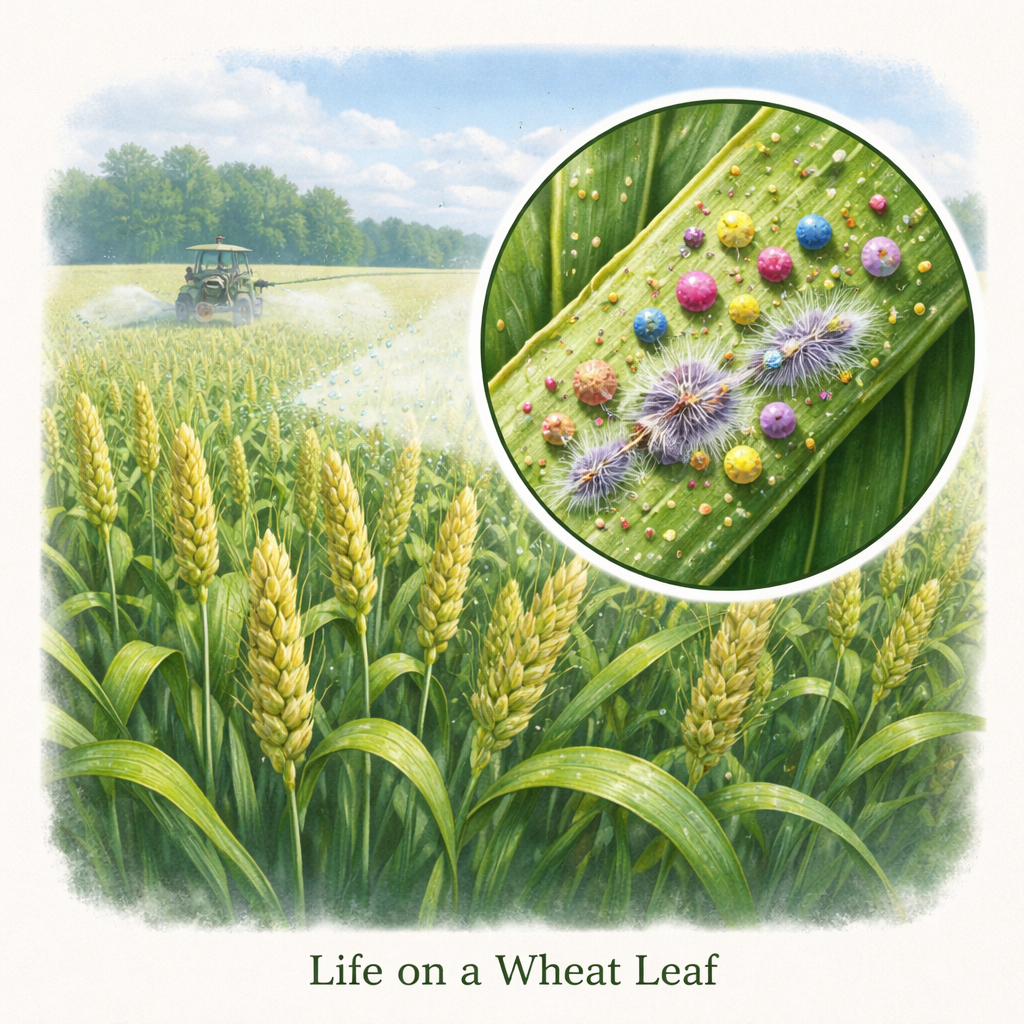
When we picture a field of wheat, we usually think about golden heads of grain, not the microscopic life clinging to every leaf. Yet these tiny residents—especially yeasts—can quietly help protect crops, influence how many grains are harvested, and even affect which chemicals end up in our food and environment. This study looks at who these yeast “tenants” are on winter wheat leaves in Estonia and how they cope with common fungicides sprayed to fight a major wheat disease.
A crowded world on each leaf
The researchers sampled leaves from winter wheat plants twice during the growing season and carefully grew and identified the yeasts they found. From just 24 leaf samples, they isolated 454 yeast strains representing 34 different species—a surprisingly rich community for such a thin strip of green. Almost all of these species (98%) belonged to a single large fungal group called Basidiomycota, which includes many harmless or beneficial yeasts. One species, Sporobolomyces roseus, dominated the leaf surfaces and turned up in nearly every sample, while close relatives from the genus Vishniacozyma and the species Rhodotorula babjevae were also frequent guests.
Communities that shift with the season
To see how stable this miniature ecosystem is, the team compared yeast communities from two wheat growth stages: an early phase when stems are elongating and a later phase when grains are filling. Overall diversity stayed high at both times, and the number of species per sample was fairly even. But the exact mix of species changed as the plants developed. Some yeasts, such as Dioszegia crocea, were more common early in the season, while others, including Filobasidium wieringae and Rhodotorula babjevae, became more abundant later as grain development progressed. These shifts suggest that changing conditions on the leaf—such as temperature, humidity, and nutrients leaking from plant cells—continually reshuffle which yeasts thrive.
Fungicides hit more than just the disease
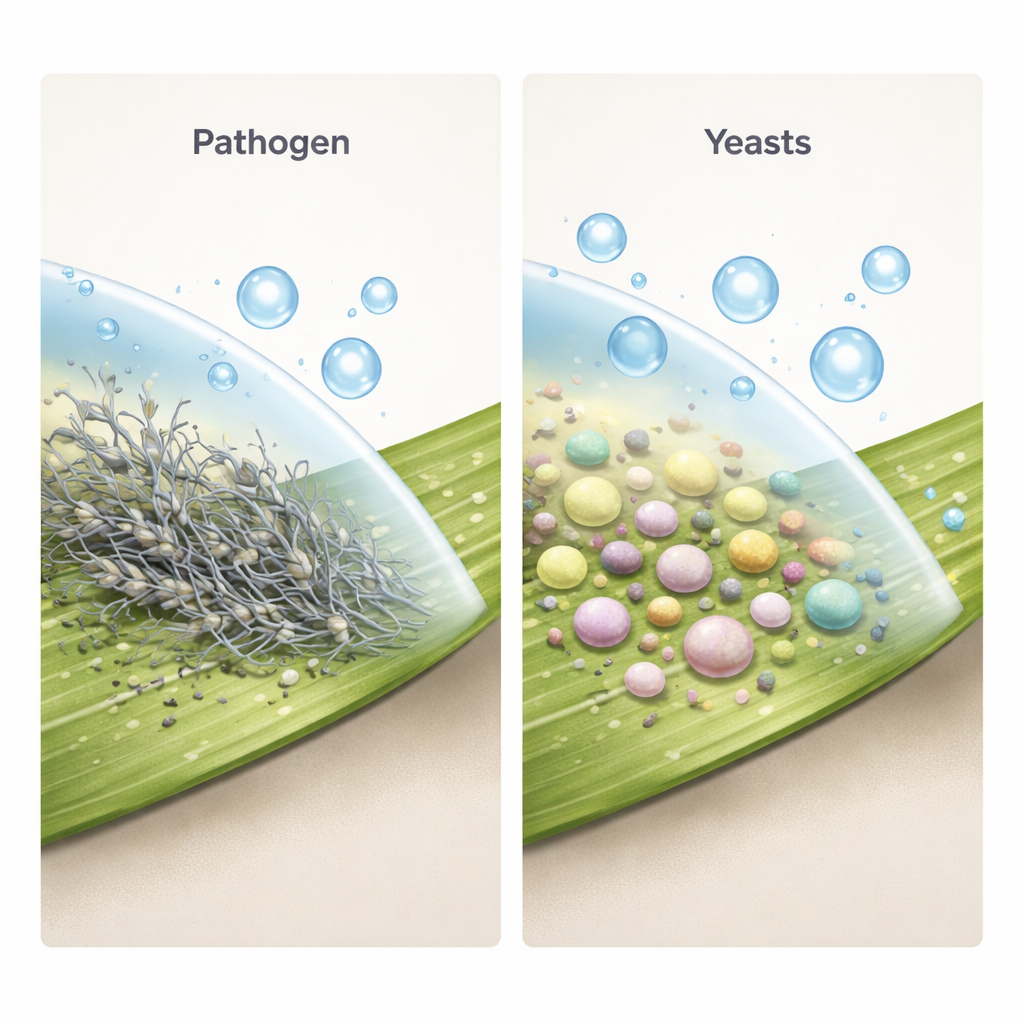
The same fields that host these diverse yeasts are regularly treated with fungicides to combat septoria tritici blotch, a disease caused by the fungus Zymoseptoria tritici that can slash yields by up to half in bad years. The scientists tested how sensitive both the leaf yeasts and local Z. tritici isolates were to key fungicides used on European wheat. Many of the products—including widely used azole fungicides and strobilurins—were more toxic to the harmless yeasts than to the target disease fungus. In other words, sprays designed to protect the crop often killed off the beneficial background community more efficiently than the pathogen they were meant to suppress. Some yeast strains were even resistant to several fungicides at once, hinting at built-in defense mechanisms or previous exposure that selected for hardier individuals.
A promising option with fewer side effects
Not all fungicides behaved the same way. Fenpicoxamid, a newer product that disrupts fungal respiration in a slightly different way from older chemicals, stood out. The disease-causing Z. tritici strains were highly sensitive to fenpicoxamid, while a large fraction of the non-target yeasts tolerated it relatively well. Species from genera such as Vishniacozyma, Filobasidium, and Sporobolomyces often survived doses that strongly inhibited the pathogen. This makes fenpicoxamid a potential tool for more selective disease control—still effective against the main threat but less damaging to the broader leaf microbiome.
Balancing crop protection and microbial allies
To a layperson, the main message is that fungicide sprays do not just hit the disease; they reshape the entire microscopic world living on wheat leaves. Some of these yeasts may help shield plants by occupying space and resources that pathogens would otherwise use. When broad-spectrum chemicals wipe them out, farmers may gain short-term disease control but lose these silent allies and risk encouraging resistant pathogens over time. By identifying which fungicides spare more of the helpful microbes—while still controlling the harmful ones—this study points toward smarter, more sustainable disease management that protects both the harvest and the hidden ecosystems supporting it.
Citation: Randmäe, H., Pütsepp, R., Põllumaa, L. et al. Yeast community associated with winter wheat leaves and its sensitivity to fungicides. Sci Rep 16, 7537 (2026). https://doi.org/10.1038/s41598-026-38648-8
Keywords: wheat leaf microbiome, yeast biodiversity, fungicide effects, septoria tritici blotch, sustainable crop protection