Clear Sky Science · en
Impact of seaweeds on tensile, thermal and viscoelasticity behavior of polybutylene adipate terephthalate-based composites
Turning Seaweed into Everyday Materials
Plastic is everywhere in modern life, but most of it lingers in the environment for decades. This study explores an unexpected helper from the ocean—red seaweed—to improve a biodegradable plastic and bring us a step closer to greener packaging and disposable products. By mixing powdered seaweed with a common compostable plastic, the researchers tested whether we can tune strength, stiffness, and heat resistance in a way that could work for real-world uses like food packaging and pharmaceutical items.
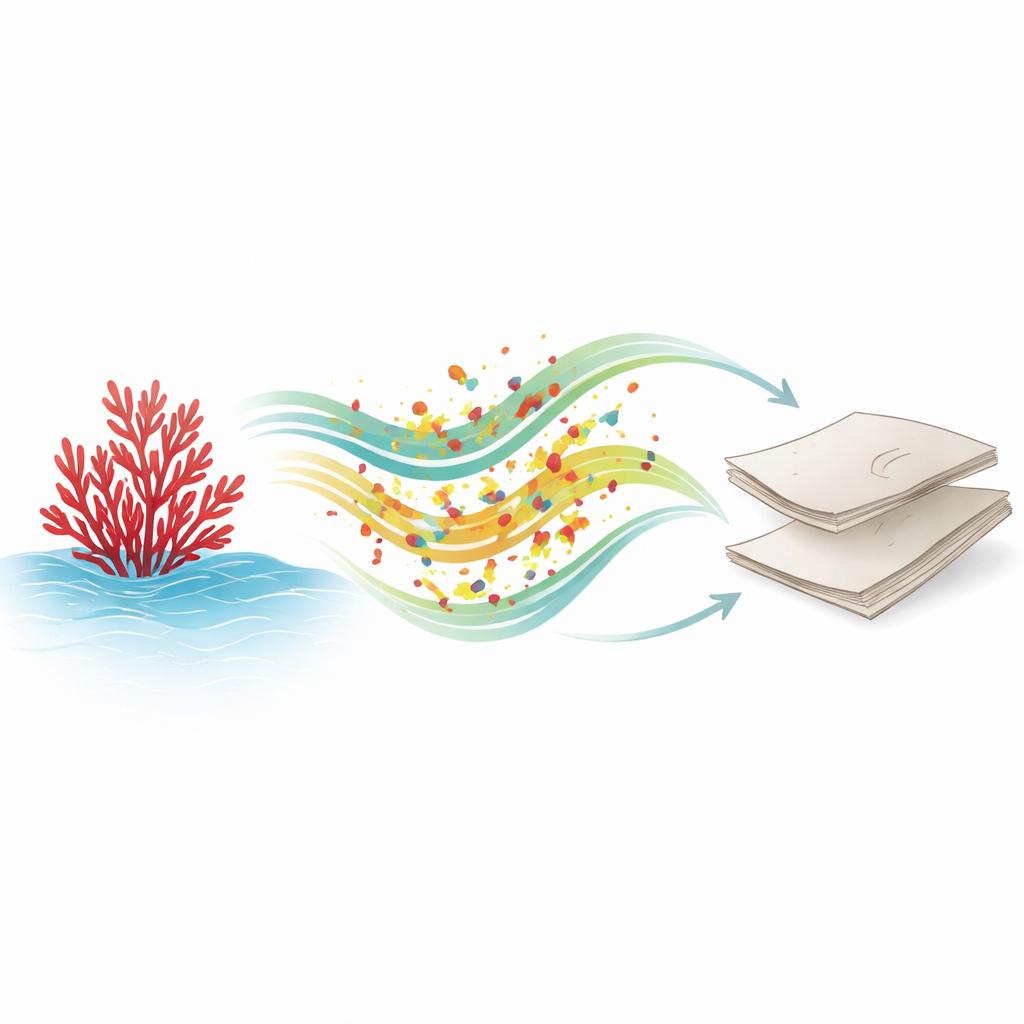
From Ocean Plants to Plastic Pellets
The researchers focused on a flexible biodegradable plastic called PBAT, already used commercially but limited by modest strength and heat durability. They combined it with finely ground particles of the red seaweed Kappaphycus alvarezii, a widely farmed species best known as a source of the thickening agent carrageenan in foods. After washing, drying, and milling the seaweed to a powder about the width of a human hair, they mixed it into molten PBAT at different loadings: 10, 20, 30, and 40 percent by weight. The blend was then pelletized and compression-molded into flat sheets and standardized test pieces, forming a family of seaweed–plastic composites.
How the New Material Bears Load
To see how this ocean-based filler changes mechanical behavior, the team pulled the specimens apart in a tensile testing machine. As more seaweed was added, the material’s tensile strength—how much pulling force it can withstand before breaking—dropped, with the highest seaweed content losing roughly half the strength of pure PBAT. This likely stems from tiny gaps and weak spots where rigid seaweed particles interrupt the smooth plastic network. At the same time, the material became markedly stiffer: the tensile modulus, a measure of how much it resists stretching, climbed sharply and was more than tripled at 40 percent seaweed. In other words, the composite evolved from a soft, stretchy plastic toward a firmer, more board-like material as seaweed loading increased.
How It Responds to Heat and Motion
Beyond simple pulling tests, the team probed how the composites behave under small, repeated deformations and rising temperature—conditions closer to real use. Dynamic mechanical analysis showed that adding seaweed generally raised the storage modulus, indicating greater rigidity across a broad temperature range, especially around 20 percent loading where stiffness at higher temperatures stood out. The viscous response and energy dissipation (tracked by loss modulus and a damping factor called tan delta) changed as well: seaweed particles restricted how freely PBAT chains could move, lowering the damping peak but not shifting the glass transition temperature very much. Thermal analysis offered more nuance. Thermogravimetric measurements revealed that pure PBAT decomposes in a single step at high temperature, whereas the composites break down in two stages—first the seaweed, then the plastic. Overall thermal stability of the blends is moderate, sitting between that of the individual ingredients, but the residues at high temperature increase with seaweed content due to mineral-rich char.
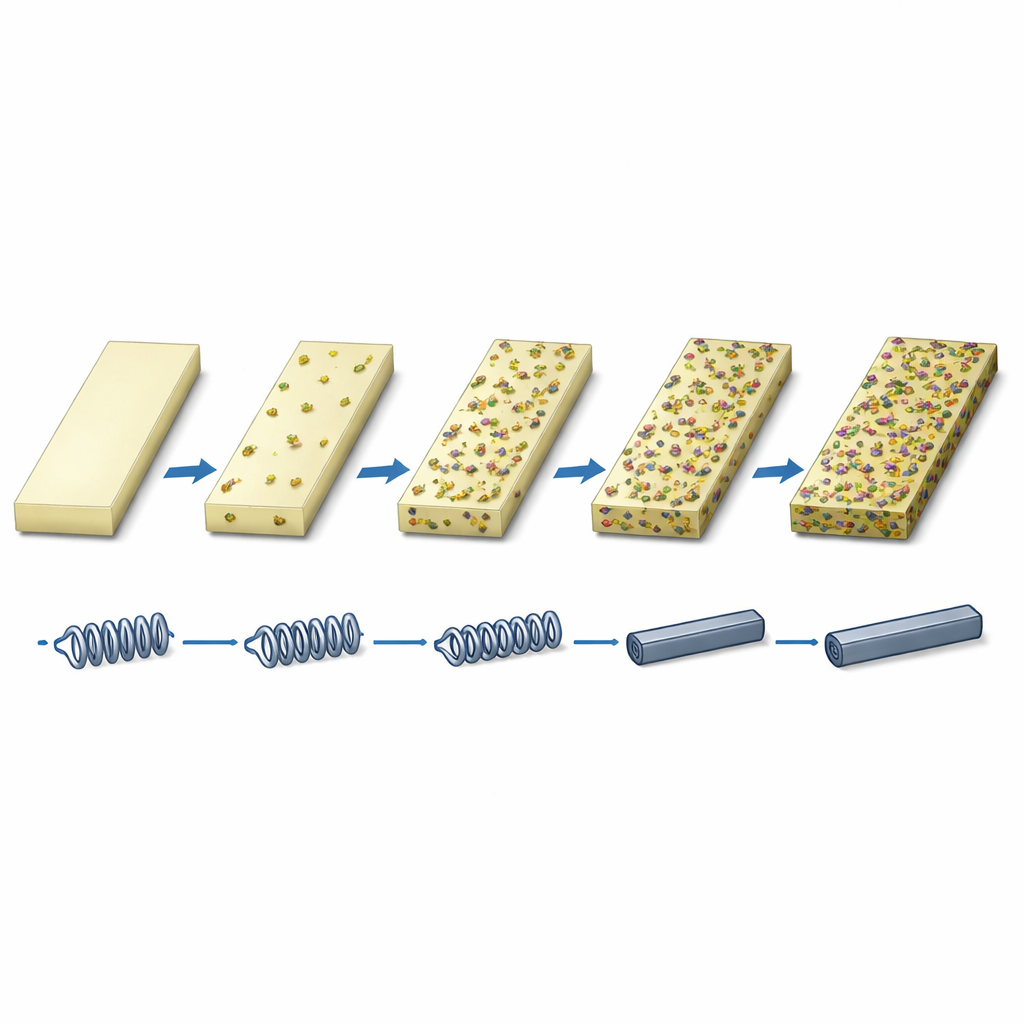
What the Microscopes Reveal
Microscope images of fractured surfaces helped connect performance to structure. Neat PBAT showed a smooth, homogeneous face. Once seaweed was added, the images revealed growing numbers of embedded particles and visible voids as loading rose. At lower contents the particles were fairly well dispersed, but at higher levels clusters and defects appeared, providing easy pathways for cracks to start and spread—consistent with the drop in strength. At the same time, the mere presence of these rigid inclusions helps explain why the modulus and high-temperature stiffness rose: the particles act like tiny reinforcing stones in a soft mortar, resisting bending even as they introduce weak points under severe loads.
Why This Matters for Greener Plastics
For a general reader, the key message is that seaweed can do more than thicken sauces; it can help engineer biodegradable plastics with tailored properties. In this work, mixing powdered red seaweed into PBAT produced composites that are stiffer and more thermally tunable, though somewhat less strong, than the original plastic. Such seaweed-filled materials could be suitable for eco-friendly packaging or disposable items where rigidity and biodegradability matter more than maximum strength. The results also show that performance depends heavily on how much seaweed is added and how well it is dispersed, pointing the way to future refinements in processing and formulation. Overall, the study demonstrates a promising route to upcycle marine biomass into practical, more sustainable materials.
Citation: Hamdan, M.H., Sarmin, S.N., Karim, Z. et al. Impact of seaweeds on tensile, thermal and viscoelasticity behavior of polybutylene adipate terephthalate-based composites. Sci Rep 16, 7985 (2026). https://doi.org/10.1038/s41598-026-38634-0
Keywords: biodegradable plastics, seaweed composites, eco-friendly packaging, PBAT materials, green materials