Clear Sky Science · en
Effect of heat generated root canal filling techniques on bond strength of NeoSealer Flo BC, AH Plus BC and BioRoot RCS to root dentin
Why the Way We Fill Root Canals Matters
Root canal treatment has a reputation for being uncomfortable, but behind the scenes dentists are refining it to be safer, longer lasting, and more predictable. A key step is how the cleaned root canal is sealed, because any tiny gaps can let bacteria sneak back in and cause pain or infection. This study looks at whether popular heat-based techniques for filling root canals weaken or preserve the bond between new-generation sealing materials and the inside of the tooth. The findings help dentists choose methods that give patients better, more durable results.
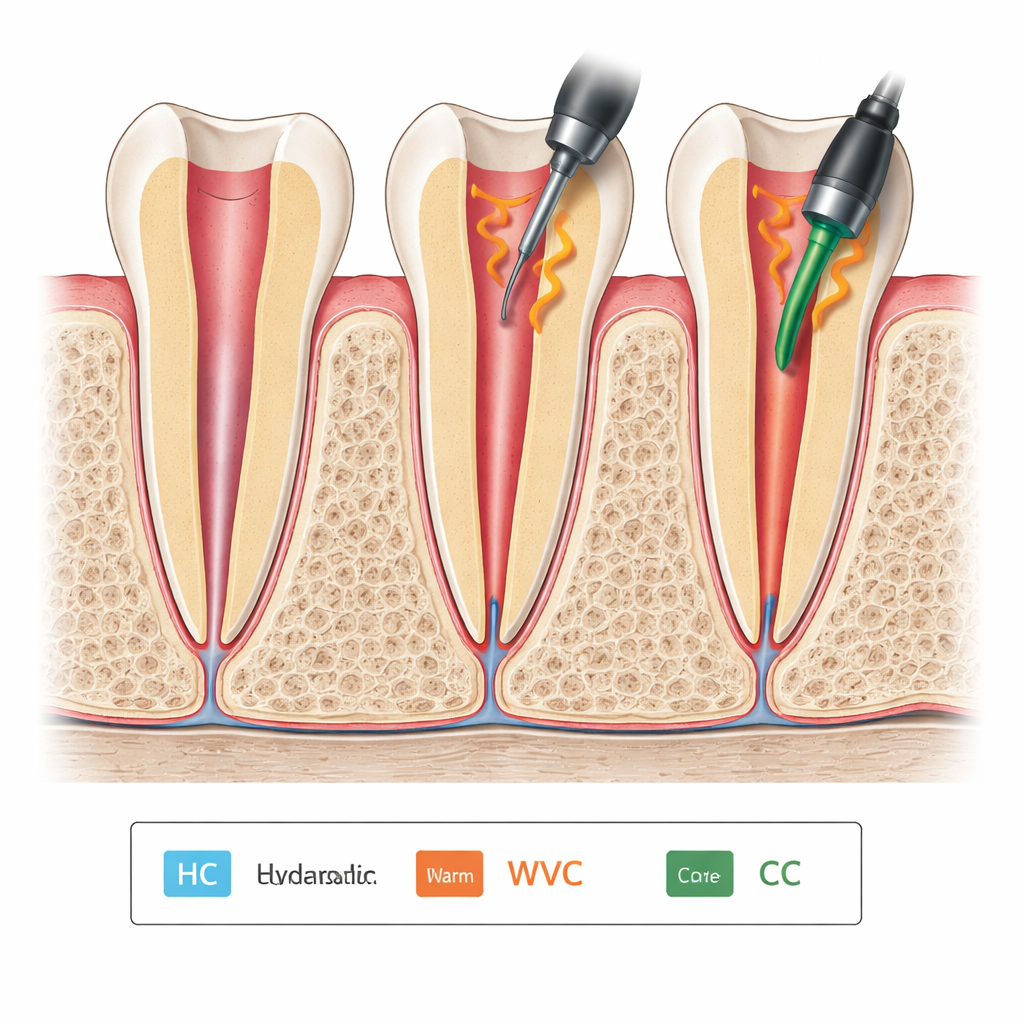
Sealing the Inside of a Tooth
After a dentist cleans out an infected root canal, the hollow space must be tightly filled so germs cannot return. This is done using a rubber-like material called gutta-percha together with a thin layer of sealer that sticks to the canal walls, much like grout between tiles. Different sealers are available: traditional resin-based products and newer “bioceramic” versions made from calcium silicates, which are designed to be more compatible with the body and to seal well even in a moist environment. At the same time, dentists can choose from several filling techniques, ranging from cooler, gentler methods to heat-based approaches that soften gutta-percha to help it flow into every nook and cranny.
Cool Versus Hot Techniques
This research compared three ways of filling root canals. The first, hydraulic condensation, uses a single cone of gutta-percha with no added heat. The second, warm vertical compaction, applies a heated instrument inside the canal to soften the material layer by layer. The third, called core-carrier, inserts a preheated, gutta-percha–coated carrier into the canal. The scientists tested four sealers: a classic resin-based sealer (AH Plus), a powder–liquid calcium silicate sealer (BioRoot RCS), and two premixed bioceramic sealers (AH Plus BC and NeoSealer Flo BC). Using 168 extracted human teeth, they filled the canals with different combinations of sealer and technique, then sliced the roots and pushed on the fillings from underneath to measure how strongly they were bonded to the dentin.
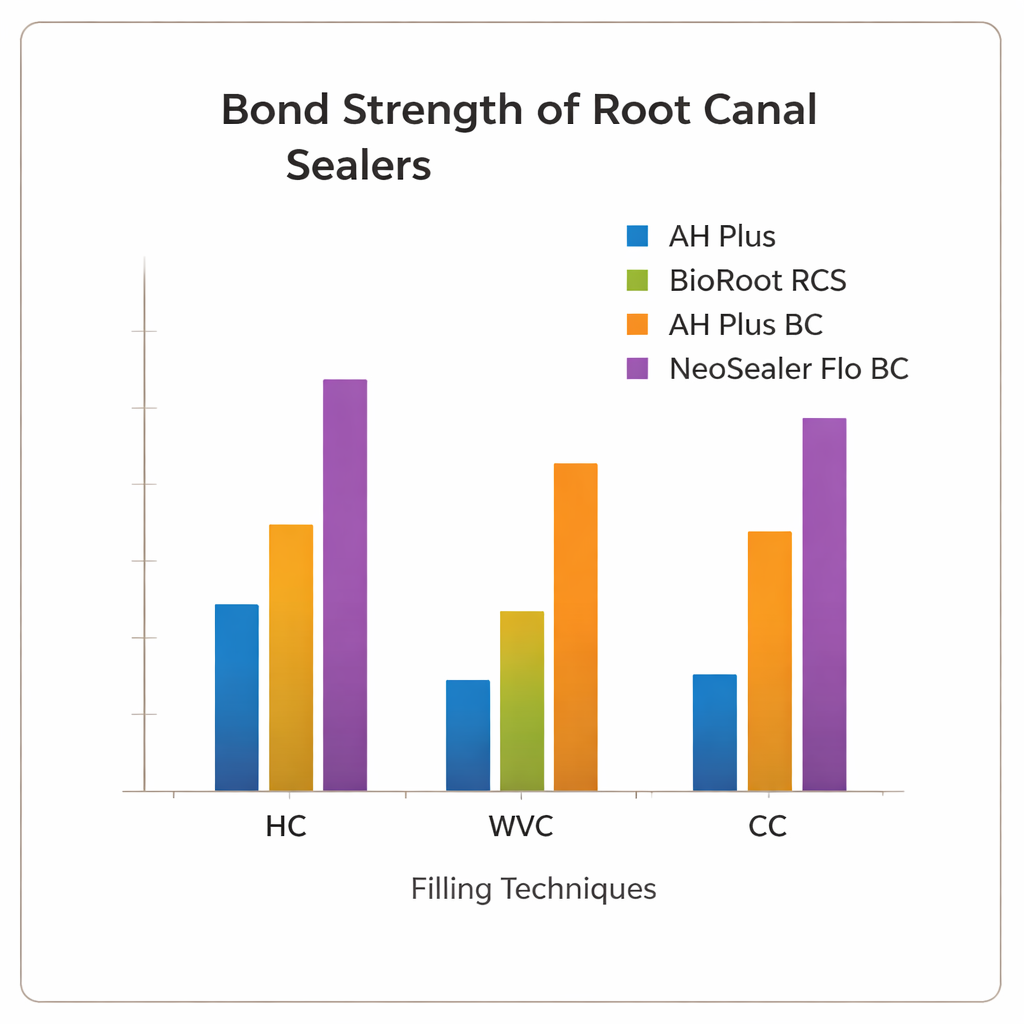
Which Sealers Hold On Best?
The strength of the bond depended on both the sealer and the technique. Across nearly all conditions, the two premixed bioceramic sealers—AH Plus BC and NeoSealer Flo BC—showed the highest bond strength to root dentin. In contrast, the traditional resin sealer and BioRoot RCS often bonded less strongly, especially when heat was involved. When warm vertical compaction or the core-carrier method was used, AH Plus and BioRoot RCS lost bond strength compared with the cooler hydraulic technique. By comparison, AH Plus BC and NeoSealer Flo BC kept their bond strength under warm vertical compaction and only dropped somewhat with the more intense core-carrier method.
How and Where the Seal Fails
The researchers also examined how the fillings failed when pushed out. With the classic resin sealer used in the cool technique, the sealer tended to peel cleanly away from the dentin, suggesting a weaker connection at the interface. Under heat-based techniques and with the bioceramic sealers, failures were more often “mixed,” meaning the break occurred partly inside the material and partly at the tooth surface. This pattern points to a better-integrated bond, where the sealer and dentin act more like a single unit rather than two layers simply stuck together. The premixed bioceramic sealers showed this more stable behavior across different techniques.
What This Means for Patients
Overall, the study suggests that not all sealers cope equally well with the heat used in modern root canal filling methods. Newer premixed bioceramic sealers, especially AH Plus BC and NeoSealer Flo BC, maintained stronger bonds to tooth structure when exposed to heat, while the traditional resin sealer and BioRoot RCS were more likely to weaken, particularly with warm techniques. For patients, this means that when dentists use heat-based methods—often chosen to better pack and adapt the filling—pairing them with heat-tolerant bioceramic sealers may provide a tighter, more durable seal and potentially a lower risk of future problems.
Citation: Özüdoğru, S., Ali, A., Bakhsh, A. et al. Effect of heat generated root canal filling techniques on bond strength of NeoSealer Flo BC, AH Plus BC and BioRoot RCS to root dentin. Sci Rep 16, 6374 (2026). https://doi.org/10.1038/s41598-026-38621-5
Keywords: root canal sealing, bioceramic sealer, dental bond strength, warm obturation, endodontic materials