Clear Sky Science · en
4-Octyl itaconate alleviates sepsis-induced liver injury by regulating ferroptosis via the OTUB1/TRAF3 axis
Why protecting the liver matters in severe infections
Sepsis, a life-threatening reaction to infection, often damages the liver—the body’s central hub for detoxification, metabolism, and immune control. When the liver falters during sepsis, the risk of death rises sharply, yet doctors currently have few targeted ways to shield it. This study explores whether a laboratory-made version of a natural immune metabolite, called 4-octyl itaconate, can protect the liver from sepsis-related injury in mice and uncovers how it works deep inside liver cells.
Damage in the septic liver
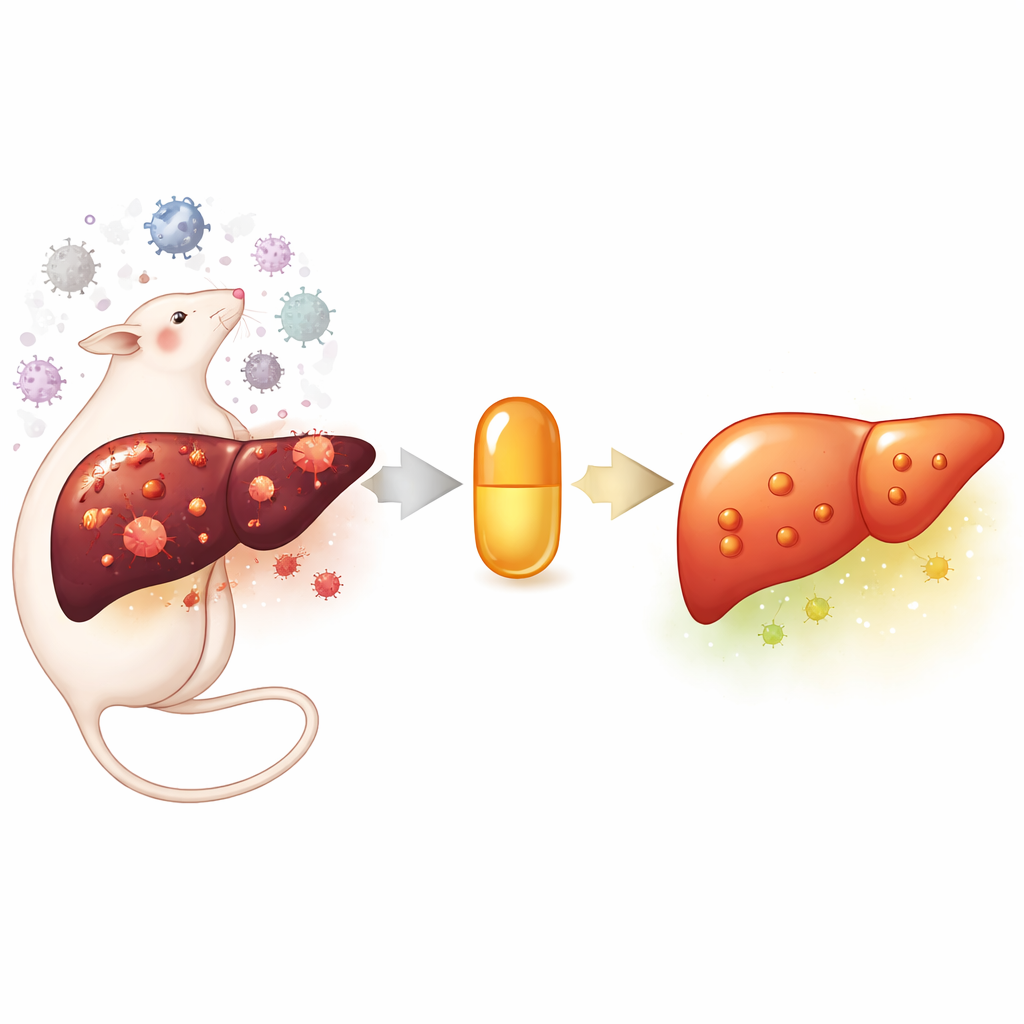
During sepsis, the liver is bombarded by inflammatory molecules, bursts of reactive oxygen (highly reactive chemicals that damage cells), and disturbances in iron handling. Together these stresses can trigger a particular form of cell death driven by iron and fat oxidation. In this state, liver cells fill with iron and toxic lipid byproducts, their structure breaks down, and blood tests show sharply elevated liver enzymes, signaling cell damage. The researchers reproduced this situation in mice using a standard surgical procedure that induces sepsis and carefully measured tissue damage, inflammation, oxidative stress, and iron-related changes.
A small molecule that calms inflammation and oxidative stress
The team treated some septic mice with 4-octyl itaconate before sepsis was triggered. Compared with untreated septic animals, the treated mice had livers that looked healthier under the microscope: overall architecture was better preserved, cell swelling was milder, and there was less inflammatory cell invasion. Blood levels of key liver enzymes dropped, indicating less cell death. At the same time, signals of inflammation—such as the messenger molecules interleukin-1β, interleukin-6, and tumor necrosis factor—were markedly reduced. Reactive oxygen levels in liver tissue also declined. These findings suggest that 4-octyl itaconate not only eases inflammation but also blunts the oxidative burst that helps drive liver failure in sepsis.
Keeping iron and cell death under control
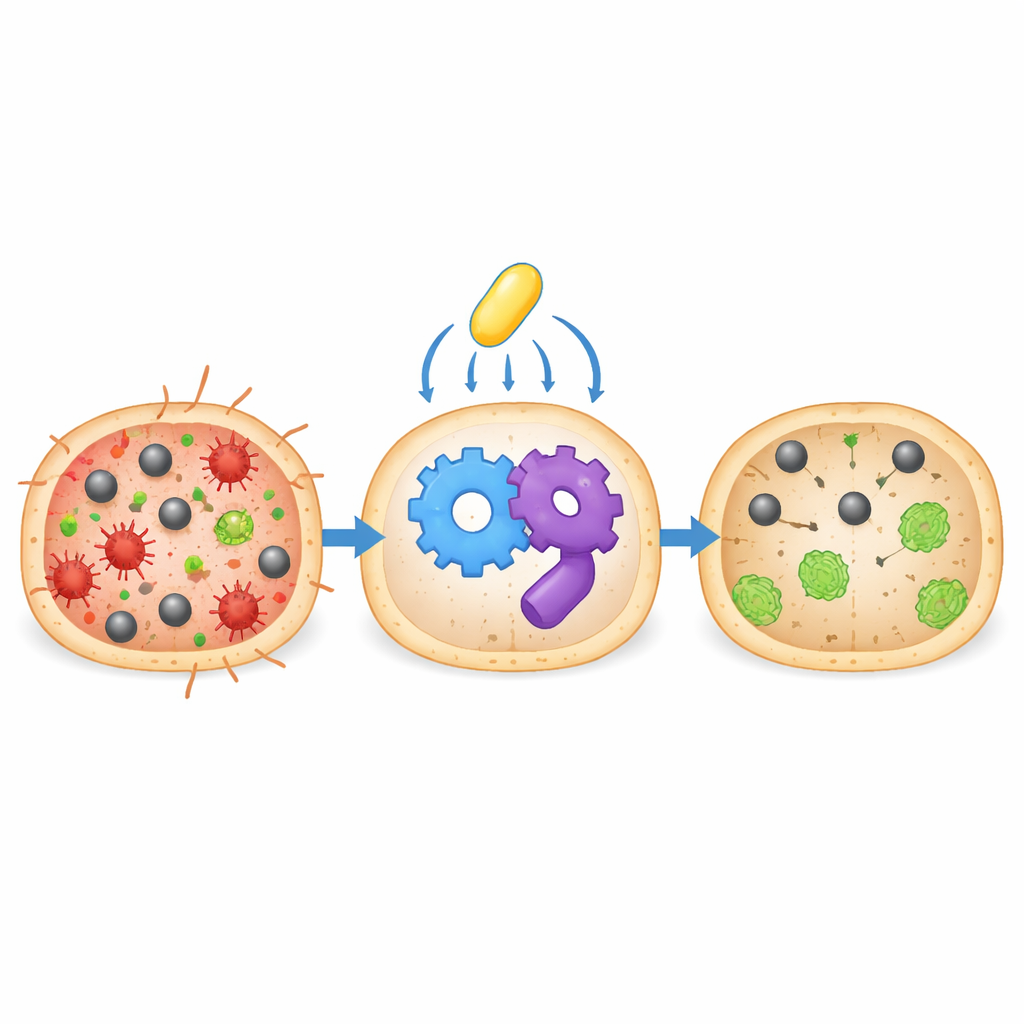
The study then investigated the iron- and oxidation-driven cell death pathway more closely. In untreated septic mice, genes involved in iron storage rose, while a key exporter dropped, and total iron within the liver climbed, pointing to unhealthy iron buildup. Proteins that normally protect cells from this iron-fueled damage—acting like internal shields that detoxify oxidized fats—were also depleted. When mice received 4-octyl itaconate, these trends reversed: iron-handling genes shifted toward a more balanced state, total liver iron fell, and the protective proteins rebounded. In both animal experiments and liver cell cultures, this pattern indicated that the compound was directly interfering with the iron-dependent death process rather than simply masking its consequences.
The hidden protein partners that make protection possible
To understand how 4-octyl itaconate stabilizes these protective proteins, the researchers focused on enzymes that tag and untag proteins for destruction. In septic livers, one such "rescue" enzyme, OTUB1, was markedly reduced. Treatment with 4-octyl itaconate selectively restored OTUB1, while leaving related enzymes unchanged. Blocking OTUB1 in mice erased nearly all of the compound’s benefits: liver structure worsened again, enzyme levels in the blood climbed, oxidative stress increased, and the protective proteins once more declined. Further work in cultured liver cells pointed to another player, TRAF3, a signaling adaptor protein better known from immune pathways. The data suggest that OTUB1 and TRAF3 act together as a kind of molecular safeguard that keeps the key protective proteins from being broken down during septic stress.
What this could mean for future treatments
Overall, the study shows that 4-octyl itaconate can significantly reduce liver damage caused by sepsis in mice by dialing down inflammation and by blocking a specific iron-driven form of cell death. It does so by boosting the enzyme OTUB1 and working through a partnership with TRAF3 to preserve proteins that shield cells from toxic oxidative damage. While much remains to be tested in humans, these findings spotlight a new molecular axis that could be targeted to protect the liver—and potentially other organs—in patients with severe infections.
Citation: Li, Z., Shang, L., Wu, S. et al. 4-Octyl itaconate alleviates sepsis-induced liver injury by regulating ferroptosis via the OTUB1/TRAF3 axis. Sci Rep 16, 8201 (2026). https://doi.org/10.1038/s41598-026-38612-6
Keywords: sepsis, liver injury, ferroptosis, itaconate, ubiquitination