Clear Sky Science · en
Sustainable hard water treatment using talc derived magnesium silicate zeolite evaluated by statistical physics and field validation in Siwa Oasis
Turning Rock into a Water Softener
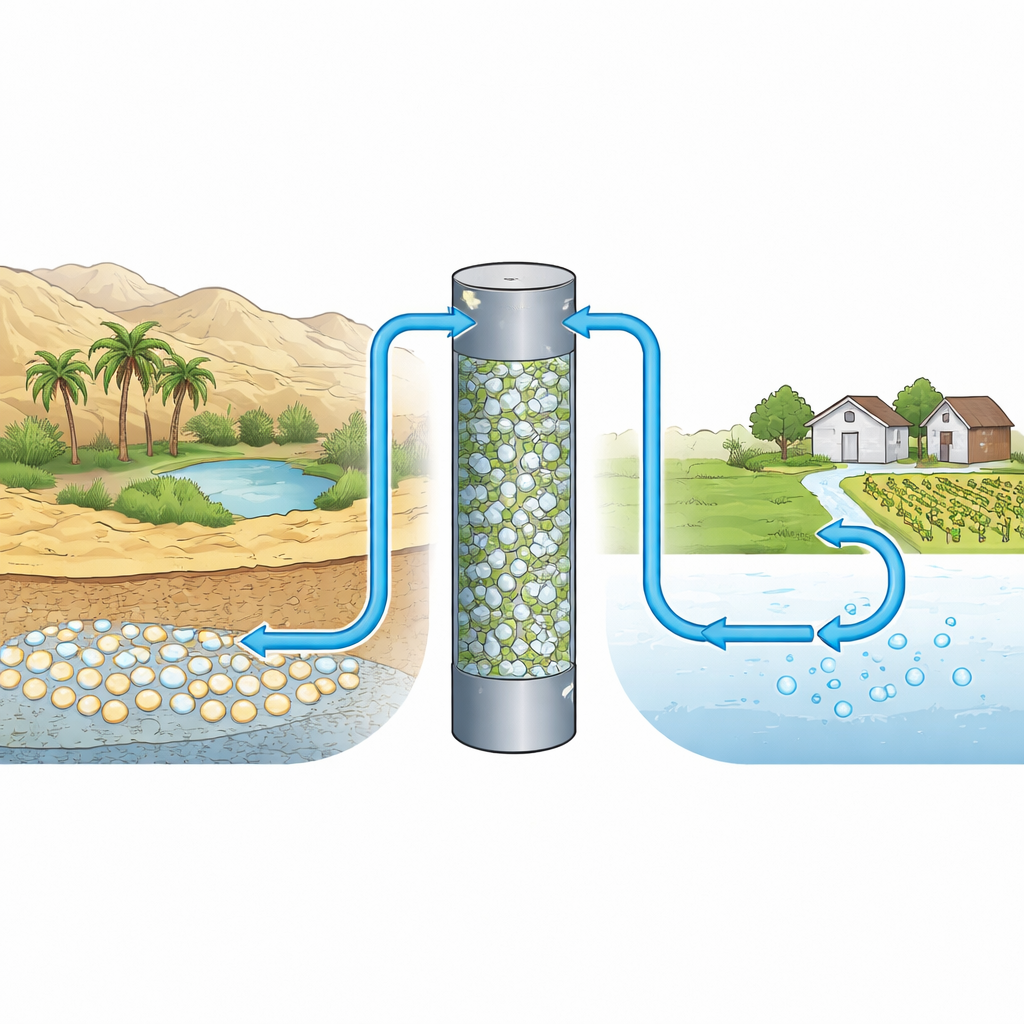
In Egypt’s remote Siwa Oasis, people depend on groundwater that is so “hard” it can damage pipes, crops, and even human health. This study describes how scientists transformed an inexpensive mineral—talc, the same soft rock used in baby powder—into a porous material that can pull the hardness out of water. By testing it in the lab and under realistic field conditions, they show a promising way for small, isolated communities to clean their water without expensive technology.
Why Hard Water Is a Hidden Problem
Hard water is rich in calcium and magnesium. In small amounts these minerals are beneficial, but in Siwa’s groundwater they are present at extreme levels—many times higher than international guidelines. Such water forms thick scale inside pipes and heaters, wasting energy and shortening equipment life. Over years of exposure, very high hardness has been linked in the scientific literature to digestive discomfort, kidney stones, and other health concerns. In an arid, farming-dependent oasis like Siwa, poor water quality also threatens soil structure and crop yields, making a practical softening solution more than just a convenience.
Building a Sponge from Talc
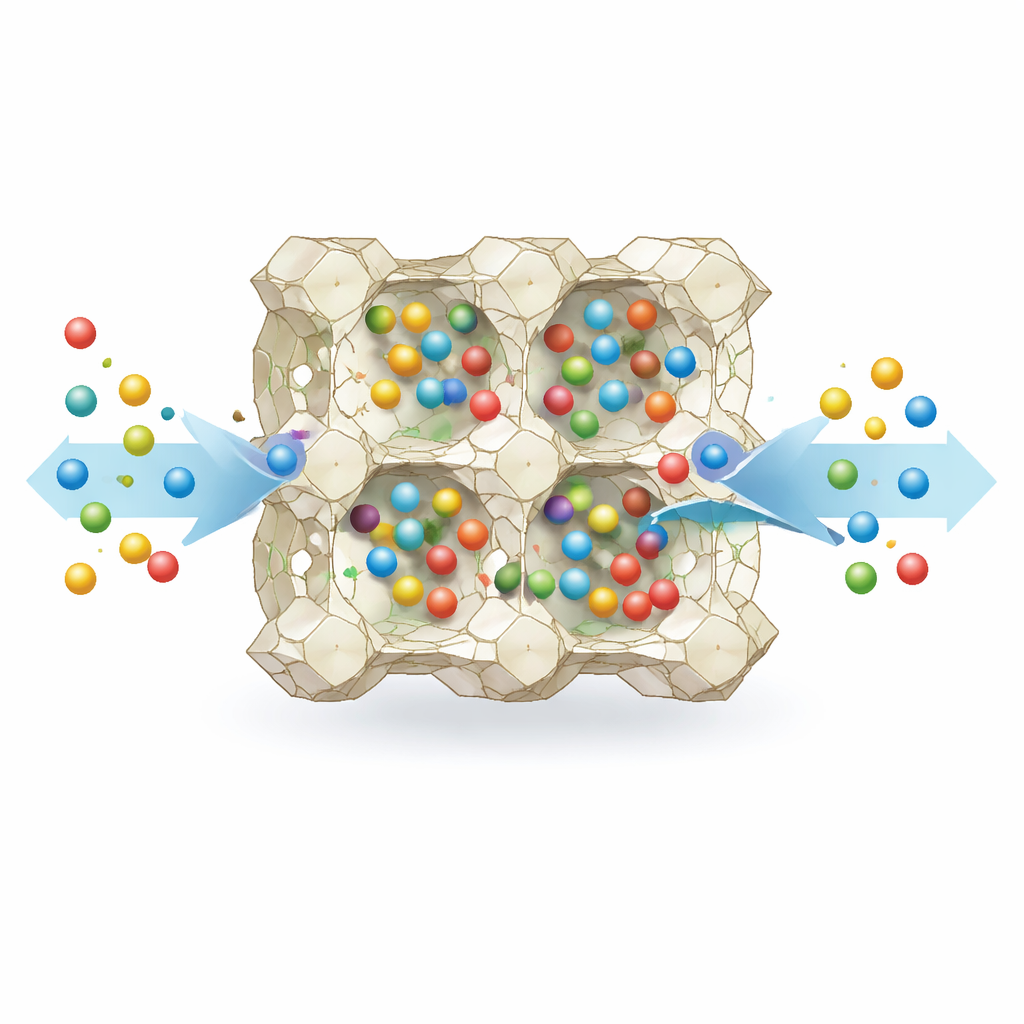
The research team started with talc mined in Egypt and used a heat-and-alkali treatment followed by a mild hydrothermal step to convert it into a magnesium-rich zeolite, which they call Mg.ZA. Under the microscope, this new material no longer looks like smooth talc flakes, but rather tiny cubes and grains riddled with pores. Measurements showed a large internal surface area and a network of fine channels where dissolved ions can be trapped. In essence, the process turns a common rock into a highly structured mineral sponge designed to grab calcium and magnesium from water while remaining stable and non-toxic.
Testing Softening Power in the Lab
To see how well Mg.ZA works, the scientists first ran batch tests in which small amounts of the material were shaken with hard water in flasks. They varied acidity, contact time, starting mineral concentration, and the dose of Mg.ZA. At near‑neutral pH, similar to typical drinking water, the material showed its best performance. Within a few hours it captured large amounts of calcium and magnesium, and its capacity increased as the water became more mineral‑rich. Careful data analysis indicated that the ions mainly attach through relatively weak, reversible forces, forming a thin layer on the mineral surface and within its pores. This is important because it means the material can later be cleaned and reused rather than thrown away.
From Bench to Flowing Columns
Because real water systems rarely sit in flasks, the team built small vertical columns filled with Mg.ZA and pumped water through them, mimicking how a household or village unit might operate. With synthetic hard water, thicker beds of the material treated more water for longer times before “breakthrough,” when hardness began to appear again at the outlet. The columns reached very high working capacities, showing that the porous grains were being used efficiently. Crucially, the researchers then switched to genuine Siwa groundwater, diluted to realistic treatment levels. Even in this more complicated mixture, where other dissolved salts compete, the columns steadily reduced calcium and magnesium to near‑acceptable limits over several treatment cycles.
Making the Material Last
Another key question was whether Mg.ZA could be regenerated. In separate tests, the scientists repeatedly loaded the material with calcium and magnesium and then rinsed it with a simple salt solution to strip the ions off. After five cycles, the material still retained more than 85 percent of its original capacity for both minerals. This durability, combined with the relatively gentle forces holding the ions, suggests that Mg.ZA could be run, rinsed, and reused many times without losing effectiveness, making ongoing operating costs much lower.
What This Means for Thirsty Regions
For non-specialists, the main message is straightforward: a low-cost mineral that is abundant in nature can be engineered into a powerful water softener suitable for remote, dry regions. In Siwa‑like settings, where centralized treatment plants and complex membranes are difficult to maintain, columns packed with talc‑derived zeolite could provide reliable, regenerable hard‑water treatment using modest equipment and common salt for cleaning. While further work is needed to scale up the process and fine‑tune energy use and long‑term robustness, this study shows that smart mineral design, guided by detailed physics and field testing, can turn local rocks into practical tools for safer water.
Citation: ELsayed, H.A., Eid, M.H., Farooq, U. et al. Sustainable hard water treatment using talc derived magnesium silicate zeolite evaluated by statistical physics and field validation in Siwa Oasis. Sci Rep 16, 8083 (2026). https://doi.org/10.1038/s41598-026-38611-7
Keywords: hard water, groundwater, zeolite, water softening, Siwa Oasis