Clear Sky Science · en
Embryonic nano lauric acid delivery modulates lipid metabolism, oxidative balance, and gut morphogenesis in broiler chicks
Feeding Chicks Before They Hatch
Poultry farmers are always looking for ways to raise healthier, faster-growing birds while using fewer antibiotics and feed additives. This study asks a striking question: what if you could "feed" a chicken while it is still inside the egg, nudging its metabolism and gut to develop in a more favorable way from day one? The researchers tested a nano-sized form of lauric acid—an oil component found in coconut and palm kernel oils—delivered directly into eggs to see whether this early boost could shape the health of broiler chicks right at hatch.
What the Scientists Put Inside the Eggs
To explore this idea, the team worked with 400 fertile broiler eggs and used an established in-egg (in ovo) injection technique. On day 12 of incubation, they gently injected some eggs with plain sterile water, and others with water containing tiny particles of lauric acid at two doses: a lower dose (2.5 milligrams per egg) and a higher dose (5 milligrams per egg). These nano-sized fat particles are designed to be easily absorbed and carried through the embryo’s tissues. After hatching, the researchers measured how many chicks emerged, how much they weighed, the fats circulating in their blood, the balance between damaging oxidants and protective antioxidants in the liver, activity of key growth-related genes, and the microscopic structure of the intestine. 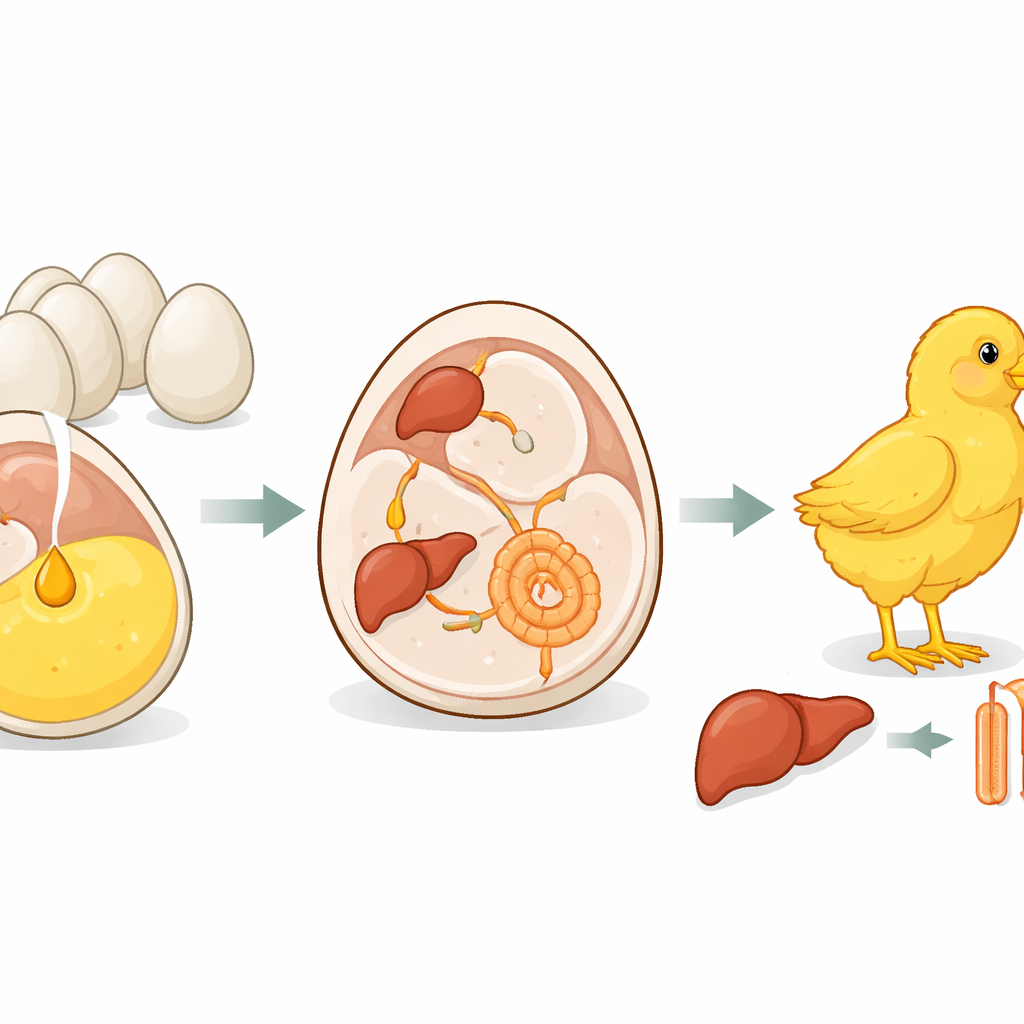
Finding the Sweet Spot for Safety and Growth
The results showed that dose mattered. Eggs given the lower dose of nano lauric acid hatched almost as well as untreated eggs, and the chicks were slightly heavier, with a greater proportion of their egg weight converted into chick body weight. In contrast, the higher dose caused a clear drop in hatchability and produced chicks that were lighter and less efficient in using the egg’s reserves, suggesting that too much of this otherwise beneficial fat can strain the embryo. These observations point to a narrow window where the compound can help without harming, an important consideration if such an approach were to be used in commercial hatcheries.
Healthier Blood Fats and Stronger Internal Defenses
Chicks from eggs that received the lower nano lauric acid dose had more favorable blood fat profiles at hatch. Their levels of triglycerides, total cholesterol, and the “bad” carriers of fat (low-density and very-low-density particles) were all reduced, while the “good” carrier (high-density particles) stayed unchanged. At the same time, their livers showed less chemical evidence of fat damage caused by oxidation and had higher stores of glutathione, a major natural antioxidant. On the genetic level, the lower dose strongly switched on protective genes linked to the body’s master antioxidant controller and to mitochondrial enzymes that neutralize dangerous oxygen byproducts. These changes suggest that a single well-timed injection can prime the chick’s inner chemistry to burn fats more cleanly and to better withstand oxidative stress right from birth. 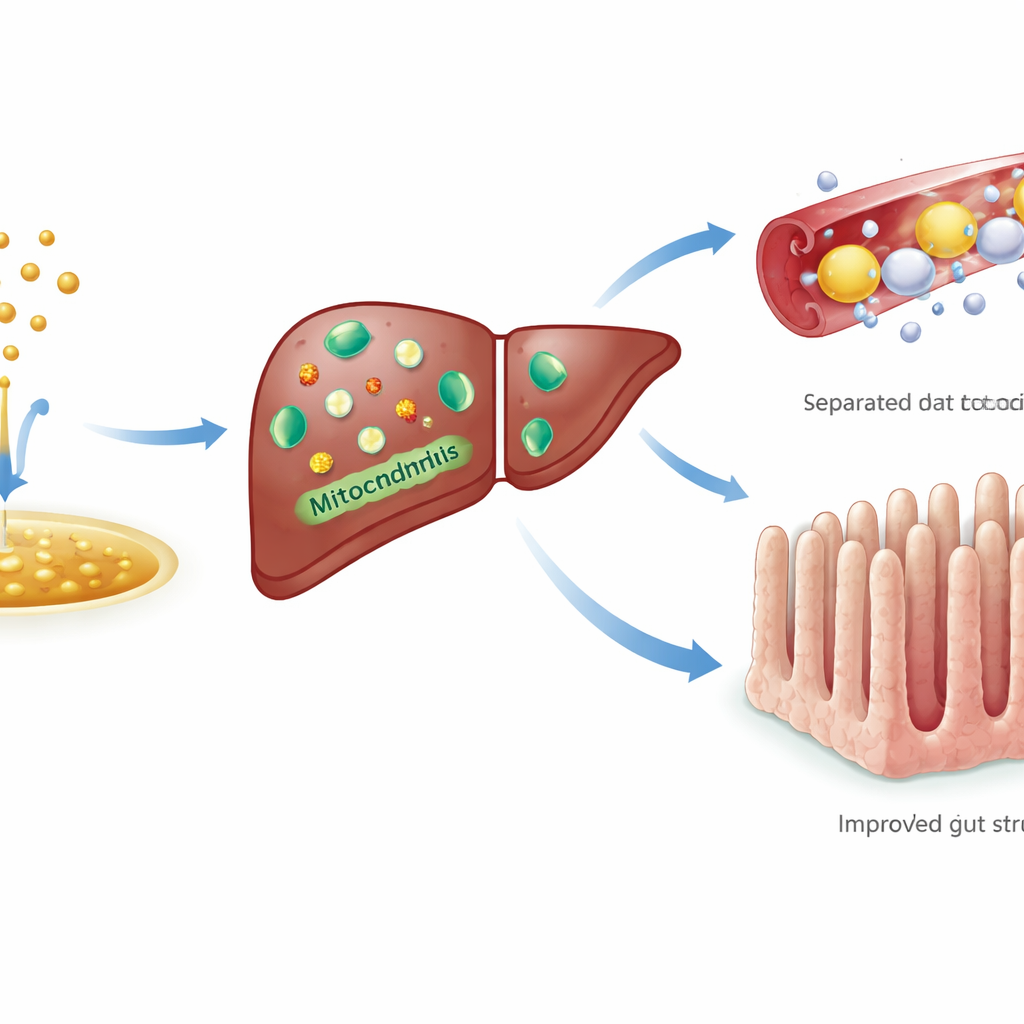
Jump-Starting Growth Signals and Gut Structure
Beyond immediate metabolism, the same lower dose also boosted the liver’s production of two powerful growth messengers known as insulin-like growth factors. These molecules help coordinate cell growth, tissue building, and energy use. Their activity in treated chicks was several times higher than in controls, hinting that the embryos’ growth machinery had been set to a more anabolic, or building, mode. Under the microscope, the small intestine of these chicks showed taller finger-like projections and deeper pockets at their base, structures that expand the absorbing surface. A larger, well-developed intestinal lining at hatch means the chicks are better prepared to digest feed and take up nutrients once they start eating on their own.
What This Could Mean for Future Poultry
Put together, the study shows that carefully dosed nano lauric acid, given before the chick even breaks the shell, can reshape early metabolism: improving blood fat handling, strengthening natural antioxidant shields, enhancing growth signals, and advancing gut development. However, pushing the dose too high flips these benefits into problems, lowering hatch rates and hinting at metabolic stress. For non-specialists, the takeaway is that “programming” an animal’s health can begin long before birth, using precise nutritional cues delivered at critical moments. If confirmed in longer-term trials that follow birds to market age, this approach could help farmers raise robust chickens with better feed use and fewer health issues, all starting from a microscopic nudge inside the egg.
Citation: Soliman, M.M., El-Shater, S.N., Yassin, A.M. et al. Embryonic nano lauric acid delivery modulates lipid metabolism, oxidative balance, and gut morphogenesis in broiler chicks. Sci Rep 16, 8157 (2026). https://doi.org/10.1038/s41598-026-38610-8
Keywords: in ovo nutrition, nano lauric acid, broiler chick development, antioxidant defense, gut morphology