Clear Sky Science · en
The emergence and spread of a novel sequence type of Corynebacterium diphtheriae in Vietnam
Why this story matters
Diphtheria is an old disease that many people assume has been defeated by vaccines. Yet in recent years it has reappeared in several parts of the world, including Vietnam. This study shows how scientists used modern DNA tools to track a new form of the diphtheria bacterium, understand how it spreads, and check whether our main antibiotics and vaccines are still doing their job. The findings reveal both a quietly changing germ and worrying gaps in everyday vaccination.
A new troublemaker appears
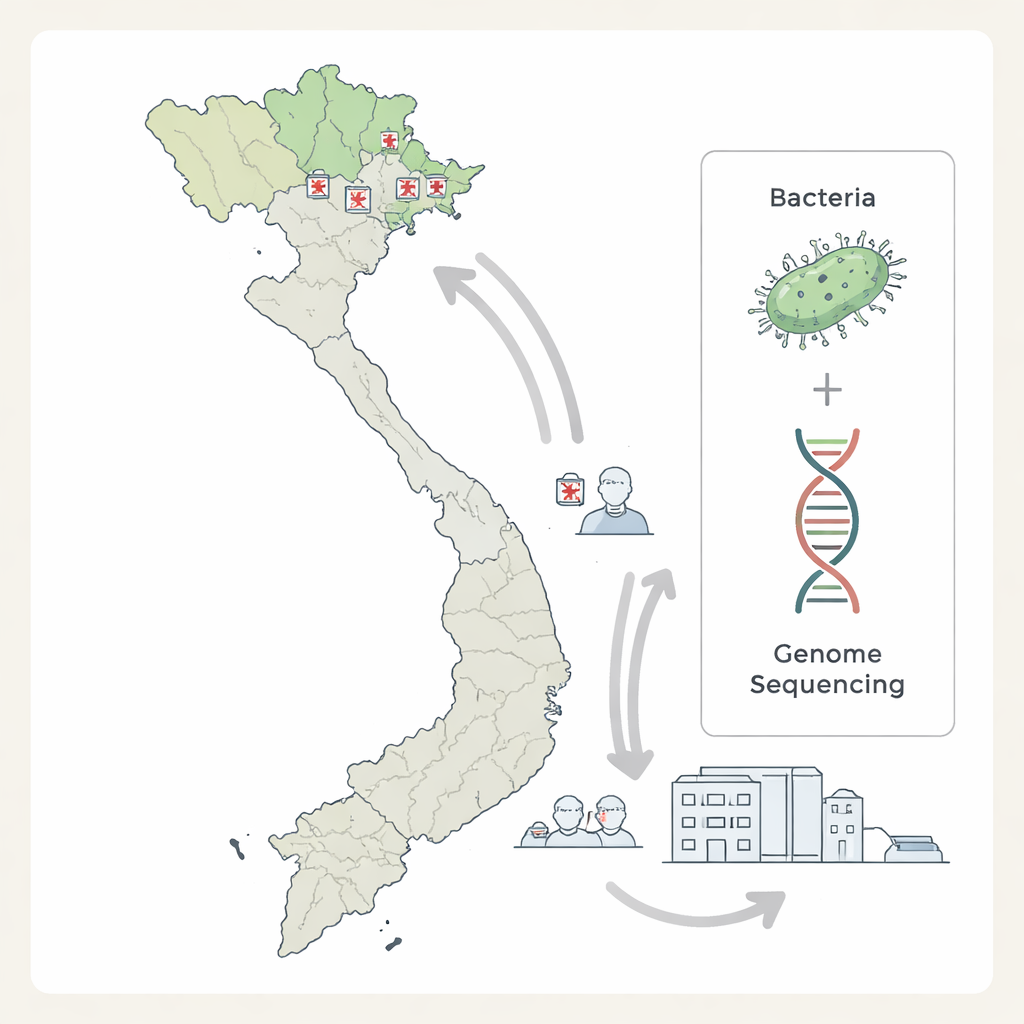
Researchers in Vietnam and Japan examined 21 samples of the diphtheria bacterium collected from patients between 2013 and 2024, most from two recent outbreaks in the country’s northern mountains. By reading the full genetic code of each sample, they discovered that 19 of them belonged to a never-before-seen genetic family, which they named ST1040. The remaining two belonged to another known family, called ST244, that has also been found in Europe. All of these bacteria carried the gene for diphtheria toxin, the poison that can damage the heart and nerves and make the infection life threatening.
Following family trees of germs
To see where the new ST1040 family came from, the team compared its DNA to diphtheria bacteria from earlier Vietnamese outbreaks and from other countries. The ST1040 samples were nearly identical to one another, differing by only a handful of tiny DNA changes, which signals a very recent, rapid spread of a single clone. Their closest relatives were strains from China and India, suggesting that this new family arose within the wider East and Southeast Asian region. In contrast, the ST244 samples from Vietnam were closely related to a strain later found in Austria, hinting that this older family may move more easily across continents or share a common global source.
What the genes say about drugs and disease
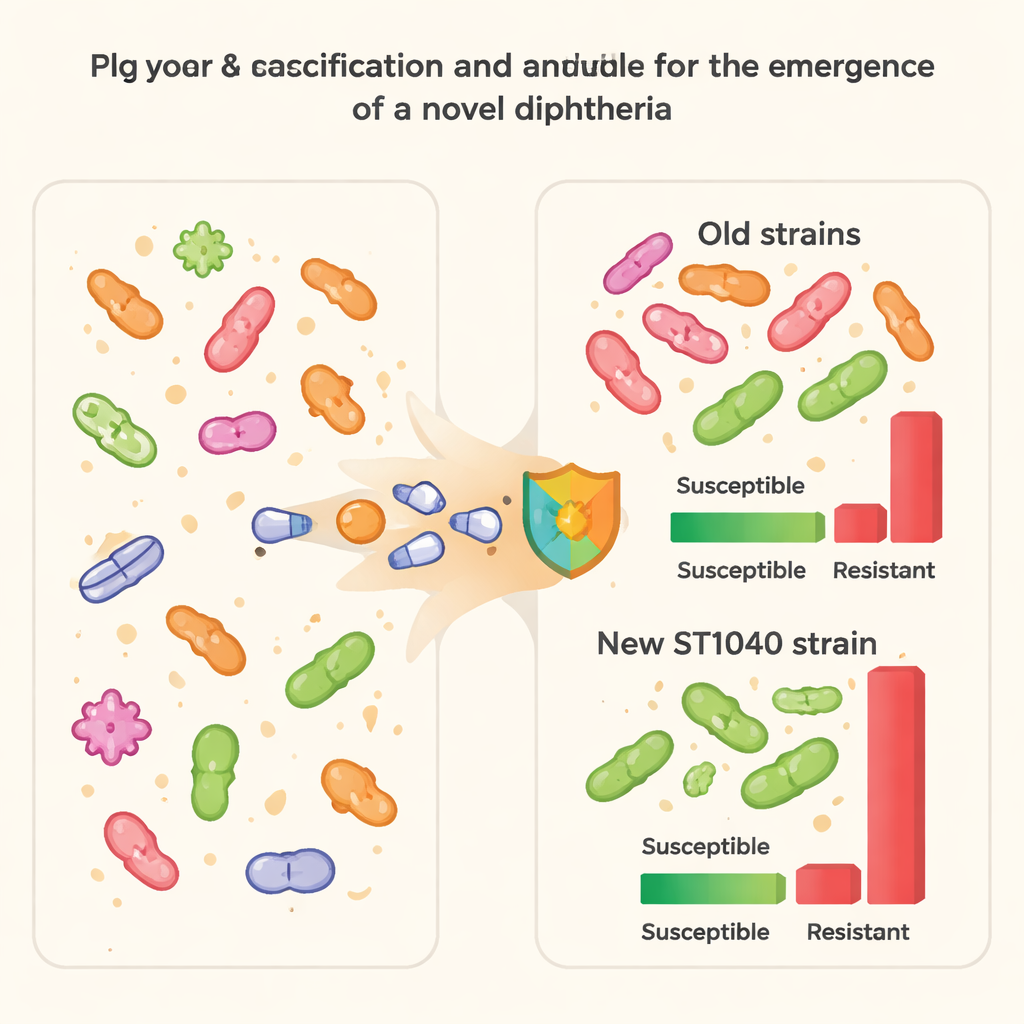
The scientists also searched the bacterial genomes for known resistance genes that can blunt the power of antibiotics. Encouragingly, none of the 21 samples showed resistance to penicillin or erythromycin, the main drugs used to treat diphtheria. However, over three quarters carried genes that make the bacteria resistant to tetracycline and to a common drug mix called trimethoprim/sulfamethoxazole. Many ST1040 samples also carried changes in a gene linked to resistance against rifampicin, another important antibiotic, although this could not be confirmed in the lab. All of the bacteria also had genetic tools that help them latch onto cells and capture iron from the body, underlining that they are well equipped to cause serious throat infections.
Cracks in the vaccination shield
Because vaccines against diphtheria target the toxin, not the entire bacterium, the team also looked at the patients’ vaccination records. For the 15 people with usable data, none had completed the full four-dose childhood schedule before becoming ill. In 12 cases, the recorded vaccine doses were actually given after the infection was detected, as part of an emergency response. Several patients fell sick within days or weeks of these “catch-up” shots—too soon for the body to build up protection. Taken together, the genetic and vaccination data suggest that the outbreak was driven less by a supercharged new germ and more by gaps in routine immunization, especially in adolescents and young adults.
What this means for everyday health
To a lay reader, the key message is that diphtheria is not a disease of the past. A new, closely related family of the bacterium has taken hold in Vietnam, and while our main treatments still work, some backup drugs may no longer be reliable. Most of the affected patients were not fully vaccinated before they were exposed. The study’s authors argue that simply reacting to outbreaks with emergency shots is not enough. Instead, countries need strong routine vaccination programs, including booster doses for teenagers and young adults, combined with ongoing genetic monitoring of the bacteria. That combination, they suggest, offers the best chance of preventing the next wave of diphtheria cases.
Citation: Hoang, L.H., Hoa, L.M., Hai, P.T. et al. The emergence and spread of a novel sequence type of Corynebacterium diphtheriae in Vietnam. Sci Rep 16, 7576 (2026). https://doi.org/10.1038/s41598-026-38608-2
Keywords: diphtheria, genomic surveillance, antibiotic resistance, vaccination gaps, Vietnam outbreaks