Clear Sky Science · en
Sulfuric acid corrosion resistance of recycled aggregate concrete containing magnetized water
Why This Concrete Story Matters
Most of the world’s buildings, bridges, and roads are made of concrete, and our appetite for it is enormous. That demand chews through natural stone and sand and leaves behind mountains of demolition waste. At the same time, many structures are attacked by acid rain, which slowly eats away at concrete, shortening the life of infrastructure. This study explores a promising way to turn waste concrete into a tougher, greener material by using recycled aggregates together with “magnetized” water and ultra-fine silica particles, so concrete can better survive in harsh, acidic environments.
The Problem With Today’s Concrete
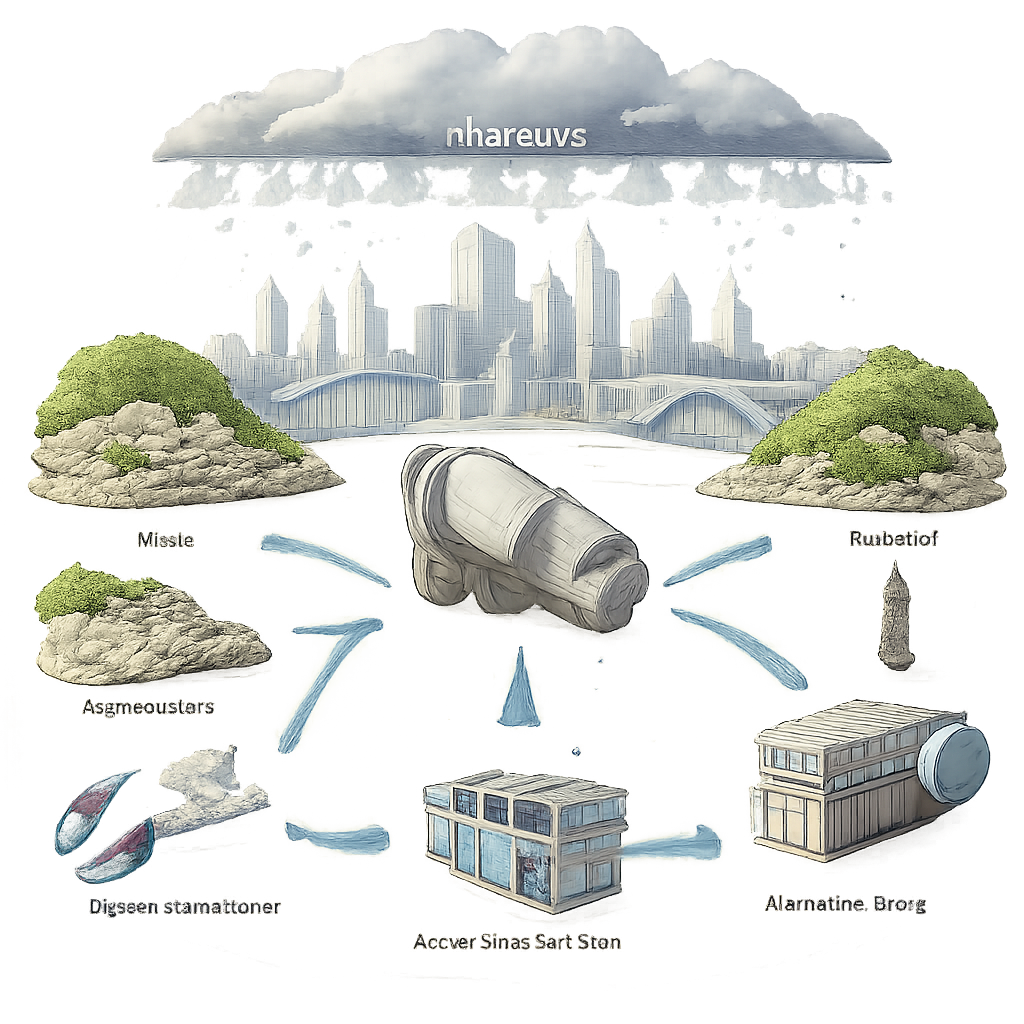
Traditional concrete relies heavily on fresh sand and gravel dug from rivers and quarries. This depletes natural resources, damages ecosystems, and generates large carbon emissions. Recycled aggregate concrete (RAC) offers a more sustainable option by crushing old concrete and using it again as stone. But RAC usually performs worse than standard concrete: it is more porous, weaker, and less durable, especially in acid rain. Acidic water seeps into the pores, reacts with cement, and gradually dissolves the material, causing strength loss, cracking, and surface damage. Engineers therefore face a dilemma: how to recycle more concrete without sacrificing safety and service life.
New Ingredients: Magnetized Water and Nano-Silica
The researchers tested two complementary ideas to upgrade RAC. First, they used magnetized water, produced by circulating tap water through a strong magnetic field before mixing it into concrete. Earlier work suggests this treatment subtly changes how water molecules and dissolved ions are arranged, helping cement react more completely and packing the hardened paste more tightly. Second, they added nano-silica, an extremely fine powder of silicon dioxide that can slip into tiny gaps in the cement paste and chemically react to form extra binding gel. Together, these two additions were expected to make the concrete denser and less porous, especially in the weak boundary zone around the recycled stones, which is normally the Achilles’ heel of RAC.
How the Study Was Carried Out
To see how well this recipe works, the team created 80 different concrete mixes. They varied four key factors: how much recycled aggregate replaced natural stone (from 0% up to 100%), how much nano-silica was added (0–6% of the cement by weight), how long the mixing water was magnetized (0–30 minutes), and how acidic the environment was (pH 7, 5.5, 4.0, and a very aggressive 2.5, all using sulfuric acid to mimic acid rain). Concrete specimens were then exposed daily to a fine spray of this “rain” for up to 90 days. The researchers measured compressive strength (how much load the concrete can carry), electrical resistivity (how hard it is for ions and moisture to move through it), mass loss (how much material was eaten away), and water absorption by capillary action.
What They Found Inside the Concrete
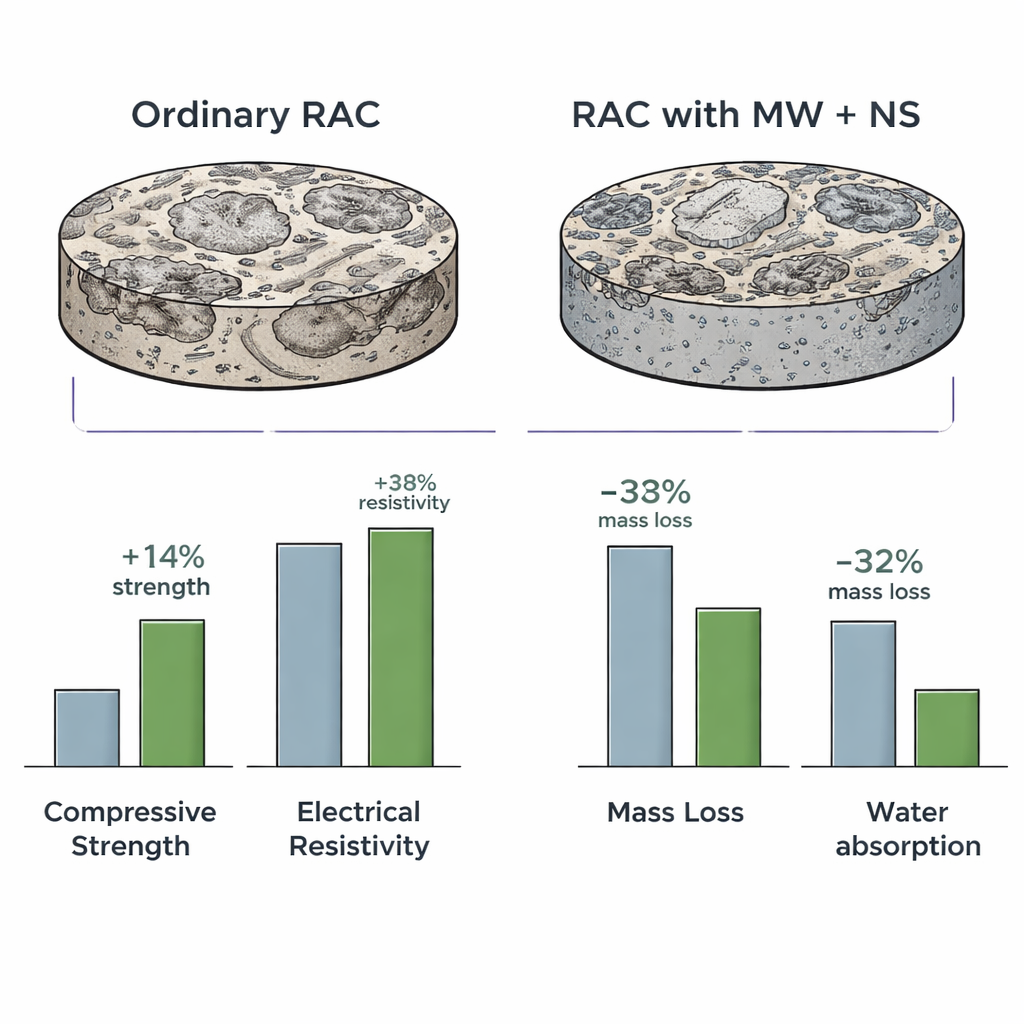
As expected, using more recycled aggregate and stronger acid both damaged the concrete. Replacing natural stone with 100% recycled aggregate cut strength by about a quarter, and dropping the pH from 7 to 2.5 caused an additional 16–25% strength loss. The concrete also lost more mass and absorbed more water under severe acid. But when magnetized water and nano-silica were introduced together, the picture changed. With 6% nano-silica and 30 minutes of magnetized water, compressive strength increased by up to 14% compared with a standard mix, even when recycled aggregate was present. Electrical resistivity rose by 12–38%, a sign of a tighter internal structure and fewer connected pores. At the same time, mass loss and water absorption fell by roughly one-third. Statistical analysis confirmed that recycled content, acidity, and nano-silica were the biggest drivers of performance, with magnetized water providing a consistent, if smaller, boost by helping the cement hydrate more completely.
The Best Mix and What It Means
The most balanced recipe combined 25% recycled aggregate, 6% nano-silica, and water magnetized for 30 minutes. This mix delivered higher strength and much better resistance to acid attack and water uptake across all tested acidity levels, showing that carefully engineered RAC can outperform conventional concrete while using less virgin stone and making use of demolition waste. In simple terms, the magnetized water helps the cement “set” more thoroughly, and the nano-silica fills and reinforces the microscopic gaps, so acid rain has a harder time getting in and dissolving the material.
A More Durable Future for Green Concrete
For non-specialists, the takeaway is straightforward: recycling old concrete no longer has to mean weaker, shorter-lived structures. By pairing magnetized water with nano-silica, engineers can build concrete that is both greener and tougher, even in regions plagued by acid rain. The study shows that with the right micro-level tweaks, waste concrete can be turned into high-performance building material, extending the life of infrastructure while easing pressure on natural resources.
Citation: Bamshad, O., Salehi, S., Habibi, A. et al. Sulfuric acid corrosion resistance of recycled aggregate concrete containing magnetized water. Sci Rep 16, 7770 (2026). https://doi.org/10.1038/s41598-026-38607-3
Keywords: recycled concrete, acid rain, magnetized water, nano-silica, durable infrastructure