Clear Sky Science · en
Bladder organoid conditioned media enhances myoblast proliferation under serum free conditions
Why Growing Meat in a Dish Matters
Cultured meat—the idea of growing animal muscle cells in large tanks instead of raising whole animals—promises burgers and steaks with a far smaller climate footprint and far less animal suffering. But today, many lab-grown cells depend on fetal bovine serum, a costly, animal-derived cocktail taken from cow fetuses. This study explores a new way to feed muscle cells using substances naturally released by tiny 3D “mini-organs” called organoids, pointing toward cleaner, more ethical ways to grow meat without relying on traditional serum.
Mini-Organs as Tiny Factories
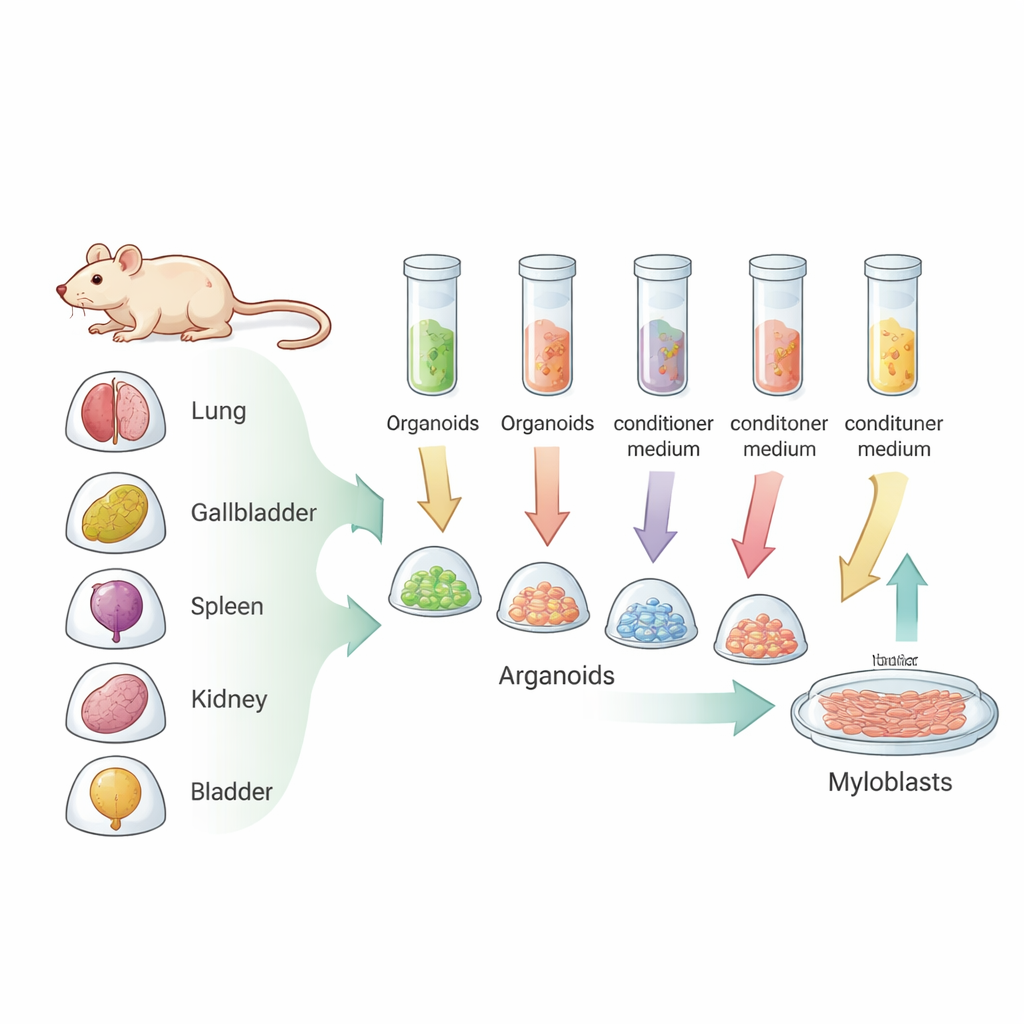
To test this idea, the researchers built miniature versions of several mouse organs in the lab: lung, gallbladder, spleen, kidney, and bladder. These organoids are three-dimensional clumps of cells that mimic the structure and behavior of real tissues, including their ability to secrete a rich mix of biological signals into the surrounding liquid. The team collected this liquid, known as conditioned medium, from each organoid type and mixed it with a simple, serum-free base solution. They then used these organoid-derived mixtures to grow mouse muscle precursor cells, called myoblasts, under conditions where no serum was added.
Finding the Strongest Growth Booster
When the muscle cells were cultured with each type of organoid-derived medium, all of them grew better than in the plain, serum-free solution. However, the medium from bladder organoids—called MBOS—stood out. It allowed the myoblasts to multiply almost as well as when they were fed the standard recipe containing fetal bovine serum. The effect of MBOS was consistent across different batches and remained strong even when it was diluted, suggesting that the bladder mini-organs produce a particularly stable and potent blend of growth-supporting factors.
How the Cells Respond Inside
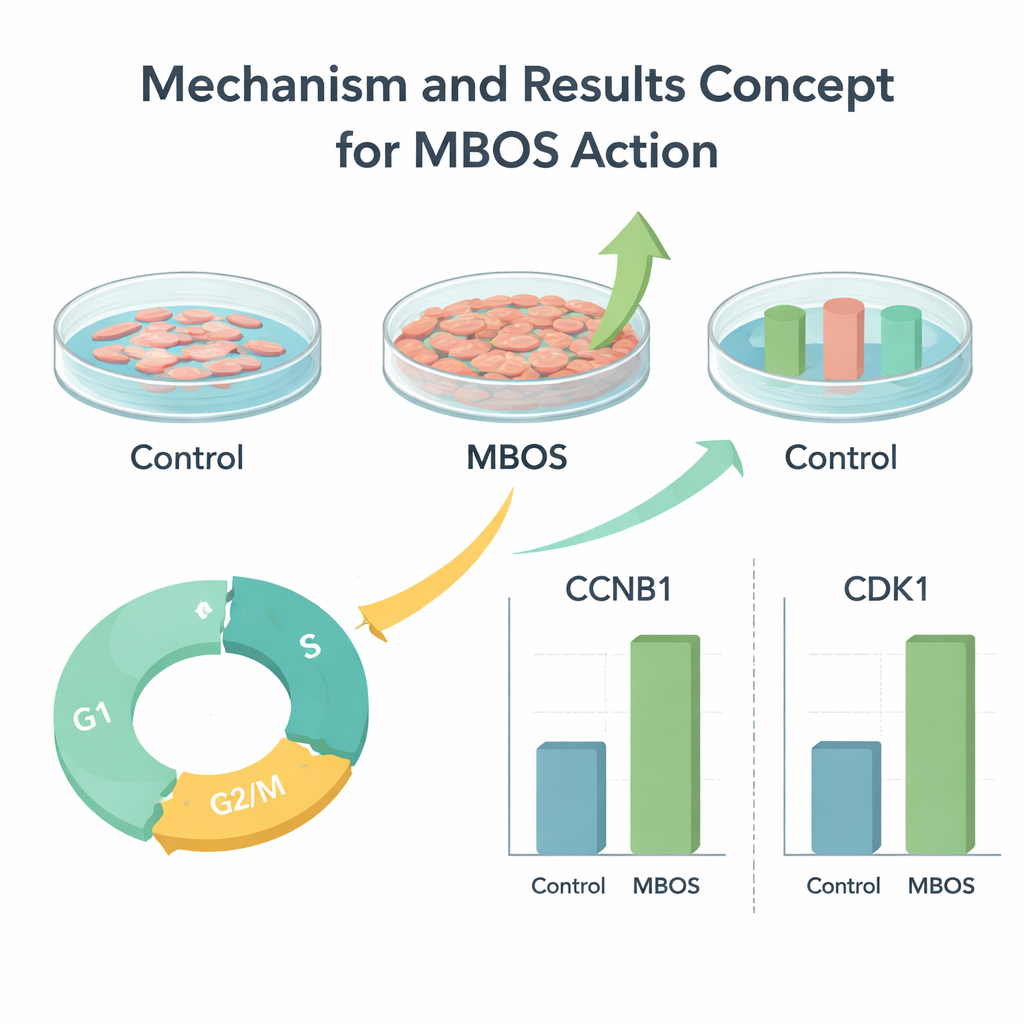
To understand what MBOS was doing inside the muscle cells, the researchers examined their genetic activity and cell cycle behavior. Using large-scale RNA sequencing, they found that MBOS turned on many genes linked to cell division, especially two key regulators called CCNB1 and CDK1. Follow-up tests at both the RNA and protein levels confirmed that these molecules were more abundant in MBOS-treated cells. Flow cytometry, a method that measures DNA content in individual cells, showed that more cells entered the G2/M phase—the stage just before and during cell division. Together, these results indicate that MBOS nudges myoblasts more efficiently through the cell cycle, helping them divide and build up cell numbers.
More Than One Growth Factor at Work
The team also measured levels of well-known muscle growth signals in MBOS, focusing on insulin-like growth factors IGF-1 and IGF-2. They discovered that MBOS contained more IGF-1 than the control medium, while IGF-2 stayed about the same. Yet when they added antibodies to block IGF-1, the muscle cells continued to proliferate strongly. This suggests that IGF-1 is only part of the story, and that MBOS likely contains a cocktail of multiple helpful molecules—possibly including other growth factors and supporting proteins—that work together to drive cell growth in ways a single purified ingredient cannot fully mimic.
From Mice to Cows and Toward Future Steaks
Crucially, MBOS was not only effective for mouse cells. When the researchers applied it to primary myoblasts taken from cows, these bovine cells also multiplied more rapidly than in serum-free control conditions. This cross-species effect hints that bladder organoid-conditioned media could help support muscle cell expansion for actual food animals, not just lab models. While today’s organoids are still grown using some animal-derived inputs and the exact active ingredients of MBOS remain to be mapped, this work demonstrates a promising path: using organoid-derived secretions as a reproducible, biologically rich supplement to reduce or eventually replace fetal bovine serum in cultured meat production.
Citation: Nagashima, Y., Yamamoto, H., Elbadawy, M. et al. Bladder organoid conditioned media enhances myoblast proliferation under serum free conditions. Sci Rep 16, 7582 (2026). https://doi.org/10.1038/s41598-026-38603-7
Keywords: cultured meat, serum-free media, organoids, myoblast proliferation, growth factors