Clear Sky Science · en
Risk factors for barrett’s esophagus identified in a large-scale Japanese community cohort study
Why this matters to everyday health
Heartburn is often brushed off as a minor annoyance, but in some people it can quietly change the lining of the esophagus and raise the risk of cancer. This condition, called Barrett’s esophagus, has been studied mostly in Western countries. The new study summarized here looks at more than 600,000 people in Japan to find out who is most likely to develop Barrett’s esophagus, and whether the same risk factors apply in East Asia. Understanding these patterns can help focus checkups on those who need them most.
Looking for warning signs in a whole community
To uncover who develops Barrett’s esophagus over time, researchers analyzed insurance and health checkup records from Shizuoka Prefecture in Japan between 2012 and 2021. Everyone in the study was at least 40 years old, had been continuously insured for at least a year, and had no prior diagnosis of Barrett’s esophagus. The team then followed 620,125 people for a median of just over six years, watching for new diagnoses recorded in the claims database. This design let them track how often Barrett’s esophagus appeared in ordinary residents, not just in patients at specialist hospitals.
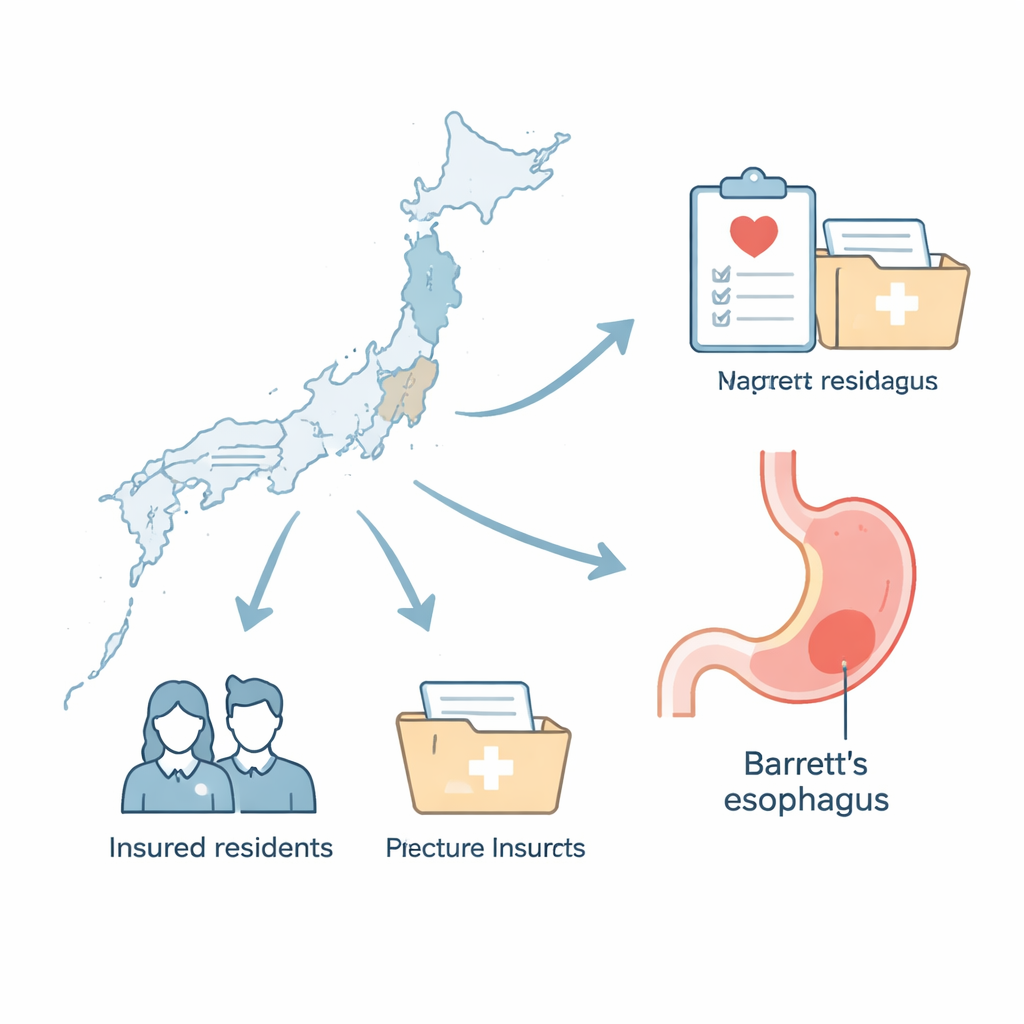
How common is Barrett’s esophagus in Japan?
During the study period, 1,577 people were newly diagnosed with Barrett’s esophagus, corresponding to about 46 cases per 100,000 people per year. That rate is similar to what has been reported in Western populations, suggesting that this precancerous condition is not rare in Japan. A small fraction of those with Barrett’s esophagus—54 individuals—were also found to have esophageal adenocarcinoma, the cancer that doctors worry about most in this setting. While the study could not fully track how many Barrett’s cases ultimately turn into cancer, the overlap underscores why finding Barrett’s early can matter.
Who turned out to be at higher risk?
After accounting for age, sex, and many medical and lifestyle factors, several clear patterns emerged. People between 50 and 79 years old were more likely to develop Barrett’s esophagus than those in their 40s, with the highest risks in their 60s and 70s. Men had about 40 percent higher risk than women. Conditions that promote or reflect strong acid reflux stood out: chronic reflux symptoms and a hiatal hernia—where part of the stomach slides up through the diaphragm—were among the strongest predictors. Two other illnesses, peripheral vascular disease (a sign of widespread artery damage) and liver disease, were also linked to higher risk, hinting at shared underlying problems such as abdominal fat, inflammation, or altered pressure inside the abdomen.
What didn’t matter as much as expected
Interestingly, several factors often blamed for Barrett’s esophagus in Western studies were not clearly linked to risk in this Japanese cohort once other variables were taken into account. Body mass index, diabetes, smoking, heavy drinking, cholesterol levels, and lack of exercise did not show independent effects in the main analyses. The use of strong acid-suppressing drugs (proton pump inhibitors and related medicines) and a history of infection with the stomach bacterium Helicobacter pylori were associated with higher risk on paper, but the authors caution that this likely reflects “reverse causality”: people with worse reflux are both more likely to be prescribed these medicines and more likely to undergo detailed endoscopy that can detect Barrett’s esophagus.
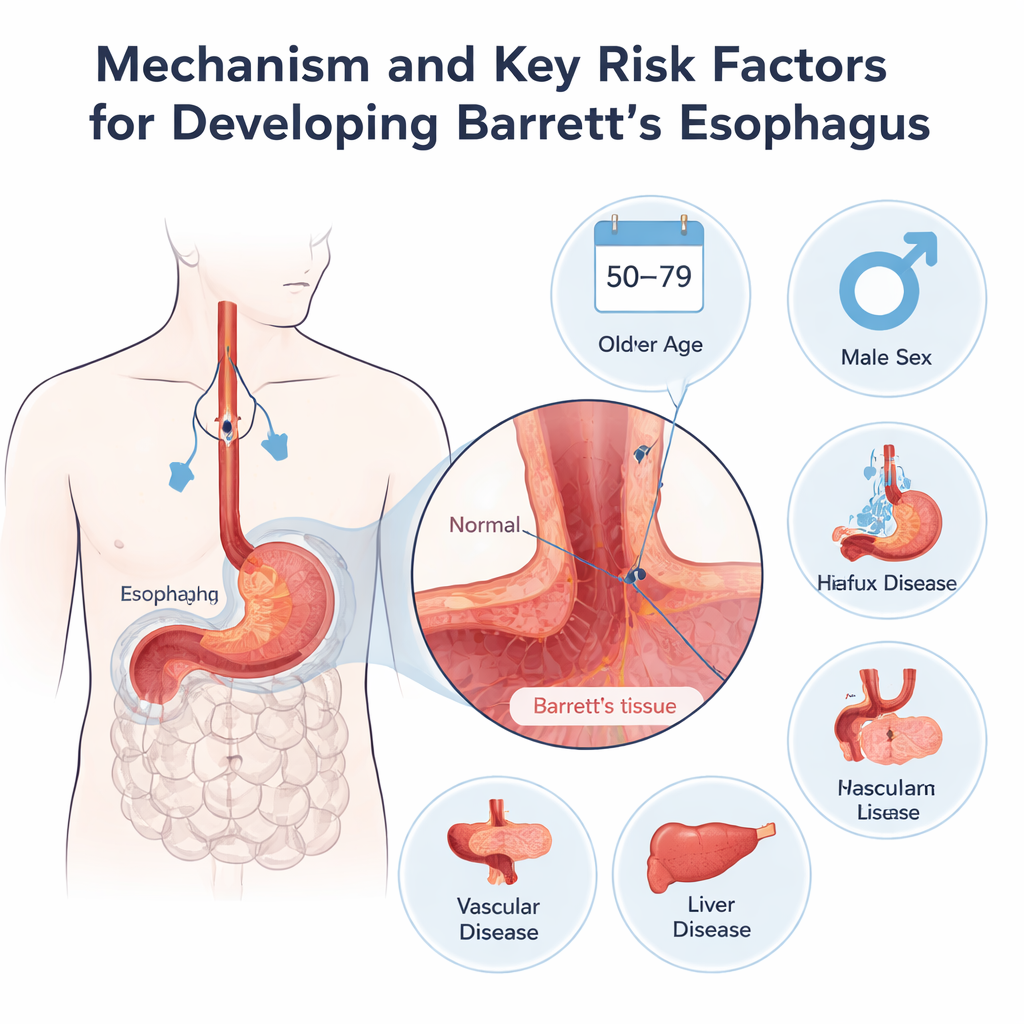
What this means for screening and prevention
For non-specialists, the key message is that Barrett’s esophagus is not just a Western problem. In this large Japanese community, it appeared at rates similar to those in Europe and North America, especially among men in their 50s to 70s and those with strong or long-standing reflux, hiatal hernia, artery disease, or liver disease. Lifestyle factors such as overall weight and smoking were less informative in this setting, at least as captured in routine records. The authors argue that health systems in East Asia should consider targeted endoscopy—rather than blanket screening—focusing on these higher-risk groups. Because most Japanese cases involve short segments of abnormal tissue, more research is needed to show whether such focused surveillance will actually catch the longer, more dangerous forms or prevent cancer. Still, the study offers an important step toward tailoring early detection strategies to local populations, turning everyday clinic and insurance data into practical guidance for who most needs a closer look.
Citation: Hirata, T., Satoh, T., Kaneda, H. et al. Risk factors for barrett’s esophagus identified in a large-scale Japanese community cohort study. Sci Rep 16, 7558 (2026). https://doi.org/10.1038/s41598-026-38601-9
Keywords: Barrett’s esophagus, acid reflux, esophageal cancer, Japanese cohort study, hiatal hernia