Clear Sky Science · en
Exploring 130 years of temperature-related mortality in the city of Madrid
Why past weather still matters today
Most of us feel that winters are not what they used to be and that heatwaves are becoming more frequent. But how much have these changing temperatures actually mattered for people’s lives and deaths over time? This study looks back over 130 years of daily records from Madrid to find out how cold and heat have shaped mortality, and how a growing, modernizing city has slowly adapted to a warming climate.
Taking the long view on heat and cold
The researchers gathered more than 1.9 million death records and daily temperature data for Madrid from 1890 to 2019. Instead of focusing only on modern heatwaves, they traced how the risk of dying on very cold or very hot days has evolved decade by decade. Using statistical models, they identified the temperature at which deaths are lowest, and then calculated how many deaths could be linked to colder or hotter days than this “sweet spot.” This long view allows them to see not just snapshots of risk, but how the city’s relationship with its climate has changed across generations.
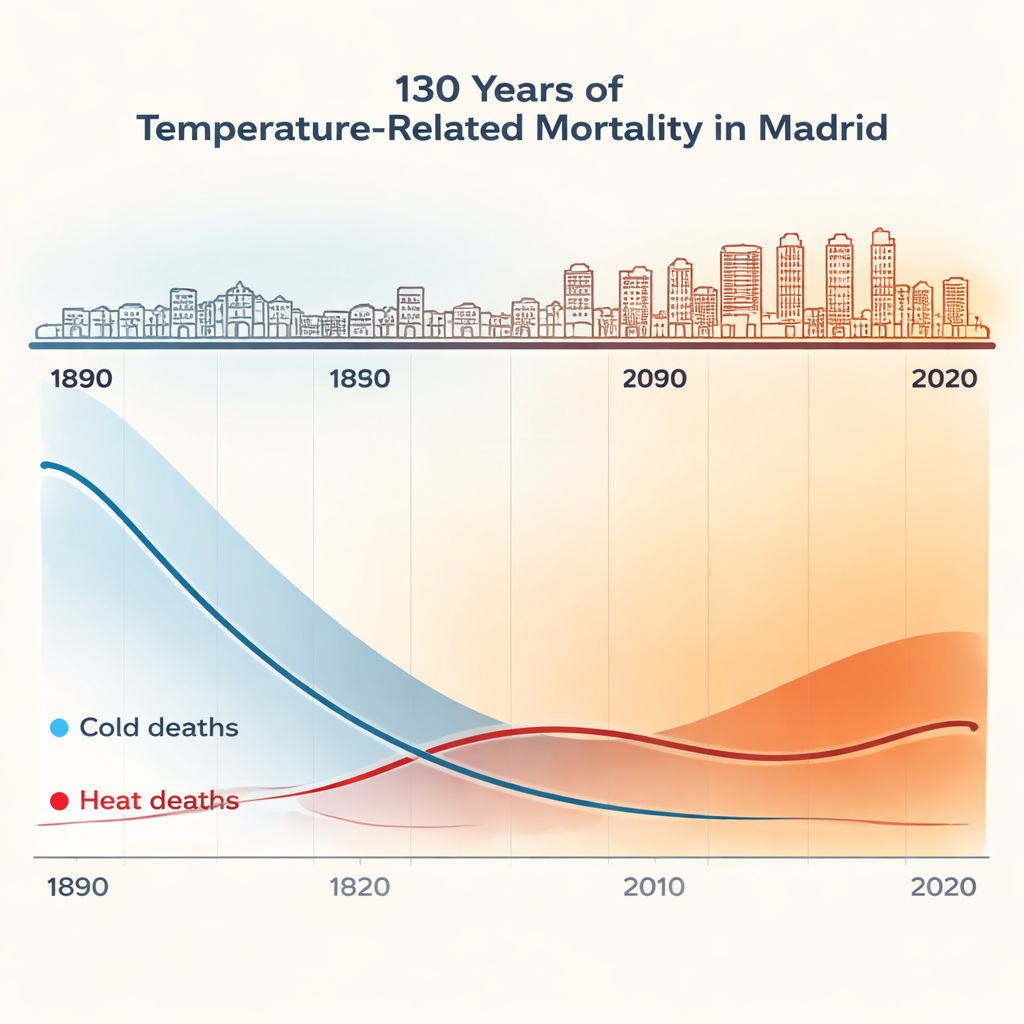
Cold once killed far more than heat
In the late 19th and early 20th centuries, cold was a major silent killer in Madrid. Very low winter temperatures were associated with a sharp rise in deaths, especially among young children and older adults. At that time, many homes lacked proper insulation or heating, infectious diseases were common, and medical care was limited. Over the decades, the city expanded, slums were gradually replaced, and central heating became more widespread. As living conditions and healthcare improved, the impact of both extreme and moderate cold on mortality fell dramatically—by roughly a factor of seven to ten between the 1890s and the 2010s.
Heat risks eased, but never disappeared
Heat also influenced mortality throughout the study period, but in a different way. Moderate summer heat became less deadly as people gained access to better housing, healthcare, and, later, air conditioning. Public health plans and warning systems helped, too. However, the most intense heat—like that experienced during severe heatwaves—remained stubbornly dangerous. While deaths linked to moderate heat declined, deaths linked to extreme heat changed little overall and even ticked up slightly in the most recent decades, particularly among older adults. Unlike cold, which tends to trigger illnesses over many days or weeks, heat can cause sudden strain on the heart and circulation, with spikes in deaths on the very hottest days.
A city transformed by growth and technology
The study shows that climate alone cannot explain these trends. Over 130 years, Madrid evolved from a mid-sized city into a large metropolis, with huge gains in life expectancy and major investments in sanitation, housing, and health services. Better heating, warmer average winters, and fewer extremely cold days combined to reduce cold-related mortality. Air conditioning, improved medical care, and organized heatwave responses helped to reduce some heat-related risks. Yet not everyone benefits equally: poorer households may still struggle to heat or cool their homes, and older people remain especially vulnerable when temperatures soar.
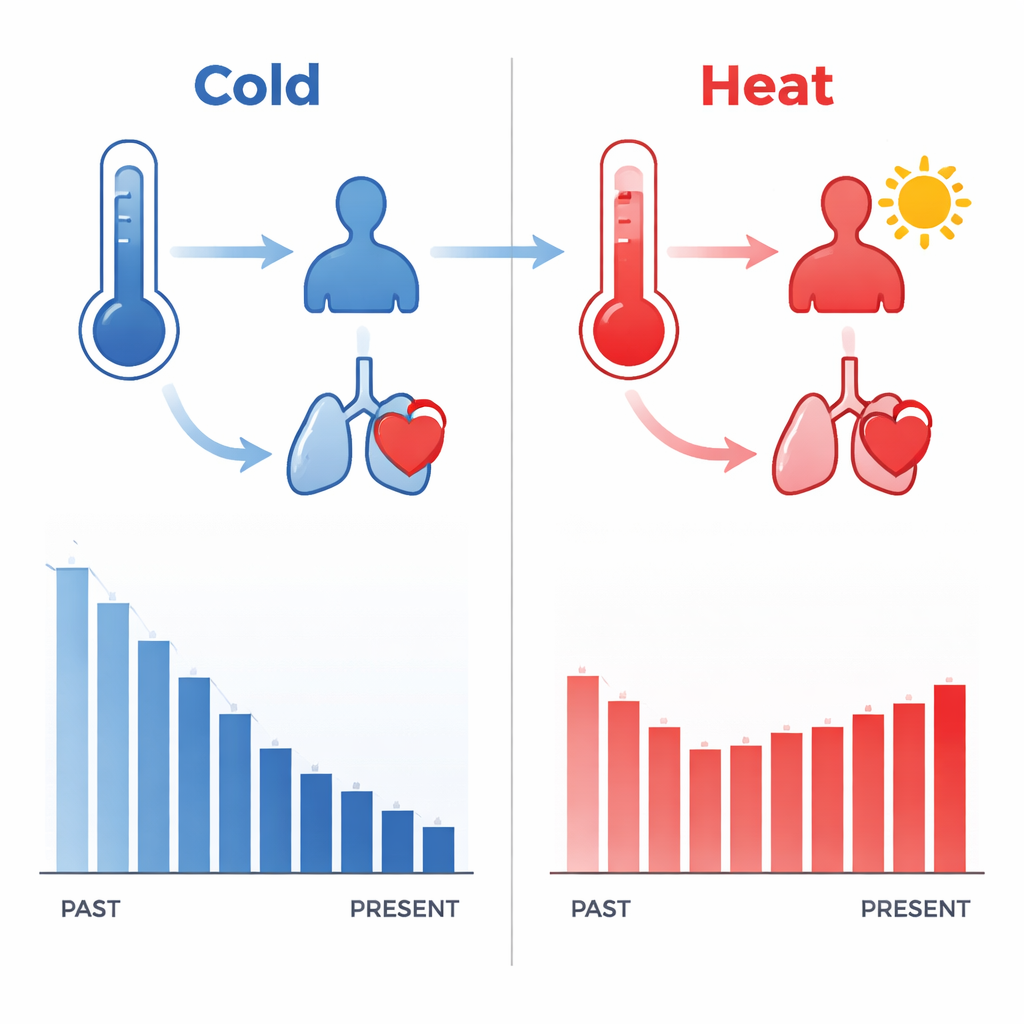
What this means for our warming future
For a layperson, the message is double-edged. On the one hand, rising temperatures and better living conditions have sharply reduced the toll of cold in Madrid. On the other hand, extreme heat continues to pose a serious and perhaps growing threat, particularly as the population ages and heatwaves become more frequent. The authors conclude that while society has already adapted in many ways, protecting people from the most intense heat will require ongoing efforts—from resilient housing and reliable energy supply to targeted health advice for those most at risk.
Citation: Ordanovich, D., Ramiro, D. & Tobias, A. Exploring 130 years of temperature-related mortality in the city of Madrid. Sci Rep 16, 7641 (2026). https://doi.org/10.1038/s41598-026-38595-4
Keywords: heatwaves, cold exposure, climate change and health, urban mortality, Madrid