Clear Sky Science · en
PLOD2 promotes proliferation, migration and invasion of colorectal cancer cells via PI3K-AKT-GSK3β signaling pathway
Why the Neighborhood Around a Tumor Matters
Colorectal cancer is one of the most common cancers worldwide, and many people are diagnosed only after the disease has already advanced. This study looks beyond the cancer cells themselves to examine their surrounding “neighborhood” of supporting tissue. The researchers focus on a little-known enzyme called PLOD2 and show how it helps colorectal tumors grow and spread by changing both the tissue environment and key growth signals inside the cells.
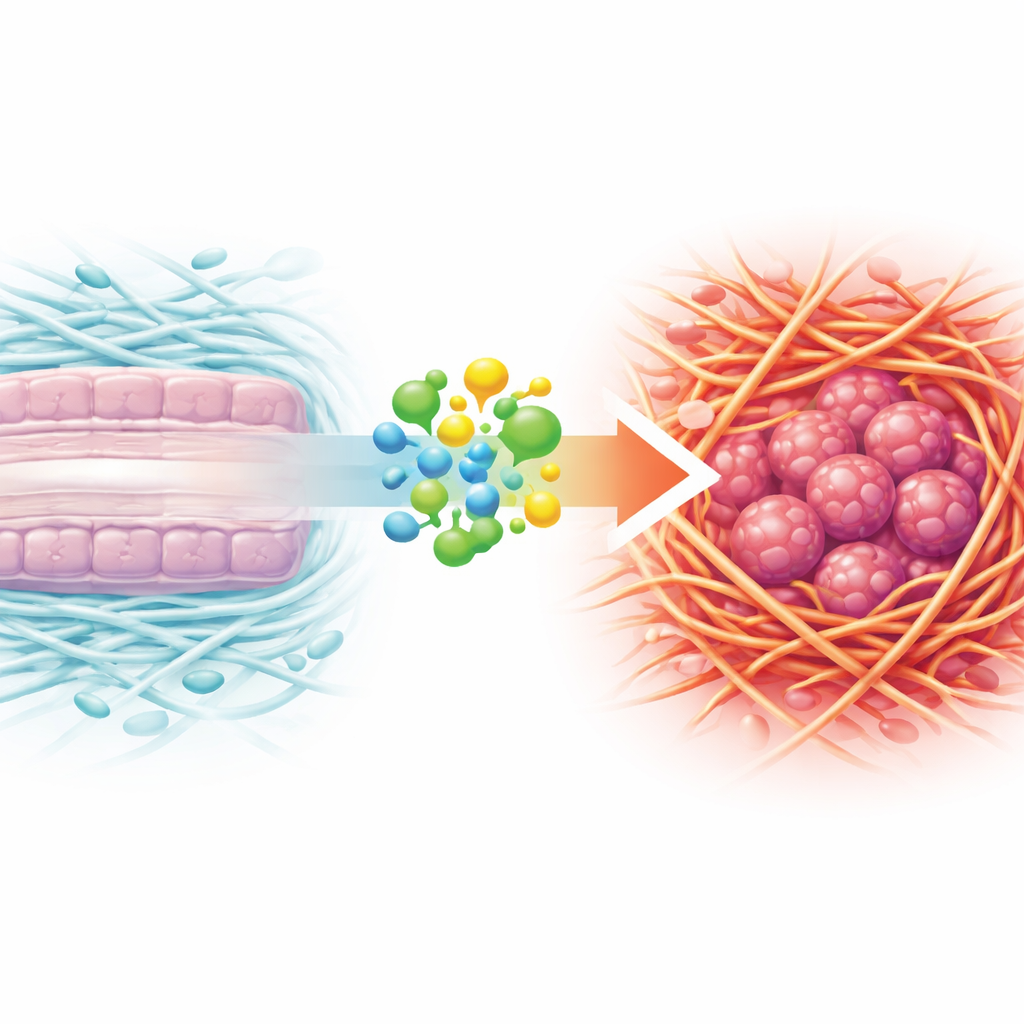
A Hidden Builder in the Tumor’s Scaffolding
Our organs are supported by a mesh of proteins known as the extracellular matrix, with collagen as its main structural component. PLOD2 is an enzyme that chemically modifies collagen, helping it form strong cross-links and stiff fibers. The team analyzed large genetic and protein databases and then examined tissue samples from 75 patients. They found that PLOD2 levels were much higher in colorectal cancer tissue than in nearby normal tissue. High PLOD2 was linked with more advanced tumors, spread to lymph nodes, and invasion along nerves, and patients whose tumors had more PLOD2 tended to live for a shorter time. These findings mark PLOD2 as a strong candidate marker of aggressive disease.
How PLOD2 Makes Cancer Cells More Aggressive
To move beyond correlations in patient samples, the researchers engineered colorectal cancer cell lines in the lab. In one cell type, they boosted PLOD2 production; in another, they switched it off. Cells with extra PLOD2 grew faster, formed more colonies, and closed artificial “wounds” in dishes more quickly, showing enhanced movement. They also migrated through porous membranes and invaded through a gel that mimics tissue barriers more readily than control cells. When PLOD2 was silenced, all of these behaviors weakened. Together, these experiments show that PLOD2 actively drives cancer cell growth, migration, and invasion, rather than simply being a bystander.
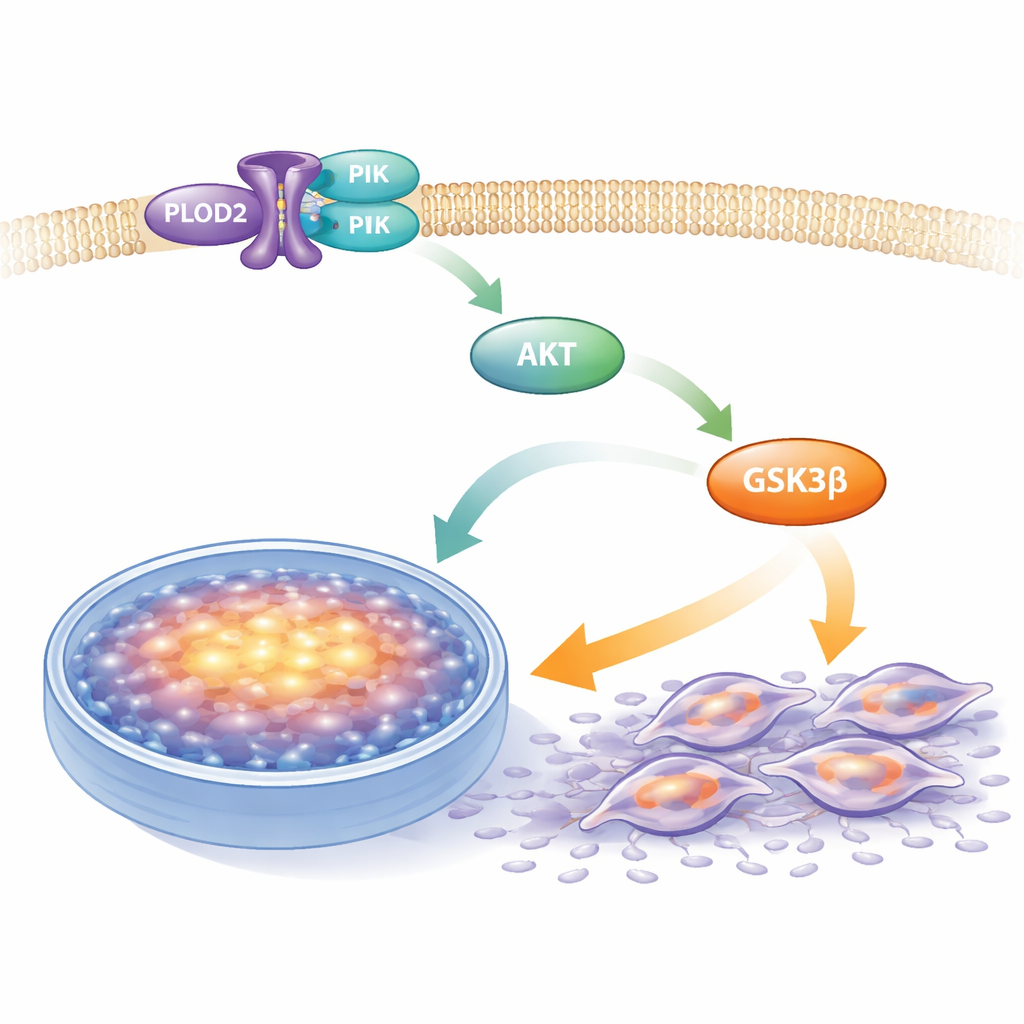
Switching On a Cancer‑Promoting Signal Chain
Inside cancer cells, many processes are controlled by interconnected signaling chains. One central chain, known broadly as the PI3K–AKT–GSK3β pathway, helps cells survive, divide, and adapt their metabolism. Using data mining and biochemical tests, the researchers discovered that PLOD2 is closely tied to this pathway. They showed that PLOD2 physically binds to PI3K, the “starter” enzyme in the chain. When PLOD2 levels were high, the activated (phosphorylated) forms of PI3K, AKT, and GSK3β increased, even though the total amount of each protein stayed the same. When PLOD2 was reduced, activation of this pathway dropped, suggesting that PLOD2 acts like a switch that turns this growth-and-motility system on.
Testing the Pathway with Chemical Tools
To confirm that PLOD2’s harmful effects depend on this signal chain, the team used drugs that either block or stimulate PI3K. In cells overproducing PLOD2, a PI3K inhibitor dampened the activation of AKT and GSK3β and slowed cell growth, movement, and invasion. In cells where PLOD2 had been silenced, a PI3K activator restored pathway activity and partially rescued the cells’ ability to proliferate and migrate. Although the rescue was not complete—hinting that PLOD2 may influence other routes as well—these experiments strongly support the idea that PLOD2 promotes malignancy mainly by feeding into the PI3K–AKT–GSK3β signaling axis.
What This Means for Patients
To a non-specialist, these molecular details can be boiled down to a simple story: PLOD2 helps colorectal cancer cells harden and remodel their surroundings while also pressing the gas pedal on key internal growth circuits. By doing both, it makes tumors more likely to grow aggressively and spread. The study suggests that measuring PLOD2 could help identify high-risk patients and that drugs aimed at PLOD2 itself—or at the signaling chain it triggers—might one day become part of more tailored treatments for colorectal cancer. More work in animals and larger patient groups will be needed, but PLOD2 now stands out as a promising new handle on a difficult disease.
Citation: Fang, H., Zheng, J., Ren, S. et al. PLOD2 promotes proliferation, migration and invasion of colorectal cancer cells via PI3K-AKT-GSK3β signaling pathway. Sci Rep 16, 8118 (2026). https://doi.org/10.1038/s41598-026-38593-6
Keywords: colorectal cancer, PLOD2, tumor microenvironment, PI3K AKT signaling, cancer metastasis