Clear Sky Science · en
Isoflurane aggravates pre-existing proteotoxicity in adult nematodes by suppressing mitochondrial fitness
Why this matters for surgery and brain health
Many older adults experience confusion and memory problems after surgery, a condition known as postoperative delirium. This study asks a simple but pressing question: can the anesthetic gas used to keep patients unconscious make vulnerable brains more fragile? Using tiny worms as a stand-in for humans, the researchers show that a widely used anesthetic, isoflurane, can worsen pre‑existing protein damage in nerve and muscle cells by undermining the health of mitochondria, the cell’s energy generators. Their findings hint at new ways to protect at‑risk patients before they enter the operating room.
An anesthetic that hits only when cells are already stressed
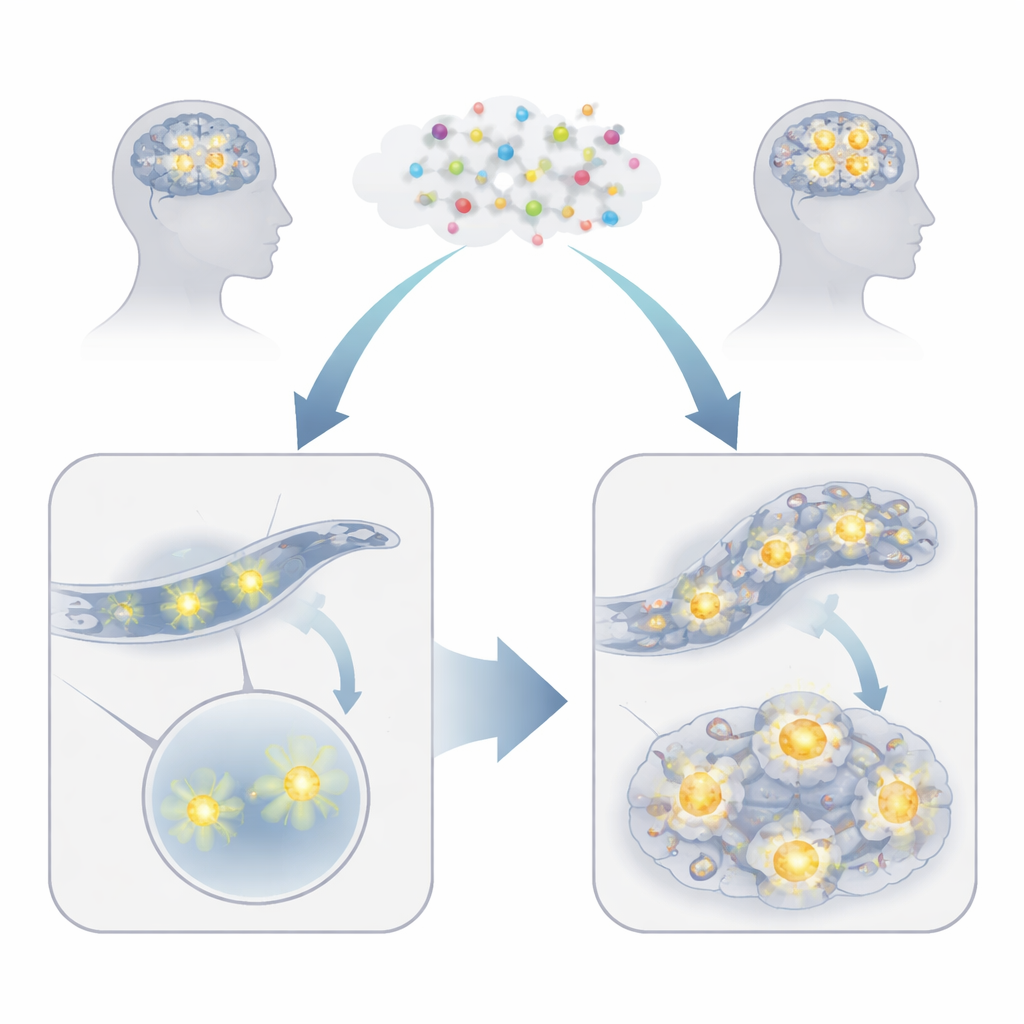
Not all brains respond to anesthesia in the same way. The team worked with the nematode C. elegans, a microscopic worm whose biology shares many core features with humans. Some worms were normal, while others were engineered to produce sticky, disease‑linked proteins that tend to clump, mimicking conditions such as Huntington’s disease. When normal worms inhaled isoflurane for a few hours, their movement and protein balance stayed largely intact days later. But in worms already burdened by clumping proteins, the same anesthetic exposure led to a clear and lasting decline in movement, a sign that their cells were struggling to cope. In other words, isoflurane acted like an extra push on a system that was already near its breaking point.
Hidden changes in protein clumps and gene activity
Looking more closely, the researchers found that anesthetized, vulnerable worms formed more visible protein foci—bright spots where the sticky proteins gather—yet paradoxically had fewer large, detergent‑resistant protein aggregates. This pattern suggests a shift toward smaller, more toxic protein assemblies rather than benign, tightly packed lumps. At the same time, the worms’ cells rewired their gene activity. Hundreds of genes involved in stress responses, metabolism, and protein cleanup were turned up or down after isoflurane exposure, whether or not the worms carried the risky proteins. Some helpers, such as certain protein‑folding chaperones, were increased, indicating that cells sensed trouble and tried to respond. Yet at least one chaperone, HSP‑16.41, actually made matters worse in the presence of isoflurane, underscoring how a protective system can become harmful under the wrong conditions.
Mitochondria in the crosshairs
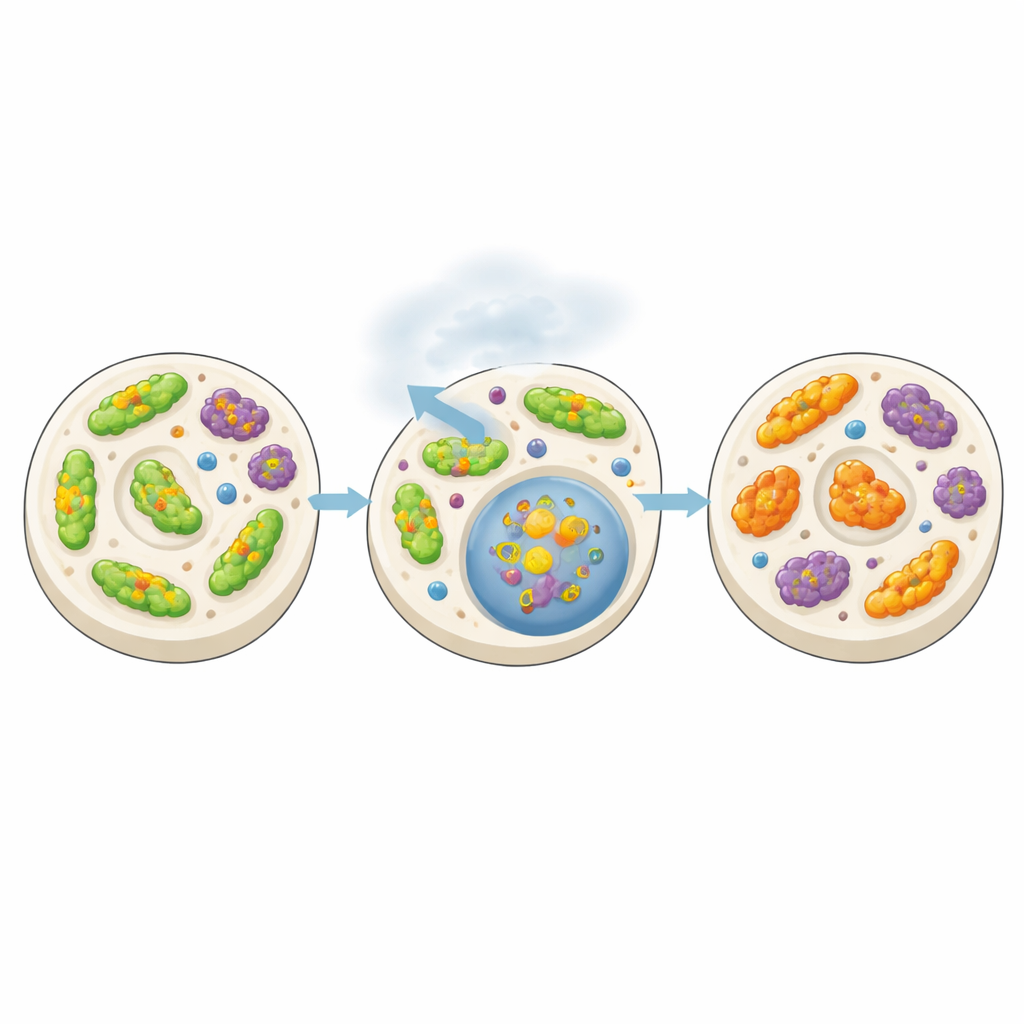
The most striking changes emerged when the team examined which proteins actually ended up in insoluble clumps. In worms with pre‑existing protein stress, many of the newly aggregated proteins came from mitochondria, especially from their internal machinery and protein import channels. When the researchers dialed down tomm‑20, a key doorway protein that helps shuttle other proteins into mitochondria, isoflurane could no longer worsen movement problems, in both muscle and nerve cells. Other mitochondrial components, such as the complex I subunit GAS‑1, also influenced how sensitive worms were to the anesthetic. Together, these findings point to mitochondria as a central stage on which the toxic partnership between anesthesia and protein damage plays out.
When cellular cleanup goes too far
Cells maintain their mitochondria through a recycling pathway called mitophagy, which tags damaged organelles for removal. The team discovered that this process, usually protective, can become a double‑edged sword. Isoflurane exposure boosted the activity of several genes tied to general cellular cleanup and mitochondrial recycling. Yet knocking down specific mitophagy players, especially the kinase PINK‑1 and the cargo receptors SQST‑1, SQST‑2, and LGG‑1, actually shielded worms from the anesthetic’s harmful effects. In worms challenged by sticky proteins, isoflurane appeared to tip the balance toward excessive mitochondrial removal without enough replacement, leaving cells with fewer healthy power plants. Supporting this idea, a small molecule known to improve mitochondrial fitness, VL‑004, helped restore mitochondrial abundance and partially rescued movement in anesthetized, protein‑stressed worms.
What this could mean for patients after surgery
Put simply, this work suggests that isoflurane can deepen protein damage and functional decline, but mainly in cells already living on the edge because of age‑related or inherited vulnerabilities. By over‑activating mitochondrial cleanup and failing to support new mitochondrial growth, the anesthetic leaves these cells energy‑poor and less able to manage toxic protein species. While worms are not people, the core processes studied here are conserved across species, and the results offer a mechanistic bridge between volatile anesthetics, mitochondrial stress, and long‑lasting cognitive problems after surgery. The study raises the possibility that carefully tuning mitochondrial fitness—perhaps with drugs like VL‑004 or by targeting mitophagy pathways—could help reduce the risk of postoperative delirium in patients with pre‑existing cognitive or protein‑handling impairments.
Citation: Elami, T., Zhu, H., Bruck-Haimson, R. et al. Isoflurane aggravates pre-existing proteotoxicity in adult nematodes by suppressing mitochondrial fitness. Sci Rep 16, 8098 (2026). https://doi.org/10.1038/s41598-026-38591-8
Keywords: postoperative delirium, isoflurane, mitochondria, protein aggregation, C. elegans