Clear Sky Science · en
Knowledge, awareness, and attitude of physical therapists on Alzheimer’s disease in Syria
Why this matters for families and caregivers
As populations age, more families are caring for loved ones with Alzheimer’s disease, often with limited support. In Syria, where health systems are strained by years of conflict, physical therapists are a crucial but understudied part of dementia care. This article explores how well Syrian physical therapists understand Alzheimer’s disease and how they feel about working with affected patients—insights that can shape the safety, dignity, and independence of thousands of older adults.
The growing shadow of memory loss
Alzheimer’s disease is the leading cause of dementia worldwide and a rising concern in the Middle East, including Syria, where dementia affects an estimated 6–10% of adults over 60. Beyond memory loss, the condition can erode a person’s sense of identity, burden families with constant care, and strain already fragile health systems. In Syria, many people associate dementia with normal aging or hopeless decline, which can delay diagnosis and limit treatment. Yet non-drug approaches—like exercise, structured routines, and safe mobility—can greatly improve quality of life when delivered by trained professionals.
The front-line role of movement specialists
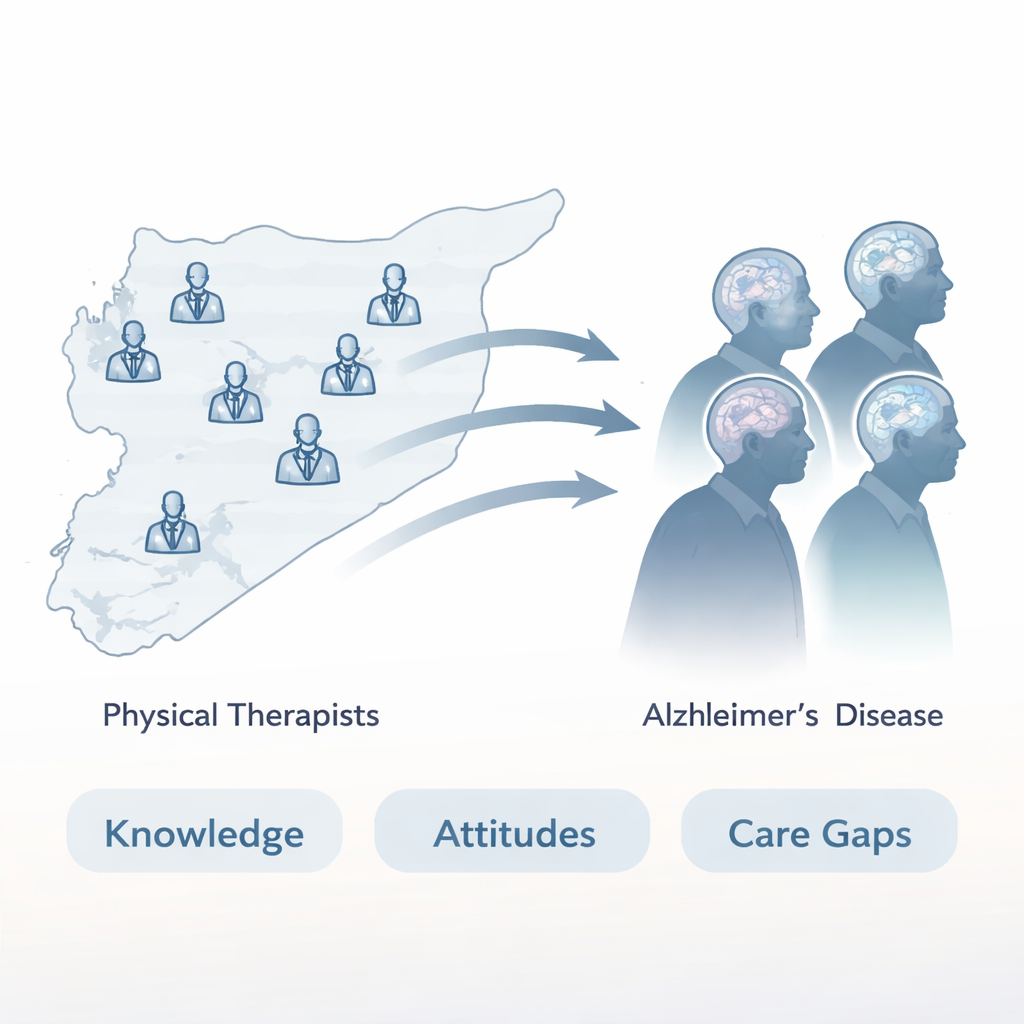
Physical therapists help people with Alzheimer’s stay active, reduce falls, and maintain independence in daily tasks. In Syria, most of these therapists work in urban hospitals and rehabilitation centers, with fewer serving rural communities. To understand how prepared they are for this role, the researchers surveyed 279 Syrian physical therapists, ultimately analyzing complete responses from 265. The questionnaire asked about their basic knowledge of Alzheimer’s—its symptoms, risk factors, diagnosis, and care needs—as well as their attitudes, such as comfort level, fear, and willingness to engage with patients and families.
What therapists know—and what they get wrong
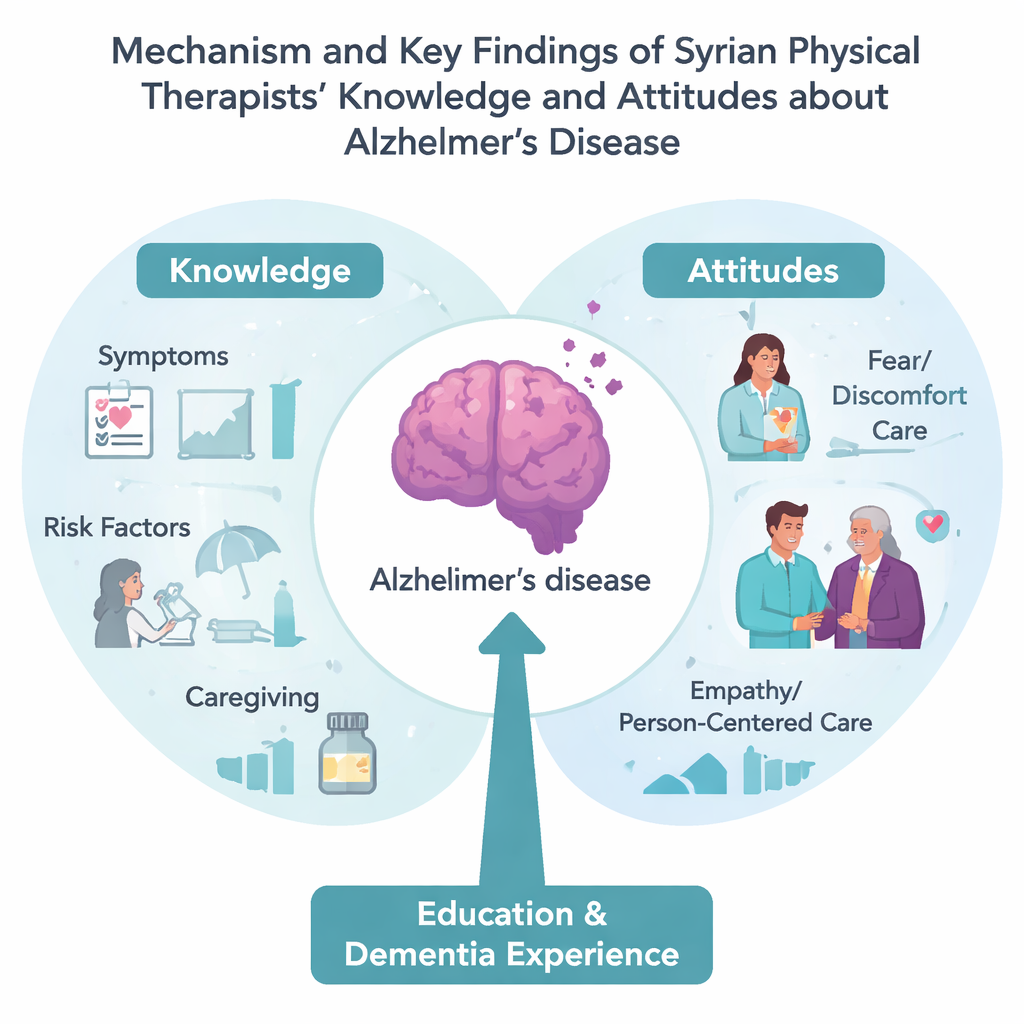
The study found that Syrian physical therapists have a mixed level of knowledge. They scored high on understanding how Alzheimer’s typically progresses and on treatment basics, suggesting they grasp the broad outlines of the disease. Many correctly recognized that problems handling money can be an early warning sign and that simple, clear instructions can help patients function better. But there were telling blind spots. More than half incorrectly believed that tremors are a usual feature of Alzheimer’s, confusing it with other brain disorders. Knowledge of risk factors—such as high cholesterol—and especially of day-to-day caregiving strategies was noticeably weaker. Some therapists held ideas that could unintentionally limit patients’ independence, like thinking caregivers should quickly take over self-care activities rather than supporting patients to do as much as they safely can.
Emotions, fears, and personal contact
Attitudes toward people with Alzheimer’s were equally complex. Many therapists endorsed person-centered ideas: over two-thirds agreed that each patient has unique needs and that understanding someone’s life story is vital for good care. More than half believed interactions with people living with dementia can be enjoyable, and many felt comfortable with physical contact. At the same time, a large majority admitted feeling afraid of patients with dementia, and more than half said they would avoid someone who seemed agitated. A sizeable share felt frustrated or unsure how to help. The study showed that therapists with higher education and those who had prior hands-on experience with dementia care tended to have both better knowledge and more positive attitudes, even though the size of these effects was modest.
Closing the gap between knowledge and care
The authors conclude that while Syrian physical therapists are willing and potentially powerful allies for people with Alzheimer’s, they need more focused support. The biggest opportunities lie in teaching accurate warning signs, clarifying real risk factors, and strengthening practical caregiving skills that protect independence and safety. The researchers call for Alzheimer’s-specific topics to be woven into university courses and for structured clinical rotations in dementia units so that therapists can gain confidence and reduce fear through direct experience. For families, the message is hopeful: with better training and support, the professionals who help loved ones walk, balance, and move can also become better informed, more compassionate partners in navigating life with Alzheimer’s disease.
Citation: Altahla, R., Alshorman, J. & Umar, M. Knowledge, awareness, and attitude of physical therapists on Alzheimer’s disease in Syria. Sci Rep 16, 7273 (2026). https://doi.org/10.1038/s41598-026-38586-5
Keywords: Alzheimer’s disease, physical therapy, dementia care, health education, Syria