Clear Sky Science · en
Symptom clusters and symptom network analysis of patients after anterior cervical spine surgery: a cross-sectional study
Why throat and gut troubles matter after neck surgery
Anterior cervical spine surgery is a common operation to relieve pressure on the spinal cord in the neck and ease pain or weakness in the arms. But many patients wake up with a surprising new set of problems: a sore throat, trouble swallowing, dry mouth, constipation, poor sleep and crushing tiredness. This study set out to map these after‑surgery complaints in detail, showing how they hang together and which ones are the real "troublemakers" that drive the others. Understanding this web of symptoms can help patients and clinicians focus their efforts where they will make the biggest difference.
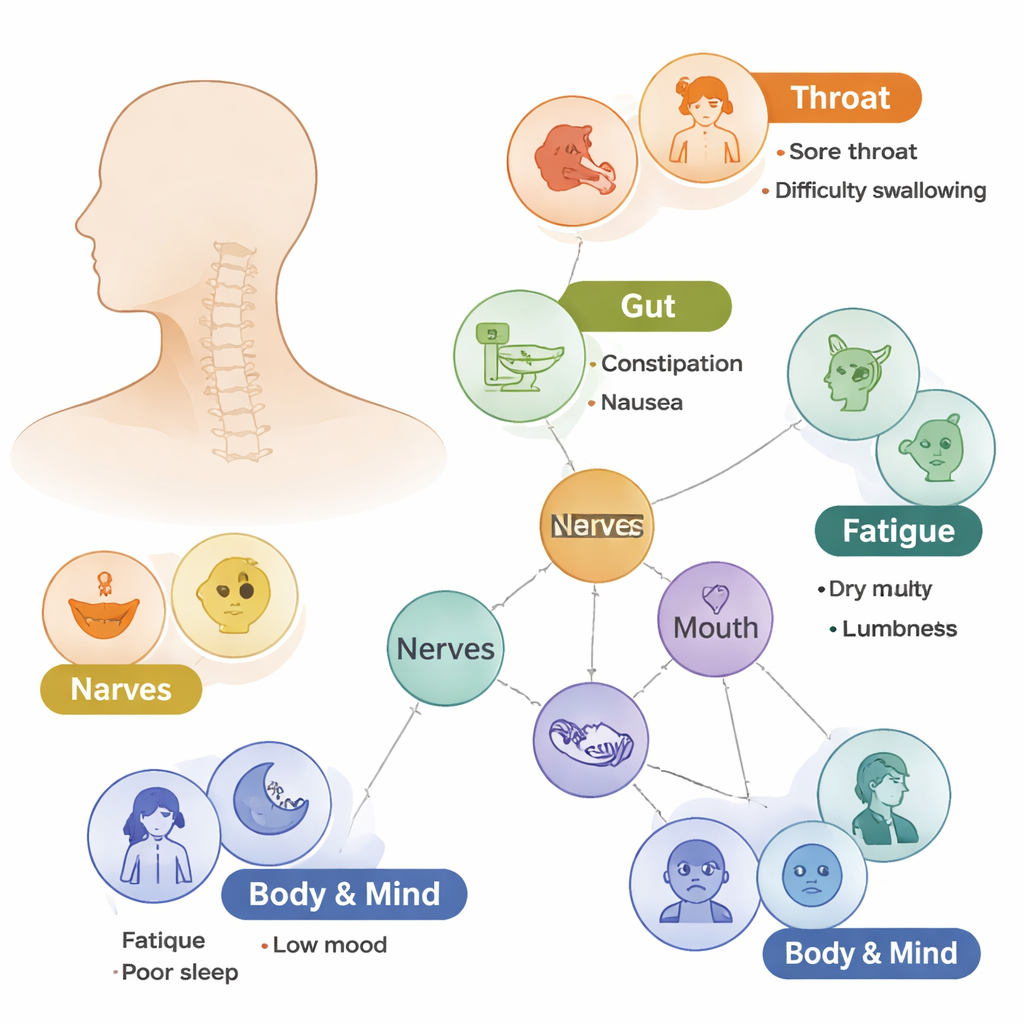
A closer look at patients after neck surgery
The researchers studied 375 adults who had undergone anterior cervical spine surgery in a large hospital in China. Within two to three days after their operations, patients filled out a detailed symptom questionnaire originally designed for people with head and neck problems. Instead of looking at each complaint in isolation, the team wanted to see how symptoms grouped together and which ones were most strongly connected. Using statistical methods, they treated each symptom as a "node" in a network and measured how tightly those nodes were linked, much like analyzing the structure of a social network.
Four main groups of connected symptoms
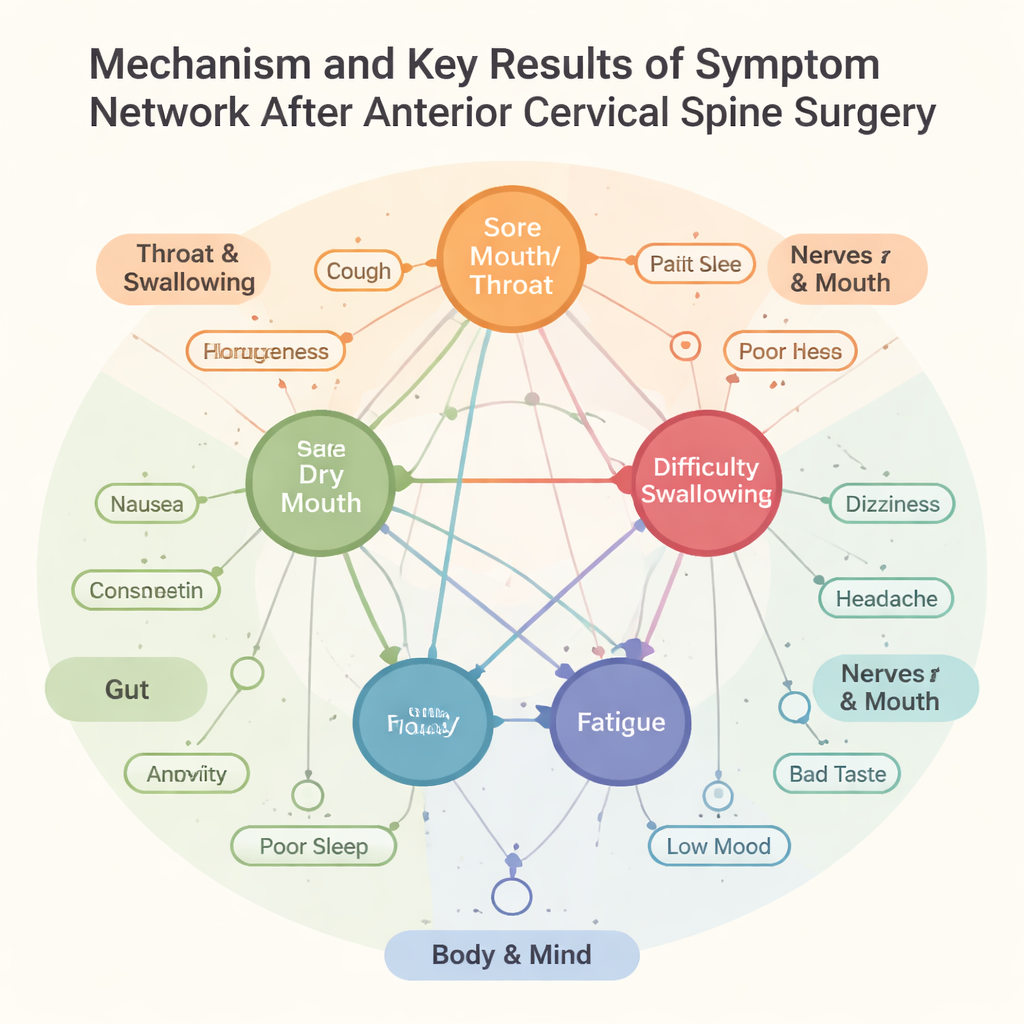
The analysis revealed four clear symptom clusters. The first and most important was a throat and swallowing cluster, including sore mouth or throat, difficulty swallowing or chewing, extra mucus, choking on food or drink, trouble speaking and problems with teeth or gums. The second cluster centered on digestion, with constipation, nausea, vomiting and poor appetite moving together. A third cluster involved nerve and mouth sensations such as dry mouth, pain, painful skin, numbness or tingling and changes in taste. The fourth cluster covered body‑and‑mind symptoms: fatigue, disturbed sleep, distress, shortness of breath, forgetfulness, drowsiness and sadness. Together, these four clusters captured about two‑thirds of the variation in how patients felt after surgery.
The key troublemakers in the symptom web
When the team examined the structure of the symptom network, a handful of complaints stood out as central hubs. Sore mouth or throat and difficulty swallowing or chewing were both very common and strongly connected to many other symptoms. Fatigue emerged as the main driver within the body‑and‑mind cluster, while dry mouth acted as a kind of bridge linking different parts of the network. In technical terms, these four—sore throat, swallowing difficulty, fatigue and dry mouth—had the highest measures of "strength" or connection to other symptoms. That means improving them is likely to ripple through the network, easing related problems such as poor appetite, sleep disturbance and low mood.
What these findings mean for care
Because symptoms travel in packs, the authors argue that care teams should move beyond treating each complaint separately. For example, well‑planned steps to prevent or relieve throat pain and swallowing problems—such as careful management of breathing tubes, use of inhaled medicines, or targeted therapies like acupuncture—may not only make eating less painful but also improve sleep and reduce exhaustion. Likewise, structured fatigue programs that combine better sleep habits, gentle activity and psychological support could improve both mood and physical recovery. Paying early attention to dry mouth and constipation, through hydration, diet changes and safe use of medicines or physical therapies, may further smooth recovery and help patients feel more in control.
Putting it all together for patients and families
This study shows that after anterior cervical spine surgery, a few core symptoms sit at the center of a wider web of discomfort. Rather than being random, problems like sore throat, difficulty swallowing, dry mouth, fatigue and constipation are tightly linked and tend to appear together. By spotting these key complaints early and targeting them with well‑chosen interventions, clinicians can indirectly ease many other problems at once. For patients and families, this means that speaking up about these specific issues and working with the care team to manage them can significantly improve comfort, speed recovery and enhance overall quality of life after neck surgery.
Citation: Ma, Yj., Sheng, Sy., Zheng, Lm. et al. Symptom clusters and symptom network analysis of patients after anterior cervical spine surgery: a cross-sectional study. Sci Rep 16, 7130 (2026). https://doi.org/10.1038/s41598-026-38585-6
Keywords: neck surgery recovery, postoperative symptoms, swallowing problems, fatigue after surgery, symptom clusters