Clear Sky Science · en
Telemonitored sleep quality and daily activity are associated with mental health outcomes among Japanese workers
Why Sleep, Activity, and Mood Matter Together
Many people sense that a bad night’s sleep or a slow, inactive day can leave them feeling on edge, sad, or simply "not themselves." Yet most of what we know about this link comes from people’s own reports, which can be fuzzy or influenced by how they feel in the moment. This study followed a group of Japanese workers at home, using wearable devices and brain-wave recordings to measure their sleep and daily movement objectively, then compared those measurements with detailed questionnaires about mood, anxiety, and personality. The goal was to see how everyday sleep patterns and activity levels tie into mental well-being, and whether remote monitoring could one day help flag trouble early.
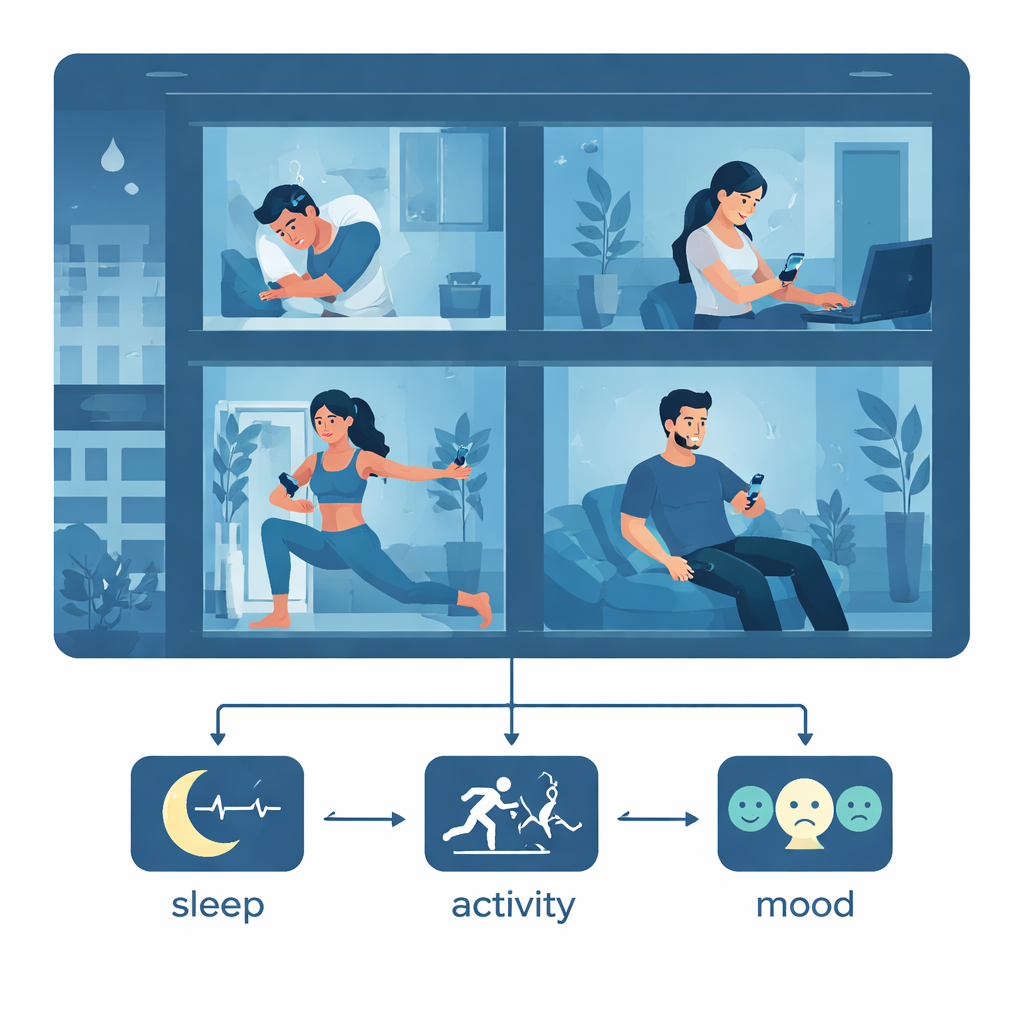
How the Study Watched People at Home
Eighty-one adults who worked in and around a Japanese university volunteered for the study during the COVID-19 pandemic. None had diagnosed mental or serious physical illnesses or a history of night-shift work, so they represented generally healthy workers. Each person wore a Fitbit Sense 2 watch-like device for five days, including weekends, so researchers could track how much moderate and vigorous movement they got and how many calories they burned through exercise. On one of those nights, they also used a portable sleep recorder at home that measured brain waves, eye movements, and muscle tone, allowing experts to divide their sleep into stages such as light sleep, deep sleep, and dream (REM) sleep.
What Was Measured About Mind and Sleep
Alongside gadgets, participants filled in online questionnaires covering several aspects of mental and sleep health. These included brief scales for distress and how much it interfered with daily life, screens for depression and current anxiety, and a measure of "harm avoidance"—a personality style marked by worry and caution. They also completed well-known sleep surveys about insomnia, overall sleep quality, and feelings of being "wound up" or hyper-alert. Each day, people rated how refreshing their sleep felt on a simple 1-to-10 scale, capturing that familiar sense of waking up either restored or still drained. This combination of objective recordings and subjective ratings let the researchers compare what the body was doing with how the mind perceived it.
How Sleep Patterns Lined Up with Feelings
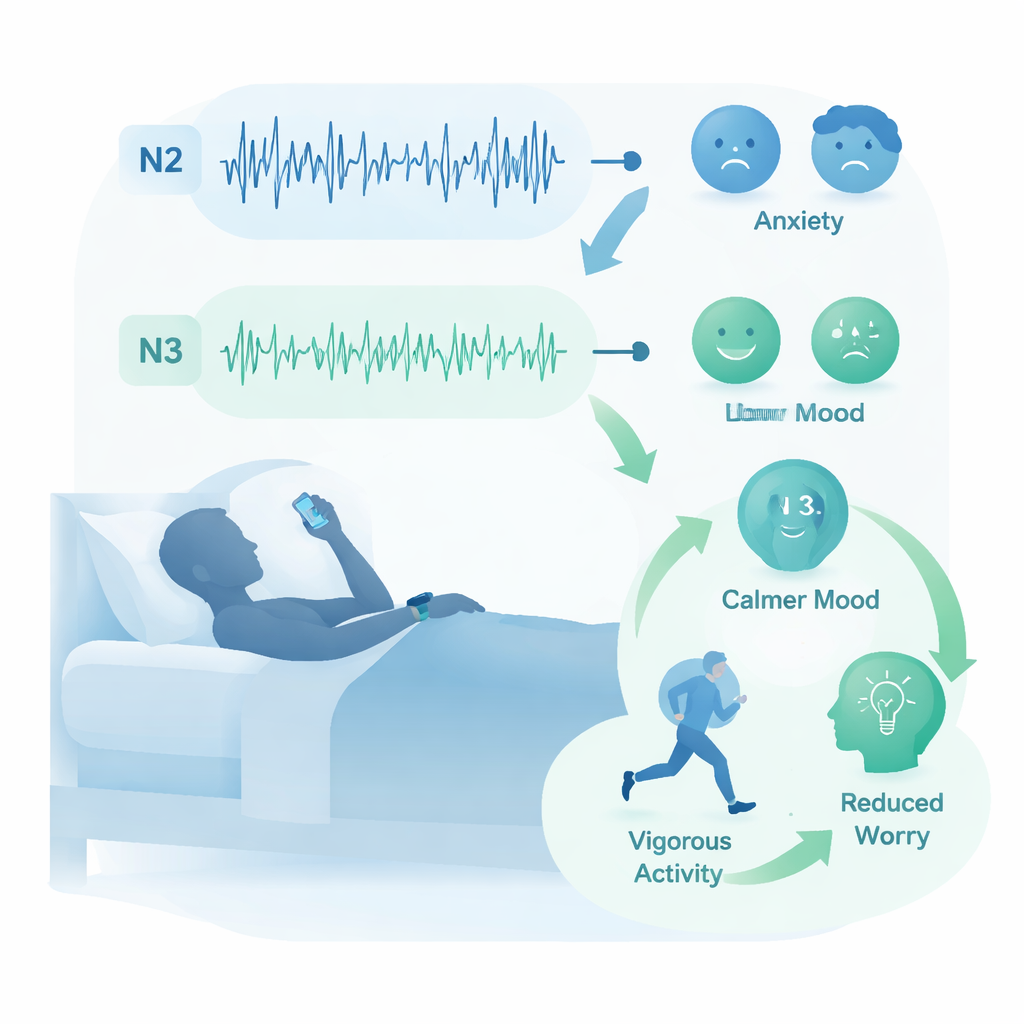
The analysis showed clear links between certain sleep features and how people felt. Going to bed later and taking longer to fall asleep were both tied to higher anxiety and greater distress. People whose sleep was more broken—spending less of their time in bed actually asleep—also tended to report that distress was getting in the way of their daily lives. When the researchers looked at sleep stages, they found that having less time in a common form of light sleep (called N2) went along with higher anxiety and more depressive symptoms. In contrast, spending more time in deep, slow-wave sleep (N3) was tied to lower scores on harm avoidance and lower signs of being constantly on edge, suggesting that deeper sleep might help buffer against a chronically worried, tense style of thinking.
Movement, Personality, and Feeling Rested
Daily movement told a more selective story. Overall activity and moderate-intensity exercise were not strongly linked to most mental health scales, but vigorous activity—more intense bursts of movement—was associated with lower harm-avoidance scores, hinting that more energetic exercise might relate to a less fearful, less cautious personality style or vice versa. The simple 1-to-10 "how restored do you feel?" rating turned out to be especially informative: people who felt more refreshed after sleep tended to report less distress, less depression and anxiety, and better sleep quality on the standard questionnaires, even though this subjective restfulness did not show clear ties to the detailed brain-wave sleep stages. Interestingly, those who engaged in more moderate-intensity activity were slightly more likely to feel their sleep was restorative, linking daytime behavior and next-morning impressions.
What This Means for Everyday Life
For non-specialists, the message is that how you sleep and move—especially how long it takes you to fall asleep, how deep your sleep is, and whether you get vigorous activity—relates in meaningful ways to how anxious, low, or tense you feel. At the same time, simply asking yourself how refreshed you feel in the morning captures something important about your mental well-being that lab instruments alone cannot see. Although this study was small and cannot prove cause and effect, it suggests that combining home-based devices with brief questionnaires could one day help people and clinicians monitor mental health in a more continuous, personal way, potentially catching problems earlier and tailoring advice on sleep and activity to support better mood.
Citation: Miyata, S., Iwamoto, K., Kawai, K. et al. Telemonitored sleep quality and daily activity are associated with mental health outcomes among Japanese workers. Sci Rep 16, 7445 (2026). https://doi.org/10.1038/s41598-026-38584-7
Keywords: sleep and mental health, wearable sleep tracking, physical activity and mood, restorative sleep, Japanese workers