Clear Sky Science · en
Mesoporous silicon microparticles enhance antiviral immunity and memory responses against SARS-CoV-2
Why tiny silicon particles matter for future vaccines
As the world looks beyond the first wave of COVID-19 vaccines, scientists are searching for ways to make protection last longer and work better against severe disease. This study explores an unexpected helper: microscopic, sponge‑like particles made of silicon that can be mixed with coronavirus proteins. These particles act as a booster for the immune system, aiming to create stronger, longer‑lived defenses than many current vaccine additives, while remaining safe and easy to produce.
Building a better vaccine helper
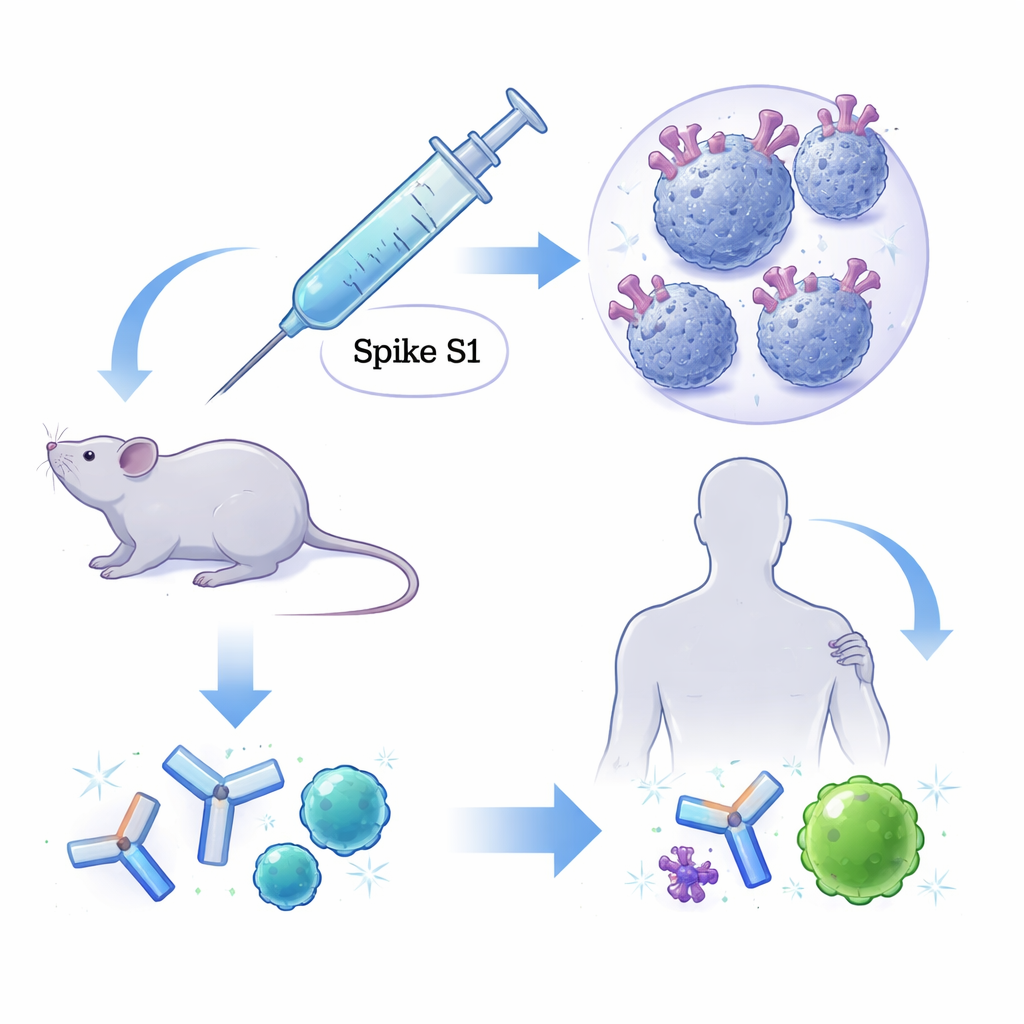
Most modern vaccines do not use whole viruses; instead, they rely on purified pieces such as the spike protein from SARS‑CoV‑2. On their own, these pieces can be too weak to rouse a lasting defense, so they are combined with additives called adjuvants that alert and train the immune system. Aluminum salts have filled this role for nearly a century, but they tend to favor only one arm of the response and are not ideal for driving strong antiviral memory. The team behind this work developed "mesoporous silicon microparticles"—crumb‑like fragments of silicon full of tiny pores—that can be loaded with the spike protein’s S1 portion. Their size, high surface area, and slow‑release behavior are designed to make them attractive targets for immune cells that patrol the body.
Stronger and longer‑lasting antibodies in mice
The researchers compared silicon‑based vaccine mixtures to standard aluminum‑based ones in mice. Over more than six months, both versions produced similar levels of antibodies against the spike S1 protein, clearly outpacing the spike protein given alone. Importantly, after a late booster dose, the silicon formulation triggered a marked rise in a particular antibody type linked to antiviral, cell‑killing responses, and these antibodies were especially good at blocking the spike protein from attaching to the human ACE2 receptor—the first step of infection. While the mouse antibodies worked well against the original, Beta, and Delta versions of the virus, they did not neutralize Omicron well, reflecting how far that variant’s spike has drifted from the original strain used for immunization.
Mobilizing the body’s cellular defenders
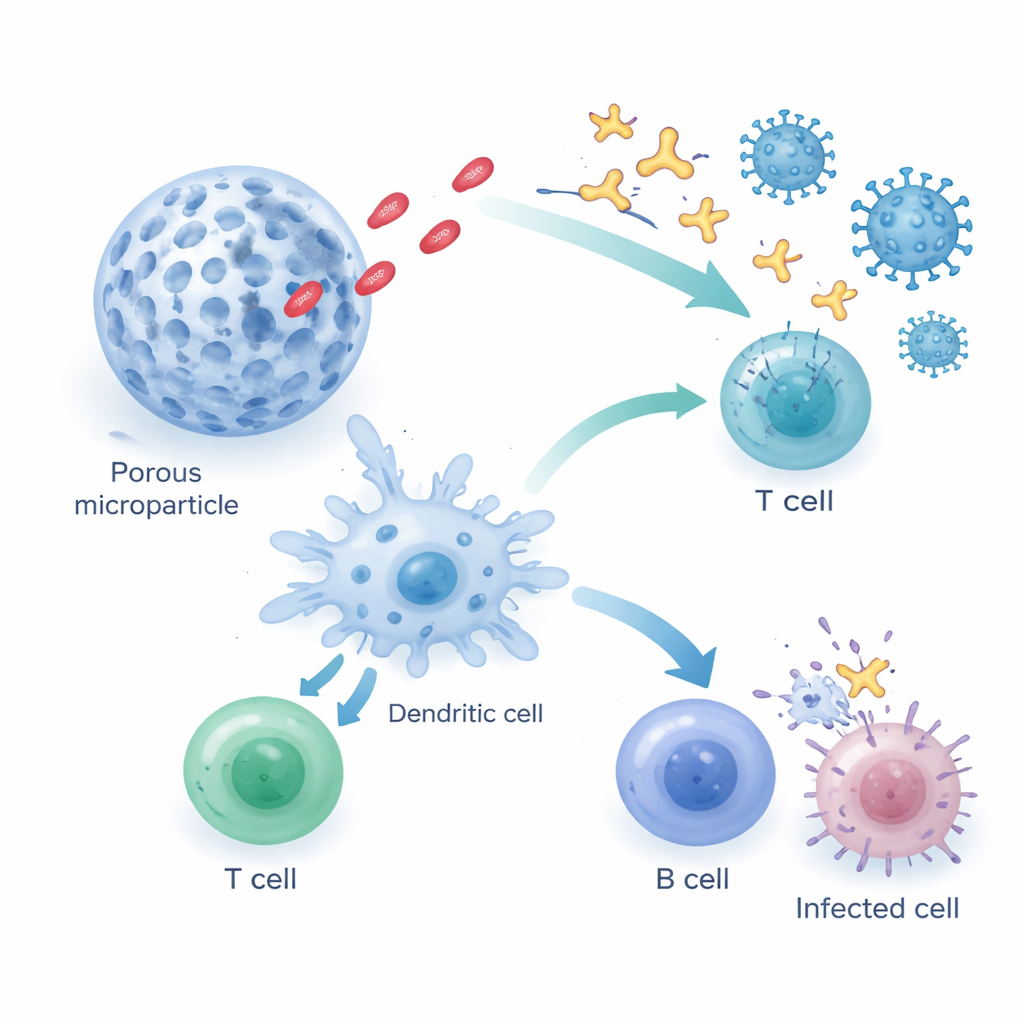
Antibodies are only part of the story; long‑term protection against viruses also depends on T cells that can recognize and destroy infected cells. When the scientists examined immune cells from vaccinated mice, they found that those given the silicon‑based formulation produced more of the antiviral messenger molecule interferon‑gamma, especially from T cells associated with direct killing of infected cells. This signaled a strong cellular response that persisted for at least seven months and was more pronounced than with aluminum. In a stringent test using genetically engineered mice that are highly sensitive to SARS‑CoV‑2, both the silicon‑ and aluminum‑based vaccines protected most animals from a lethal challenge, sharply reducing virus levels in the lungs and brain compared with unvaccinated controls.
Hints from human immune cells
To see whether these particles might also benefit human immunity, the team collected blood cells from volunteers who had previously been infected with or vaccinated against SARS‑CoV‑2. In the laboratory, they exposed these cells to spike‑derived fragments, either floating freely or attached to the silicon particles. When the viral fragments were carried by the silicon, more T cells from vaccinated donors switched on interferon‑gamma production, particularly when supported by dendritic cells—the immune system’s professional sentinels. These results suggest that the particles can help reawaken existing immune memory and may be well suited to boosting responses in people who have already encountered the virus or a prior vaccine.
What this could mean for future vaccines
Taken together, the mouse and human cell data portray mesoporous silicon microparticles as promising next‑generation vaccine helpers. They match aluminum salts in overall antibody production, outperform them after a delayed booster in generating potent, antiviral antibody types, and provide stronger support for durable T‑cell responses—all while being made from a biodegradable, low‑toxicity material that can be produced at scale. For a layperson, the message is that carefully engineered silicon crumbs may help future vaccines not only raise higher shields against viruses like SARS‑CoV‑2, but also teach the immune system to remember those threats more deeply and for longer.
Citation: López-Gómez, A., Real-Arévalo, I., Mayol-Hornero, E. et al. Mesoporous silicon microparticles enhance antiviral immunity and memory responses against SARS-CoV-2. Sci Rep 16, 7355 (2026). https://doi.org/10.1038/s41598-026-38583-8
Keywords: COVID-19 vaccines, vaccine adjuvants, silicon microparticles, antiviral immunity, immune memory