Clear Sky Science · en
The LS/CS ratio-performance relationship in DG-activated hybrid cements
Turning Industrial Waste into Stronger, Greener Cement
Mountains of waste from metal refineries—materials like lithium slag and copper slag—are piling up around the world, threatening land, water, and air quality. This study explores a way to transform those troublesome by‑products into useful ingredients for cement, cutting waste and lowering the environmental footprint of construction without sacrificing strength. By fine‑tuning how different slags are mixed and gently “woken up” with a mild additive, the researchers show that concrete can be both greener and robust enough for real‑world use.
Why These Wastes Are a Growing Problem
Producing lithium for batteries and copper for wiring generates huge amounts of leftover slag for every ton of valuable metal. Lithium slag is rich in silica and alumina, while copper slag contains a lot of iron and silica but very little lime. On their own, these materials react slowly in cement and are hard to use efficiently. At the same time, ordinary Portland cement, the backbone of modern building, is responsible for a large share of industrial carbon emissions. Finding a way to blend these slags into cement, and get them to harden properly without harsh chemicals, could ease environmental pressure on both the metals and cement industries.
A Gentle Push Instead of Harsh Chemicals
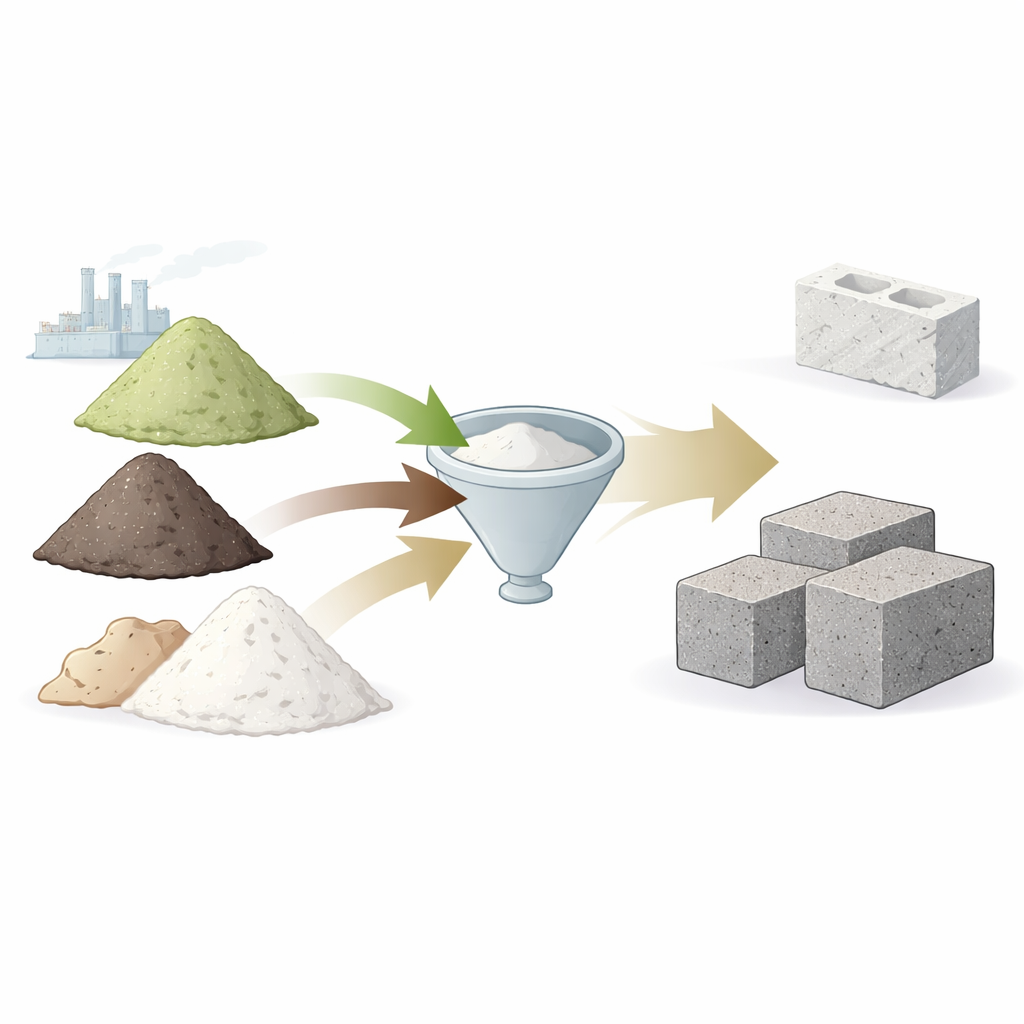
The team designed a hybrid binder in which 30 percent of the cement is replaced by a mix of lithium slag and copper slag, while a small dose of desulfurized gypsum—a by‑product from power‑plant flue gas cleaning—acts as a mild activator. Instead of using strong alkalis, which can be corrosive and costly, they rely on this low‑alkali, sulfate‑rich environment to coax the waste powders into reacting. The lithium slag is ground very finely by wet ball milling, giving it tiny particles that can act as seeds for new crystals to grow. Copper slag, with larger and more angular grains, helps fill space and contributes iron‑rich components that later join the hardening network.
Finding the Sweet Spot in the Mix
To see how recipe changes affect performance, the researchers prepared several pastes and mortars with different lithium‑to‑copper slag ratios, all at the same overall replacement level. They measured how easily the fresh mixtures flowed, how strong they became at 3, 7, and 28 days, and what kinds of crystals and gels formed inside. They also used tools such as X‑ray diffraction, infrared spectroscopy, electron microscopy, and mercury intrusion tests to probe the internal structure and pore system. One mixture in particular—containing 20 percent copper slag and 10 percent lithium slag—stood out. After 28 days, its compressive strength reached more than 95 percent of plain cement, and its flexural strength was clearly higher than mixes with only one type of slag.
How the Slags Work Together
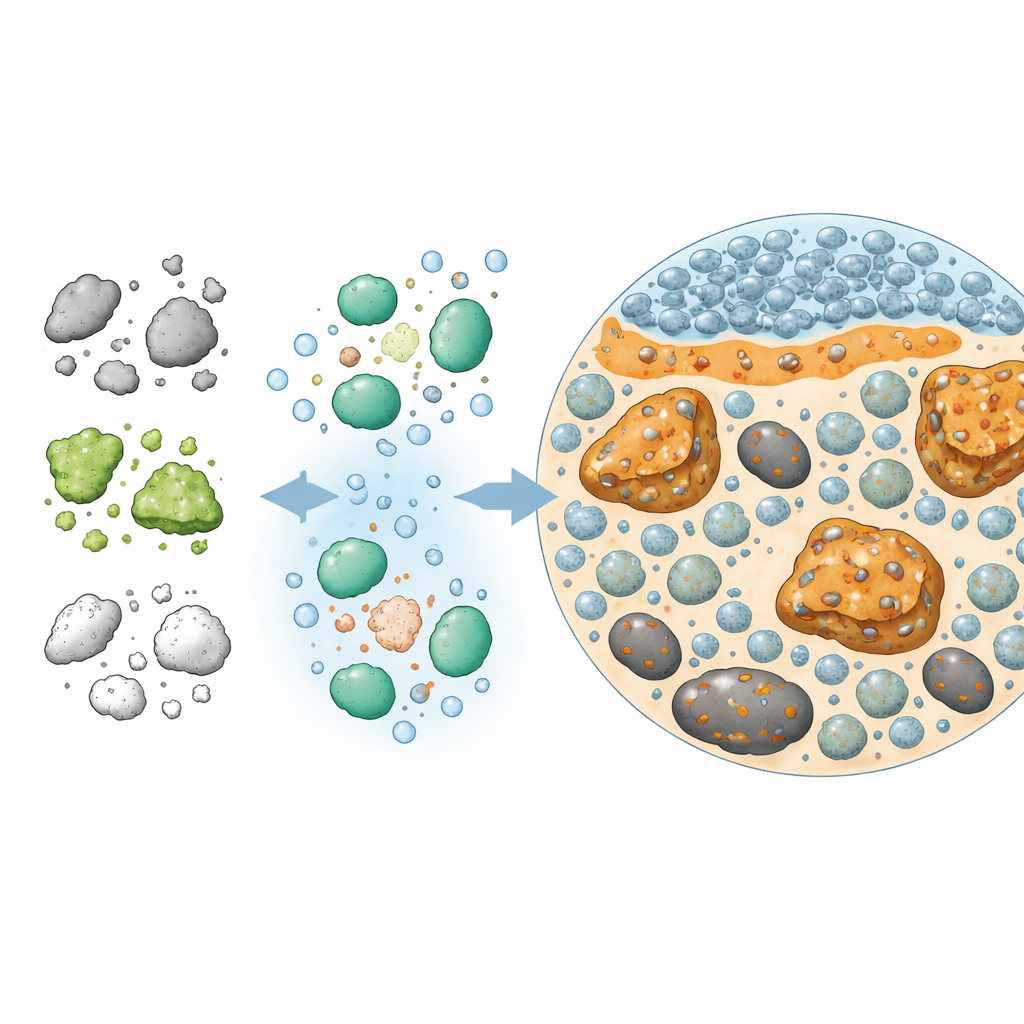
The data show that lithium slag and copper slag do more together than either can accomplish alone. Lithium slag consumes calcium hydroxide, a by‑product of cement hydration, and in doing so helps form extra binding gels rich in silica and alumina. These gels also promote further reaction of minerals within the copper slag, including iron‑bearing phases that slowly break down and join the hardened network. At the same time, the different particle sizes of cement, fine lithium slag, and coarser copper slag allow tighter packing, leaving less empty space. Pore measurements reveal that the optimized mix shifts the material toward smaller, less harmful pores and a denser, more complex microstructure, which is closely tied to improved strength and durability.
What This Means for Future Buildings
In plain terms, the study shows that carefully balanced blends of lithium slag and copper slag, gently activated with desulfurized gypsum, can replace a significant share of traditional cement while still delivering strong, compact building materials. The best mix nearly matches standard cement in strength, improves internal density, and turns troublesome industrial waste into a resource. Although questions remain about very long‑term behavior and resistance to harsh environments, this work points toward a practical path for more sustainable concrete that makes smarter use of what industry now throws away.
Citation: Xiang, B., Zhang, Z., Yang, G. et al. The LS/CS ratio-performance relationship in DG-activated hybrid cements. Sci Rep 16, 8865 (2026). https://doi.org/10.1038/s41598-026-38577-6
Keywords: green cement, industrial waste recycling, lithium slag, copper slag, sustainable concrete