Clear Sky Science · en
Workplace ostracism influences hotel employees pro-environmental behaviour through green work engagement
Why the Hotel Workplace Matters for the Planet
When you stay in a hotel, it’s easy to notice the visible green efforts: towel reuse cards, keycards that switch off the lights, or recycling bins in the hallway. What you don’t see is how the social life behind the front desk and in the back offices can make or break those environmental promises. This study looks at what happens when hotel employees feel ignored or left out at work, and how that quiet social pain can drain their enthusiasm for saving energy, reducing waste, and supporting a hotel’s eco-friendly goals.
Being Left Out at Work Hurts More Than Feelings
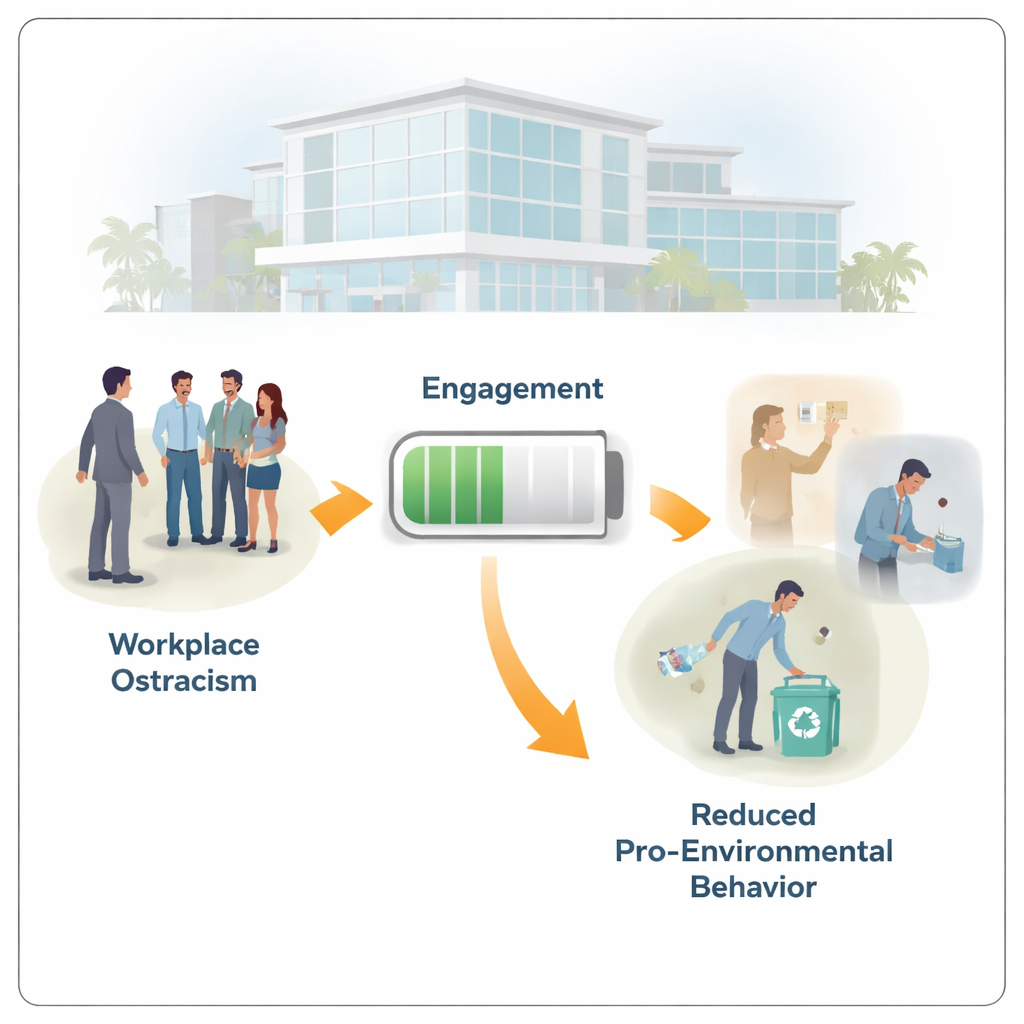
The researchers focused on “workplace ostracism” – the experience of being avoided, ignored, or excluded by coworkers or supervisors. They surveyed 528 employees from four- and five-star hotels in major Chinese cities, asking about their day-to-day social experiences, their enthusiasm for environmental tasks, and how often they took voluntary green actions such as recycling, switching off unused lights, or cutting water waste. The results were clear: employees who felt more excluded were significantly less likely to go the extra mile for the environment. In other words, a chilly social climate at work can quietly cool down employees’ willingness to support their hotel’s sustainability efforts.
Green Enthusiasm Is the Missing Link
To understand why exclusion leads to fewer eco-friendly actions, the study examined “green work engagement” – how energetic, dedicated, and absorbed employees feel when they take part in environmentally focused tasks. This kind of engagement is like a battery that powers everyday green choices. The analysis showed that ostracism drains this battery: socially sidelined employees reported much lower green engagement. In turn, employees with higher green engagement were more likely to act in environmentally responsible ways. This means that feeling left out doesn’t just hurt emotionally; it saps the motivation that turns good environmental intentions into real behavior.
When Green Policies Help—and When They Backfire
The study also explored how hotel policies and personal values shape this process. Many hotels now have “green management initiatives,” such as formal sustainability policies, environmental training, and clear signals from leaders that going green is a core priority. Surprisingly, the data showed that when these initiatives were very strong, the negative effect of ostracism on green engagement became even sharper. For employees who already felt excluded, constant reminders and pressure to support green programs could make them feel even more out of place and less willing to get involved. This suggests that strong environmental systems cannot replace a supportive, respectful workplace; both are needed for green programs to work as intended.
Passion for the Environment Makes a Difference
On the positive side, the researchers found that employees’ personal passion for the environment can act as a powerful buffer. Those who cared deeply about environmental protection were better at turning their green engagement into concrete actions. When these passionate employees felt energized about sustainability tasks, they were much more likely to follow through with day-to-day green behaviors, even when workplace conditions were less than ideal. This suggests that nurturing genuine environmental concern among staff does more than improve attitudes; it helps convert enthusiasm into consistent, on-the-ground change.
What This Means for Guests, Workers, and the Planet
For a lay reader, the message is straightforward: a hotel’s environmental performance depends not only on technology and policies but also on how people treat one another at work. Social exclusion reduces employees’ green engagement and, in turn, their willingness to act in eco-friendly ways. Strong environmental programs can’t fully compensate for a toxic social climate, but building an inclusive culture and fostering real passion for the environment can help hotels deliver on their sustainability promises. The next time you see a “please reuse your towel” sign, remember that the quiet bonds—and rifts—among staff behind the scenes play a crucial role in whether that hotel truly lives up to its green image.
Citation: Haijiang, H., Rafiq, M. Workplace ostracism influences hotel employees pro-environmental behaviour through green work engagement. Sci Rep 16, 7811 (2026). https://doi.org/10.1038/s41598-026-38569-6
Keywords: workplace ostracism, pro-environmental behavior, hotel employees, employee engagement, sustainability at work