Clear Sky Science · en
Excess cardiovascular morbidity in psoriatic arthritis and cardioprotective effects of biologic dmards: a propensity-matched analysis
Why Joint Disease Matters to the Heart
Psoriatic arthritis is usually thought of as a painful joint and skin condition, but this study shows it is also closely tied to heart health. Using medical records from hundreds of thousands of adults, the researchers asked two key questions: Do people with psoriatic arthritis face more heart and blood vessel problems than similar people without it? And among those with the disease, do modern "biologic" medicines offer any protection for the heart compared with older drugs? Their answers suggest that this form of arthritis is much more than an ache in the joints—it is an important red flag for future heart trouble.
Looking at Real-World Patients
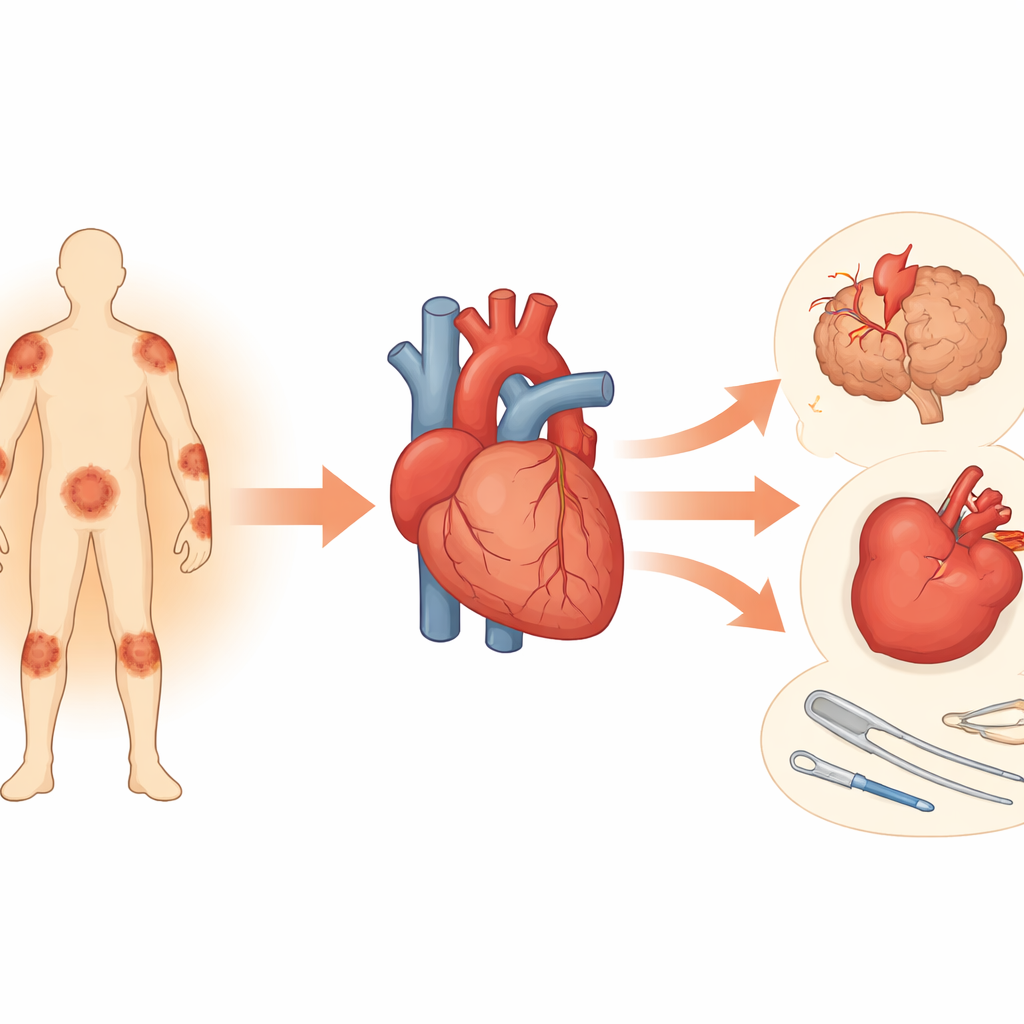
To explore these questions, the team turned to a large U.S. network of electronic health records covering more than two decades. They identified over 123,000 adults with psoriatic arthritis and compared them to an equal number of people of similar age, sex, and health background who did not have psoriasis or psoriatic arthritis. They then followed both groups for several years to see how often serious heart problems occurred—events like heart attacks, strokes, heart failure, and deaths from any cause. They also recorded how often patients needed major heart procedures, including stent placement, bypass surgery, and heart valve interventions. By carefully matching patients on many common risk factors such as high blood pressure, diabetes, obesity, and smoking, the researchers tried to isolate the added risk that comes specifically with psoriatic arthritis.
Higher Heart Risks in Psoriatic Arthritis
The analysis showed that people with psoriatic arthritis carry a clearly heavier burden of cardiovascular disease than their matched peers. Rates of major heart and vessel events were roughly 70% higher, and deaths from any cause were nearly doubled. Heart failure, heart attacks, and strokes all occurred more often in the psoriatic arthritis group, even after accounting for other medical conditions. These patients were also more likely to develop a wide range of related problems, such as clogged arteries in the legs, valve disorders, and irregular heart rhythms that sometimes require implanted devices to stabilize the heartbeat. In fact, the need for advanced procedures like stent placement, bypass surgery, valve replacement, and pacemaker or defibrillator implantation was markedly higher in people with psoriatic arthritis than in those without it.
Do Modern Arthritis Drugs Help the Heart?
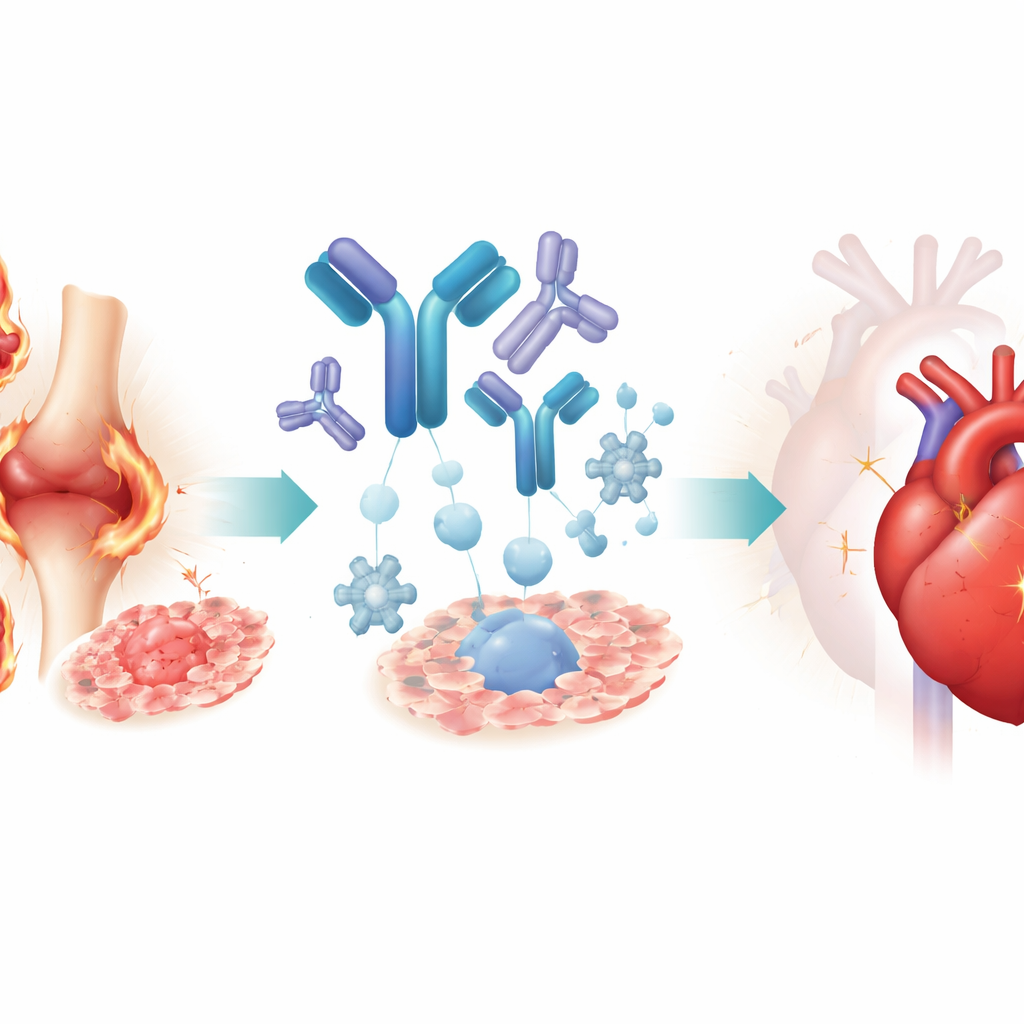
Within the psoriatic arthritis group, the researchers then compared two treatment paths. One involved only older, tablet-based drugs that broadly damp down the immune system. The other used biologic therapies—engineered antibodies that target specific immune signals driving inflammation. After matching nearly 45,000 patients in each treatment group on age, existing illnesses, and other factors, they found that those on biologic drugs had slightly fewer major heart events and a modestly lower risk of death during follow-up. The differences were small but consistent: heart attacks, heart failure, and the combined measure of serious cardiovascular events all tended to be less common in people treated with biologics, though not every comparison reached strict statistical certainty. Overall, the pattern supports the idea that better control of long-lasting inflammation may bring small but meaningful heart benefits.
What This Means for Patients and Doctors
Taken together, the findings argue that psoriatic arthritis should be viewed as a whole-body condition with consequences that reach far beyond the joints. The level of extra heart risk seen here is similar to that reported in other inflammatory arthritic diseases, suggesting that long-term immune activation speeds up damage to blood vessels and the heart muscle. The authors recommend that heart risk checks—such as blood pressure, cholesterol, and lifestyle assessment—be built into routine care for everyone with psoriatic arthritis, starting at diagnosis. For patients at higher risk, biologic treatments may offer a modest added layer of protection in addition to their benefits for pain, stiffness, and skin disease, but they are not a substitute for controlling blood pressure, blood sugar, weight, and smoking.
Take-Home Message for Everyday Life
For a layperson, the key message is straightforward: psoriatic arthritis is a warning sign for the heart. People living with this condition are more likely to suffer heart attacks, strokes, heart failure, and to need major heart procedures than those without it. Modern targeted medicines appear to chip away at this risk but do not erase it. The study’s conclusion is that anyone with psoriatic arthritis—and their clinicians—should treat heart health as a central part of managing the disease, combining effective arthritis treatment with aggressive prevention of traditional cardiovascular risk factors.
Citation: Tyczyńska, K., Krajewski, P.K., Złotowska, A. et al. Excess cardiovascular morbidity in psoriatic arthritis and cardioprotective effects of biologic dmards: a propensity-matched analysis. Sci Rep 16, 9688 (2026). https://doi.org/10.1038/s41598-026-38565-w
Keywords: psoriatic arthritis, cardiovascular risk, biologic therapy, inflammation, heart disease prevention