Clear Sky Science · en
Morpho-phytochemical and molecular diversity in cherry tomato (Solanum lycopersicum var. cerasiforme) germplasm
Why Tiny Tomatoes Matter
Cherry tomatoes may be small, but they pack a powerful punch for both nutrition and income, especially in countries like Bangladesh where malnutrition and limited farm profits are major concerns. This study set out to discover which cherry tomato types are not only tasty and colorful, but also naturally rich in health‑boosting compounds and strong enough to serve as parents for future, improved varieties. By looking closely at how these tomatoes look in the field and what their DNA reveals in the lab, the researchers built a roadmap for breeding better cherry tomatoes for farmers and consumers alike.
Many Looks, Many Possibilities
The team evaluated 36 cherry tomato genotypes, sourced from Bangladesh and abroad, grown in experimental fields in northern Bangladesh. At a glance, the fruits showed remarkable variety: some were tiny, some much larger; shapes ranged from classic round to pear, heart, and even glove‑like forms; colors spanned red, orange, yellow, tangerine, greenish‑red, and purple. Yield also differed sharply from one genotype to another. Certain lines produced more than three and a half kilograms of fruit per plant, while others yielded barely a tenth of that. This visible diversity hinted at a rich genetic treasure chest that breeders could tap to meet different market and nutritional needs.
Nutrition Inside the Fruit
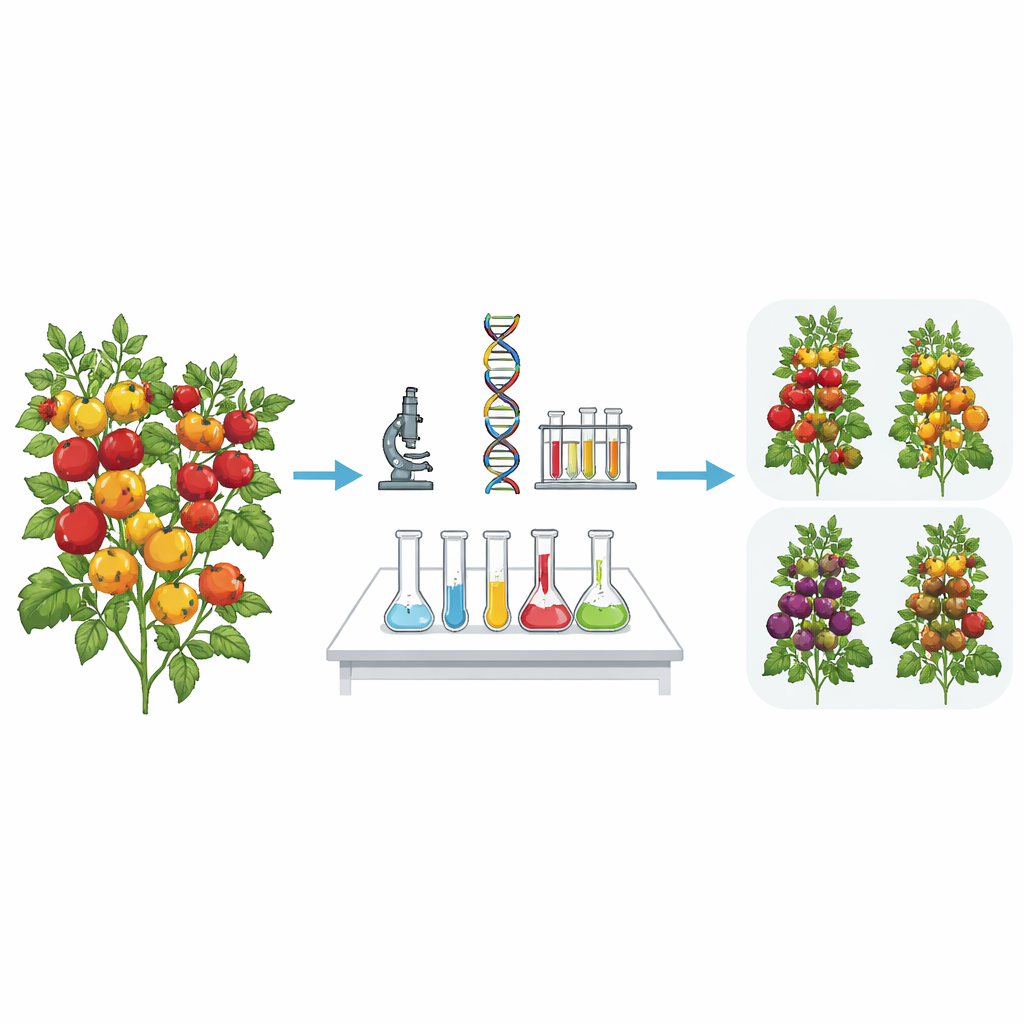
Beyond looks and yield, the researchers measured key nutritional traits. They focused on carotenoids and lycopene—the pigments that give tomatoes their vivid colors and act as powerful antioxidants—as well as natural sugars that influence flavor. Some genotypes excelled: one line stood out for its high total carotenoid content, another for its very high lycopene level, and others for particularly sweet fruit. By comparing these measurements across all lines, the team could pinpoint which tomatoes combined attractive appearance, strong yield, and rich nutritional profiles, making them especially promising for breeding healthier varieties that could help improve local diets.
From Field Patterns to Genetic Maps
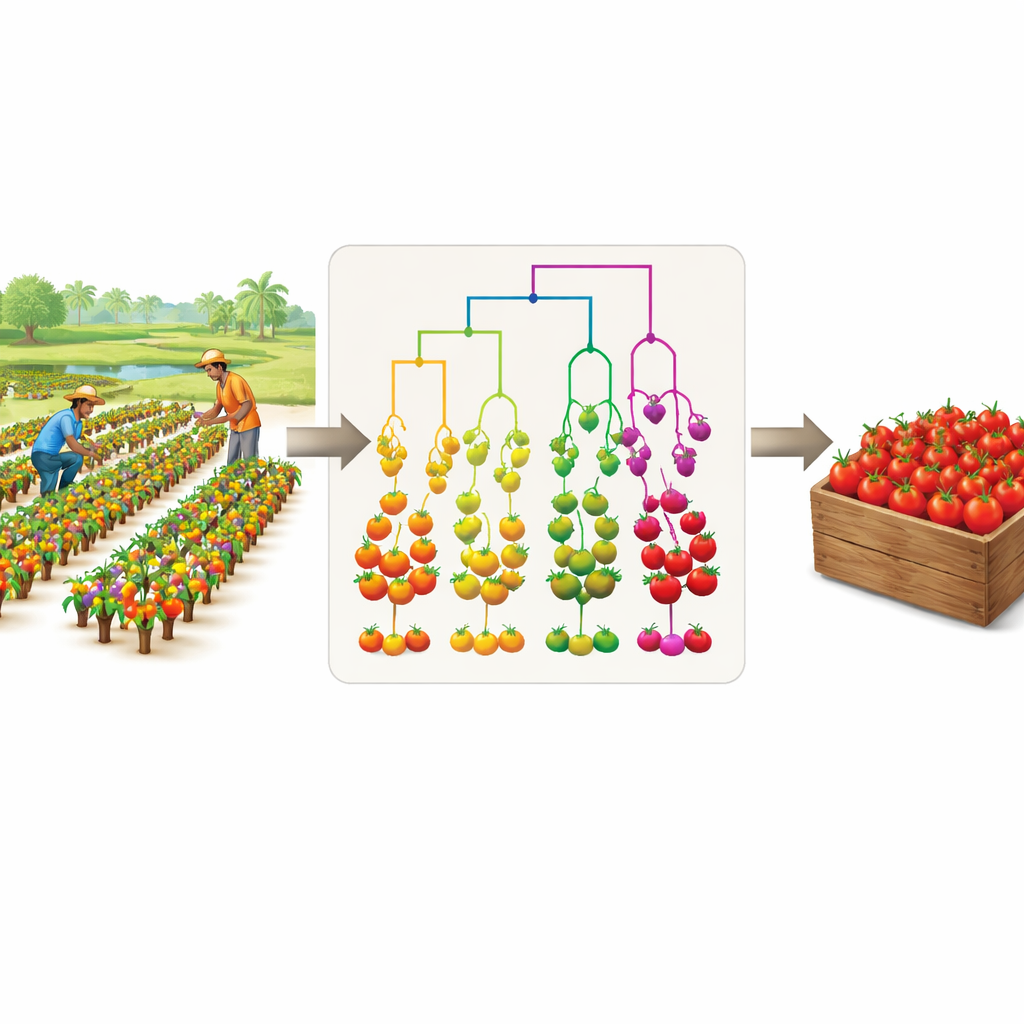
To make sense of so many traits at once, the scientists used statistical tools that group similar plants together and highlight the features that matter most. Based on field and fruit measurements alone, the 36 genotypes fell into five clusters, each with its own strengths—early flowering and harvest, high yields, longer shelf life, or superior nutrient content. Another analysis showed that a handful of traits, particularly fruit set and lycopene content, explained much of the difference among lines. This helped the team zero in on genotypes that are not just good performers, but also genetically distinct enough to be valuable parents in crossing programs.
DNA Fingerprints of Tiny Tomatoes
Because environment can blur the picture drawn from field observations, the researchers also examined the tomatoes at the DNA level. Using short, repeated stretches of DNA known as SSR markers—essentially genetic barcodes—they detected dozens of distinct variants across the 36 lines. This allowed them to build a family‑tree‑like diagram and to sort the genotypes into three major genetic groups. Some of the same lines that looked promising in the field also stood out genetically, confirming that they are truly distinct, not just products of weather or soil differences. The overlap between field‑based clusters and DNA‑based clusters gave the team extra confidence in their choices.
Picking the Best Parents for Tomorrow’s Tomatoes
By combining what they saw in the field with what they read from the plants’ DNA, the researchers identified a set of cherry tomato genotypes that are both high performing and genetically diverse. These lines offer traits such as high yield, long shelf life, early harvest, and elevated levels of beneficial pigments and sugars. In plain terms, they are strong candidates to serve as parents for the next generation of cherry tomato varieties—ones that can help Bangladeshi farmers earn more and consumers eat better. The study shows that carefully blending visible traits and genetic information is a powerful way to design future crops that are productive, nutritious, and resilient.
Citation: Mushrat, Z., Sarker, A., Kabir, M.S. et al. Morpho-phytochemical and molecular diversity in cherry tomato (Solanum lycopersicum var. cerasiforme) germplasm. Sci Rep 16, 9049 (2026). https://doi.org/10.1038/s41598-026-38561-0
Keywords: cherry tomato, genetic diversity, plant breeding, nutritional quality, Bangladesh agriculture