Clear Sky Science · en
Physics-guided machine learning framework for RCA concrete by experimental database, modelling, and statistical validation
Turning Old Concrete into a New Resource
Every year, billions of tons of broken concrete from demolished buildings and roads are treated as waste, even though much of it could be reused. This study explores how to turn that rubble into reliable new concrete by combining careful laboratory testing with modern machine learning. The goal is to make construction more sustainable without sacrificing safety, by learning exactly how much recycled material can be used and under what conditions.
Why Reusing Concrete Is Not Straightforward
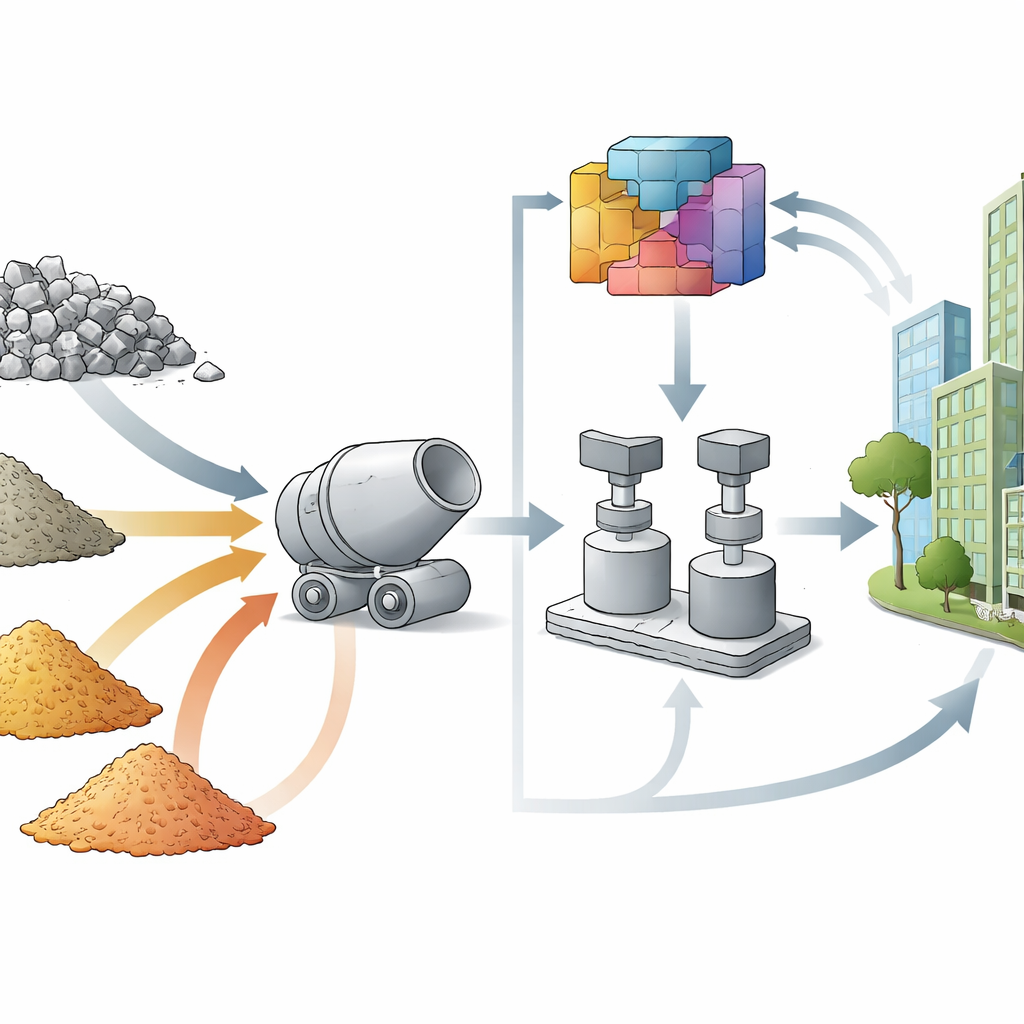
Recycled concrete aggregate comes from crushing old concrete into smaller pieces that can replace the gravel and sand normally mined for new construction. Using it cuts down on waste, quarrying, and transport emissions. But these recycled particles still carry bits of old mortar and tiny cracks, making them more porous and less uniform than natural stone. As a result, concrete made with recycled aggregate can lose strength and become harder to predict. Engineers need clear, trustworthy rules about how different amounts, sizes, and qualities of recycled aggregate affect the strength of new concrete.
Building a Rich Experimental Picture
To answer these questions, the researchers ran a comprehensive series of concrete mixes using recycled material from six different original strength classes, ranging from very weak to strong structural concrete. They separated the recycled aggregates into three size bands—fine, medium, and gravel-sized—and used them to replace 10% to 50% of the natural aggregate, always keeping the same water and cement conditions. For each mixture they measured compressive strength (how much squeezing it can take), splitting tensile strength (how it behaves in tension), and flexural strength (how it bends). Across all tests, strength consistently dropped as the proportion of recycled aggregate increased, but the size of the drop depended strongly on both particle size and the quality of the original concrete. Fine recycled particles, with more attached old mortar and pores, did the most damage to strength, while coarse and gravel-sized particles were less harmful.
Finding Safe Limits and Key Influences
The experimental results revealed useful design rules that can guide practical construction. When recycled material came from low-strength parent concrete, replacing 30% of natural aggregate led to double-digit percentage losses in both compressive and tensile strength, especially when fine particles were used. In contrast, when the recycled aggregate originated from high-strength concrete, strength losses at 30% replacement were small, and overall performance remained acceptable for structural use. Across many series, a consistent “tipping point” appeared: mixtures with 10% or 20% recycled aggregate generally retained good strength, while going beyond roughly 30% brought a noticeable drop, particularly for weaker source materials and finer fractions. These patterns match earlier studies and show that not all recycled aggregates are equal—quality and size matter.
Teaching Machines to Respect Physics
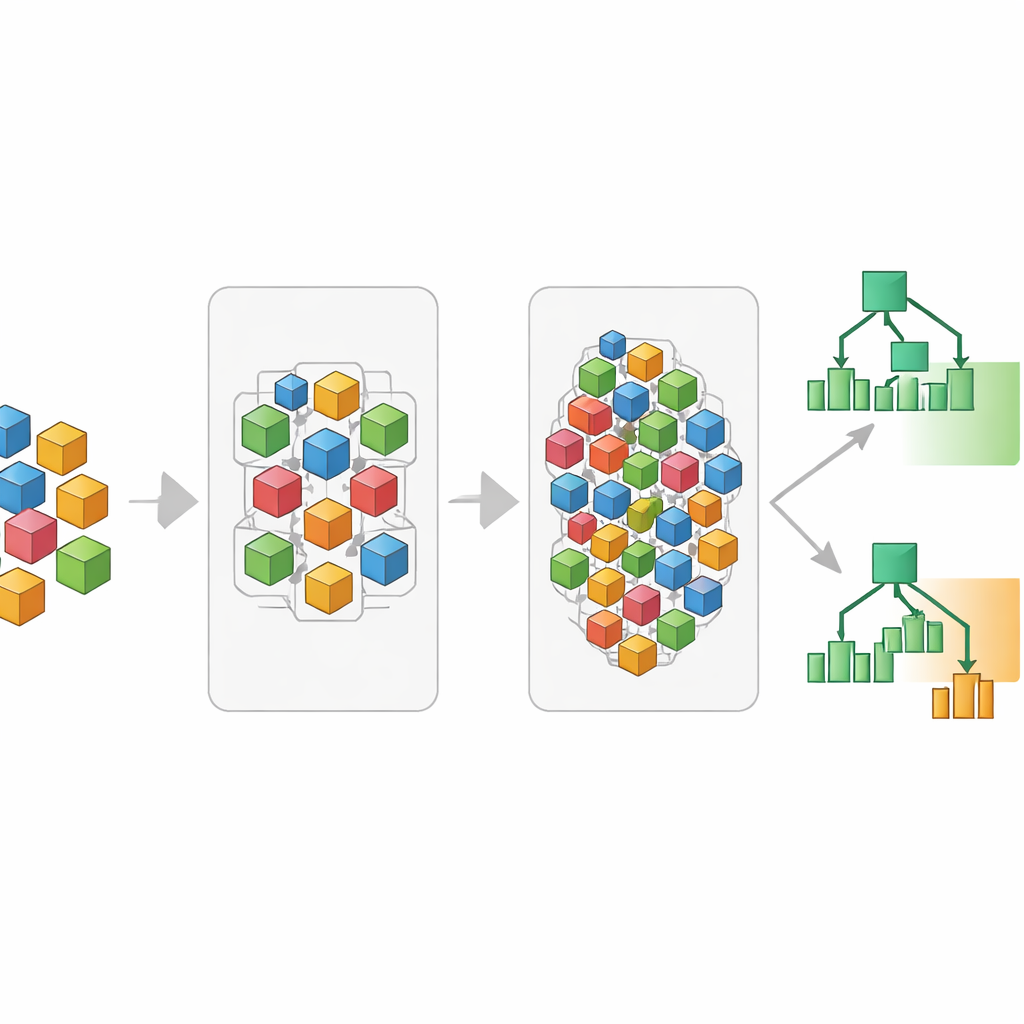
Because running endless laboratory tests is impractical, the team turned to machine learning to predict strength for new combinations that were not physically tested. Instead of feeding the computer raw data alone, they introduced what they call a physics-guided framework. First, they carefully cleaned and organized the test results, then created additional “synthetic” data points by gently nudging mix parameters and strengths within narrow, realistic bounds that reflect ordinary lab variability. Next, they used an advanced oversampling method to fill in gaps between tested mixtures, but only along directions that made physical sense. These enriched datasets trained two popular ensemble models, XGBoost and LightGBM, along with simple linear surrogate equations that summarize the dominant trends in a form engineers can easily use.
How Well the Predictions Work
Once trained, the models were judged on completely unseen test mixes. Their predictions for compressive and tensile strength matched measurements closely, with errors staying within the range commonly seen from repeated lab tests. The models were especially accurate for tensile strength, where the underlying degradation pattern with more recycled aggregate is smoother and easier to capture. Importantly, the authors checked that the predicted declines in strength with higher recycled content were not statistical flukes: standard statistical tests showed that these trends are both strong and highly significant. By comparing versions of the models with and without physics-guided data expansion, they found that the guided approach produced slightly less eye-catching accuracy scores, but far more stable and realistic behavior, particularly in high-replacement, data-sparse regions.
What This Means for Greener Construction
In everyday terms, this work shows that it is possible to use computer models to design greener concrete mixes that rely on recycled material, without treating the underlying physics as an afterthought. The study confirms that modest amounts of high-quality recycled aggregate—especially coarser particles from stronger old concrete—can safely replace a significant share of natural aggregate. At the same time, it demonstrates a way for machine learning to stay grounded in real-world behavior by honoring known limits and trends. This kind of physics-aware prediction tool can help engineers make better, quicker decisions about mix design, supporting the wider adoption of recycled concrete while keeping structures safe and reliable.
Citation: Mohamud, M.A., Alasiri, M.R., Özdöner, N. et al. Physics-guided machine learning framework for RCA concrete by experimental database, modelling, and statistical validation. Sci Rep 16, 7907 (2026). https://doi.org/10.1038/s41598-026-38554-z
Keywords: recycled concrete aggregate, sustainable construction, machine learning in materials, data-driven mix design, concrete strength prediction