Clear Sky Science · en
FK506-binding protein-5 in high-fat diet-induced metabolic dysfunction-associated steatotic liver disease
Why this research matters for everyday health
Many people worry about how a long-term high-fat diet can harm their liver and overall metabolism, leading to conditions such as fatty liver disease and type 2 diabetes. This study looks at a stress-related protein called FKBP5 and shows how it unexpectedly links our diet, gut bacteria, and liver health. By revealing how blocking this protein protects mice from fatty liver and obesity, the work hints at new ways to prevent diet-related liver damage by acting on both our genes and our gut microbes. 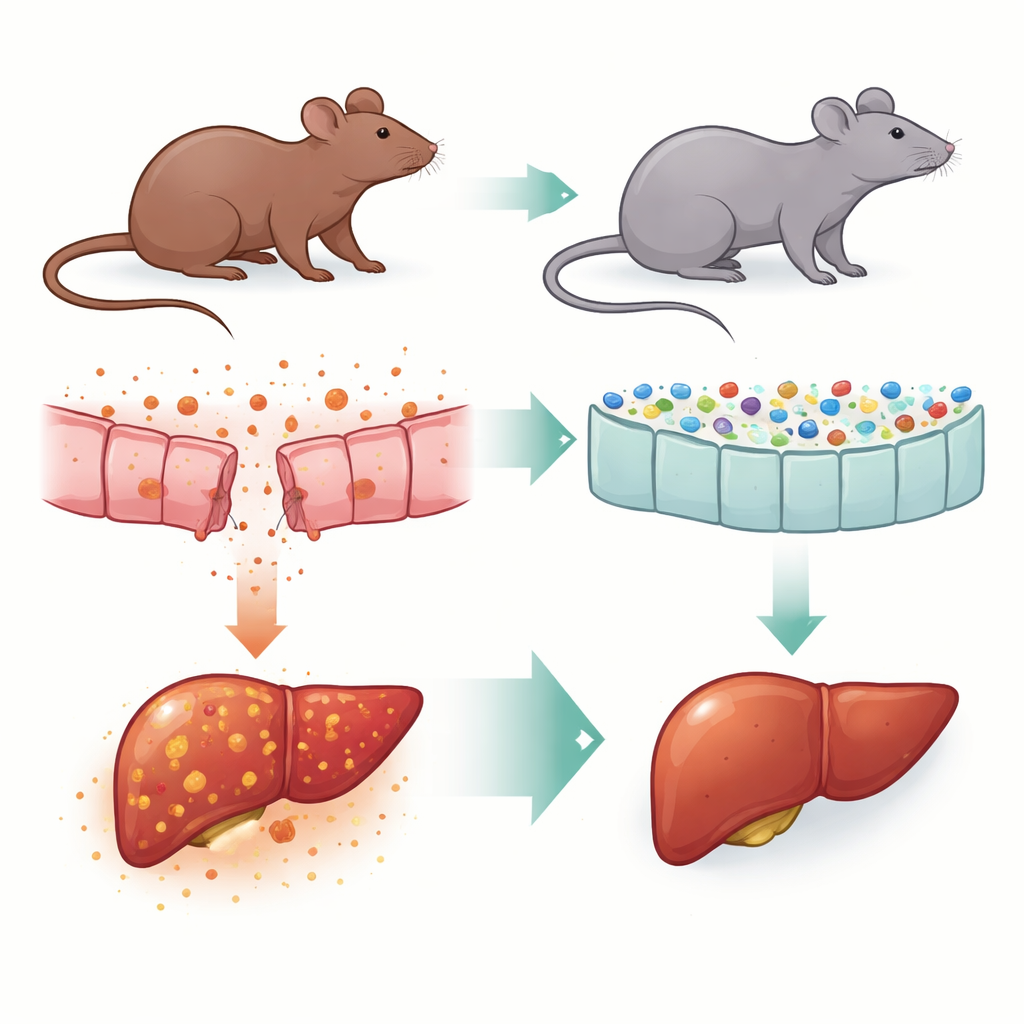
From high-fat eating to sick liver
When animals (and people) eat a high-fat diet over time, they often gain weight, the liver fills with fat, and blood sugar control worsens. The researchers compared normal mice with mice genetically engineered to lack FKBP5 and fed both groups either regular chow or a high-fat diet for 16 weeks. Normal mice on the high-fat diet gained more weight, accumulated fat in their blood and liver, and showed higher markers of liver injury. In contrast, mice without FKBP5 stayed leaner, had lower liver and blood fat, better glucose tolerance, and fewer signs of liver scarring and inflammation. Their livers contained less fat under the microscope and expressed fewer genes that drive fat storage, tissue stiffening, and inflammatory damage.
Gut bacteria and the gut wall as key gatekeepers
The team then asked why FKBP5 loss was so protective. They focused on the gut microbiota—the vast community of bacteria in the intestine—and the thin gut wall that separates these microbes from the bloodstream. Using gene-based surveys of bacterial communities, they found that high-fat feeding shifted gut bacteria in normal mice toward patterns linked to obesity and liver disease, including changes in the balance between two major groups, Firmicutes and Bacteroidetes. Mice lacking FKBP5, however, showed a distinct bacterial profile that was more resistant to high-fat-induced disruption and was enriched in groups associated with leanness and beneficial metabolites such as butyric acid. 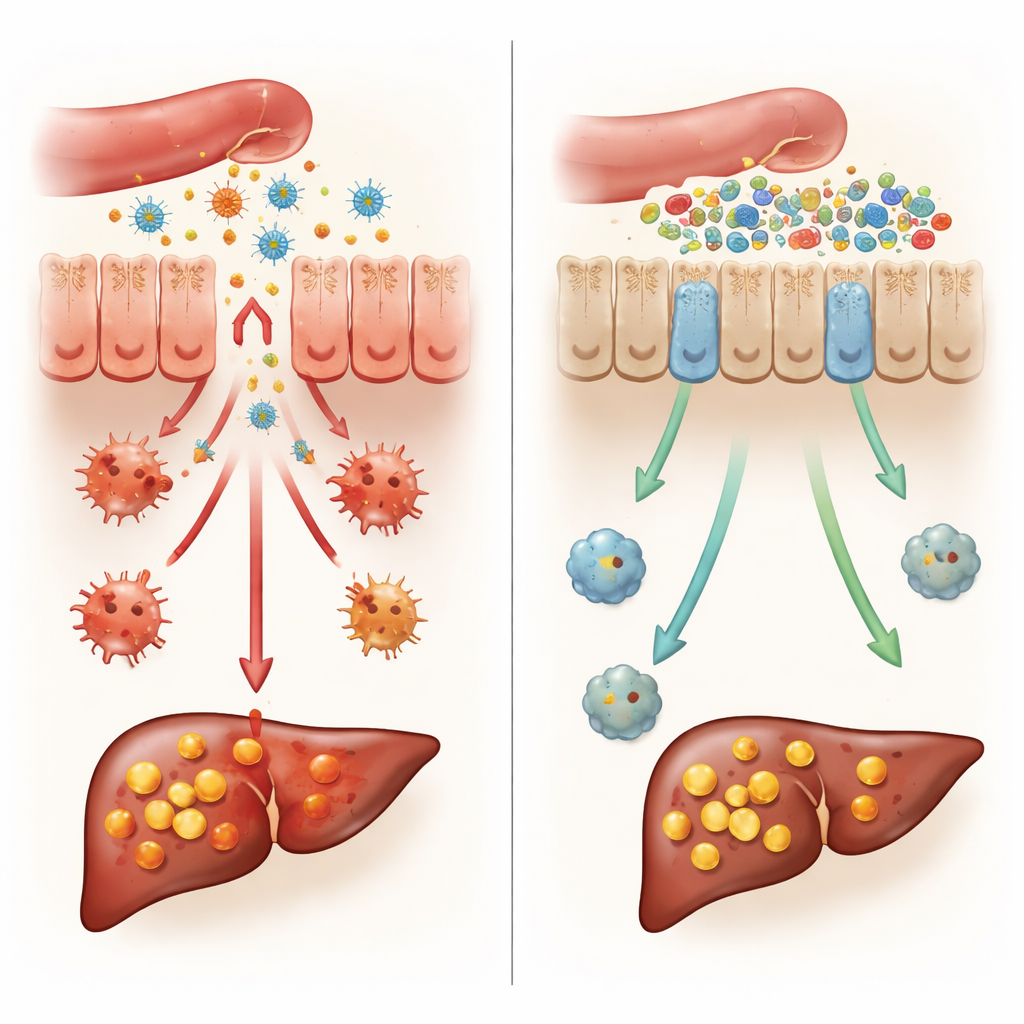
Keeping the intestinal barrier tight and calming immune reactions
High-fat diets often weaken the gut barrier, allowing bacterial components to seep into the bloodstream and reach the liver, where they trigger chronic inflammation. In normal mice on a high-fat diet, the researchers observed leakier intestines, fewer mucus-producing goblet cells, and disturbed “tight junctions” that usually seal neighboring gut cells. In mice without FKBP5, these harmful changes were largely prevented: the barrier stayed tighter, goblet cells were more abundant, and a test dye passed much less easily from the gut into the blood. At the same time, FKBP5-deficient mice showed fewer inflammatory immune cells and lower levels of inflammatory molecules in both the gut and liver, indicating that a calmer immune environment accompanied better barrier function.
Probiotics as a helping hand
Because some beneficial bacteria were reduced by the high-fat diet, the researchers tested whether a commercial probiotic mixture called VSL#3 could further improve outcomes. Giving VSL#3 to high-fat-fed mice lowered body weight gain, improved blood sugar control, strengthened the gut barrier, and reduced markers of liver injury and inflammation. The probiotic-treated mice also showed richer bacterial diversity in their gut and fewer circulating immune cells associated with chronic low-grade inflammation. Notably, these benefits appeared in both normal and FKBP5-deficient mice, suggesting that boosting friendly microbes and tightening the gut wall can complement the genetic protection provided by FKBP5 loss.
What this means for future treatments
Overall, the study paints FKBP5 as a key switch that connects stress pathways, gut bacteria, the intestinal barrier, and liver health under a high-fat diet. Removing FKBP5 in mice reshaped gut microbes, preserved gut-wall integrity, reduced harmful immune cell activity, and shielded the liver from fat buildup and scarring. While more work is needed to confirm these findings in humans, the results suggest that drugs blocking FKBP5, combined with microbiota-targeted approaches such as probiotics, could one day form a new strategy to prevent or treat fatty liver disease and related metabolic disorders driven by unhealthy diets.
Citation: Wu, LL., Liao, YJ., Peng, WH. et al. FK506-binding protein-5 in high-fat diet-induced metabolic dysfunction-associated steatotic liver disease. Sci Rep 16, 9241 (2026). https://doi.org/10.1038/s41598-026-38549-w
Keywords: fatty liver disease, gut microbiota, high-fat diet, probiotics, metabolic syndrome