Clear Sky Science · en
Association between osteoporosis and waitlist mortality in liver transplant candidates
Why bone health matters for people awaiting liver transplants
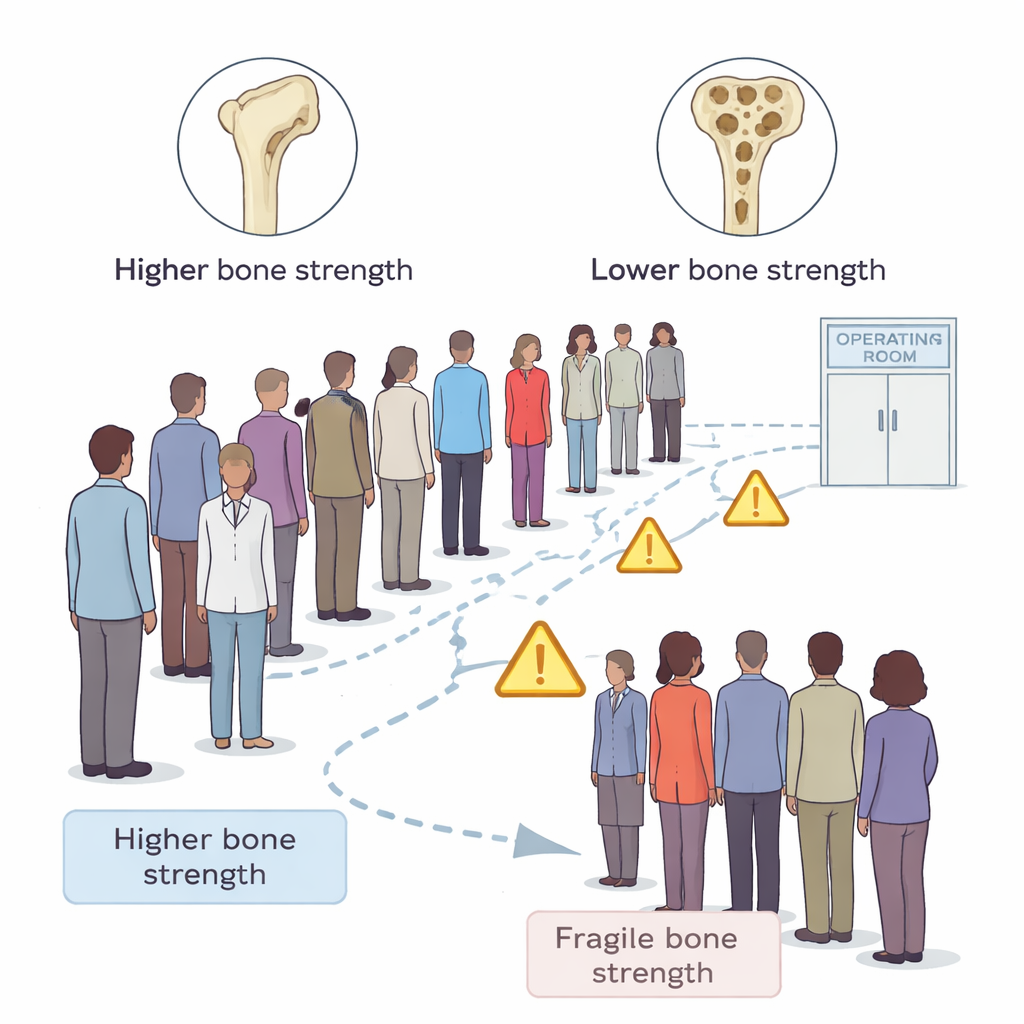
When we think about liver failure and the need for a transplant, bones are probably the last thing that comes to mind. Yet fragile bones and hidden bone loss can quietly raise the chances that a very sick liver patient will die before ever reaching the operating room. This study from a major Middle Eastern transplant center followed hundreds of adults waiting for a donor liver and asked a simple but important question: does low bone strength, known as osteoporosis, actually predict who survives long enough to get a transplant?
A hidden problem in people with severe liver disease
Doctors have long known that patients with serious liver disease often lose bone mass and suffer fractures, especially after transplantation. Many factors play a role: poor nutrition, lack of physical activity, long-term steroid use for autoimmune disease, and hormone changes that weaken the skeleton. But most earlier research focused on Western populations or on specific liver conditions, leaving open the question of how common bone disease really is in more diverse groups of patients and whether it affects their chances of survival before surgery.
A large real-world snapshot of transplant candidates
The researchers tracked 702 adults with end-stage liver disease referred for their first liver transplant at Iran’s largest transplant center between 2016 and 2023. All patients had their bone mineral density measured using a standard low-dose X-ray scan at the spine and hip before they were officially placed on the transplant waiting list. People with other major bone disorders were excluded so the team could focus on the effect of liver-related bone loss. After the scan, each person was followed until one of two things happened: they either received a deceased-donor liver or died while waiting.
Bone loss was the rule, not the exception
The results were striking. Fewer than one in five patients had normal bone density. About 37 percent had mild bone loss (osteopenia), and more than 43 percent met criteria for osteoporosis, meaning their bones were fragile enough to substantially raise fracture risk. The spine was the weakest site on average. All major liver disease causes were represented, including viral hepatitis, metabolic fatty liver disease, and several autoimmune and bile-duct disorders. Patients with autoimmune hepatitis—who are often treated with long-term steroids—had the highest rates of osteoporosis, with more than half affected.
Fragile bones signaled a higher risk of dying on the waitlist
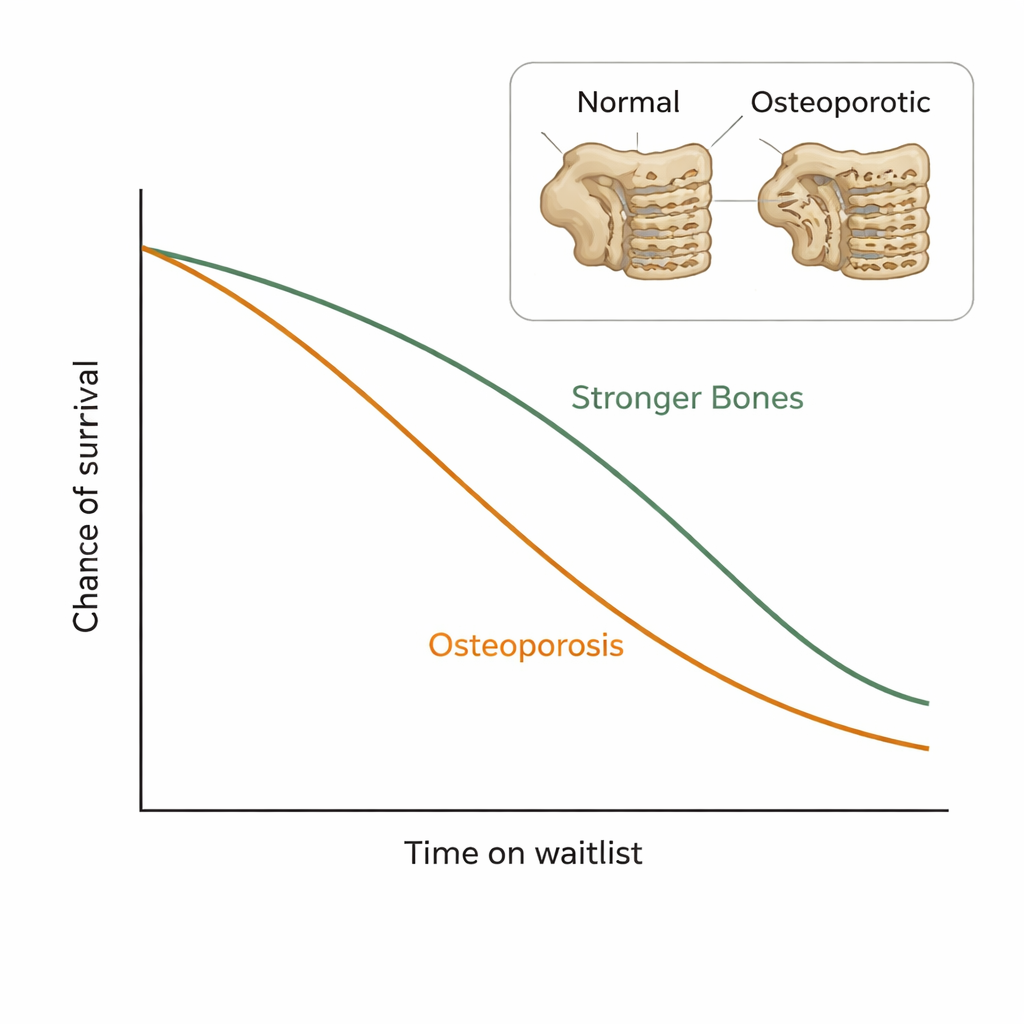
To understand whether bone health predicted survival, the team used a standard time-to-event analysis that accounts for how long each patient stayed on the waiting list. After considering other factors such as age, body mass index, and type of liver disease, osteoporosis still stood out as an independent warning sign: patients with osteoporosis were nearly twice as likely to die before transplant as those without it. In contrast, people whose liver disease was caused by a condition called primary sclerosing cholangitis tended to fare better on the waitlist than others. A survival-curve analysis showed clearly separated lines—those with weak bones had a steeper drop in survival over time while waiting.
What this means for patients and their care teams
For a layperson, the key message is that in severe liver disease, bone health is much more than a comfort issue about future fractures. Fragile bones appear to be a marker of overall frailty and reduced physical reserve, signaling who is less likely to withstand the long, difficult wait for a donor organ. By routinely checking bone density before listing, transplant teams may be able to better identify higher-risk patients, intensify nutritional and rehabilitation efforts, and consider bone-strengthening treatments. In other words, paying attention to the skeleton could become a vital part of keeping liver transplant candidates alive long enough to receive the life-saving surgery they need.
Citation: Naseri, A., Shojaeefard, E., Keshtkar, A. et al. Association between osteoporosis and waitlist mortality in liver transplant candidates. Sci Rep 16, 7412 (2026). https://doi.org/10.1038/s41598-026-38543-2
Keywords: osteoporosis, liver transplantation, bone mineral density, end-stage liver disease, waitlist survival