Clear Sky Science · en
Thermoregulatory adaptations to cold in C3H/HeJ mice are independent of ADRB3 signaling
Why Cold-Loving Mice Matter to Human Health
Staying warm may not sound like a cutting-edge medical issue, but how the body copes with cold has everything to do with how it uses and burns energy. This study looks at two common kinds of lab mice and asks a surprisingly important question: when they get cold, do they turn on their internal "furnaces" the same way humans do? The answer helps explain why some obesity drugs that worked in mice failed in people—and points to a more human-like mouse model for studying metabolism.
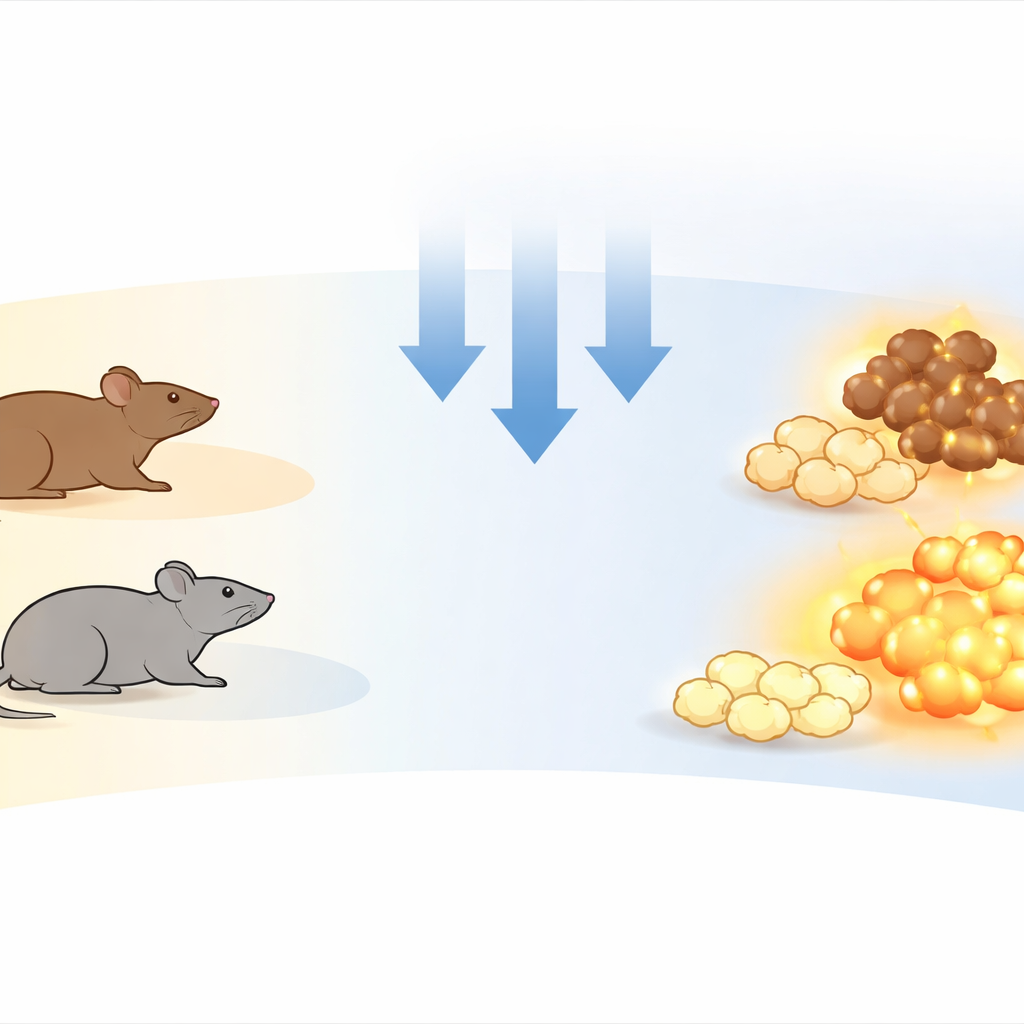
Two Types of Mice, One Chilly Challenge
The researchers compared standard C57BL/6J mice, a workhorse of metabolic research, with a less commonly used strain called C3H/HeJ. Both groups were first kept at about 30 °C, a temperature at which mice barely need to spend energy to stay warm. Then the animals were gradually cooled down to 10 °C, and their body weight, food intake, and energy use were carefully measured inside high-tech metabolic cages. Interestingly, both strains shared nearly the same “comfort point” for minimal energy use—around 29–30 °C—meaning they started from a similar baseline before facing the cold.
When the Cold Hits, One Strain Works Harder
Once temperatures dropped, both kinds of mice ramped up their energy expenditure, as expected. But the C3H mice burned more energy than the C57 mice, even though they ate similar amounts of food. This higher energy burn was not just a short-term reaction—it persisted during both the first hours and the following days of cold exposure. Despite this, C3H mice ended up lighter and had less brown fat overall, hinting that their existing fat worked harder rather than simply growing larger. Blood tests also suggested that C3H mice mobilized more fuel, such as glycerol, to feed this extra heat production.
Brown and White Fat Join the Heat Team
To see what was happening inside the body, the team examined brown fat—the classic heat-generating tissue—as well as two types of white fat. In C3H mice, cold strongly boosted the activity of genes linked to heat production in brown fat, and key proteins that support fuel burning and mitochondrial activity were more strongly activated. Microscopy revealed structural changes consistent with a more active tissue. White fat told a similar story: in particular, a depot around the testes, usually slow to convert into heat-producing cells, showed striking activation in C3H mice. This suggests that in these animals, not only brown fat but also traditionally "storage" fat can be recruited to help keep the body warm.
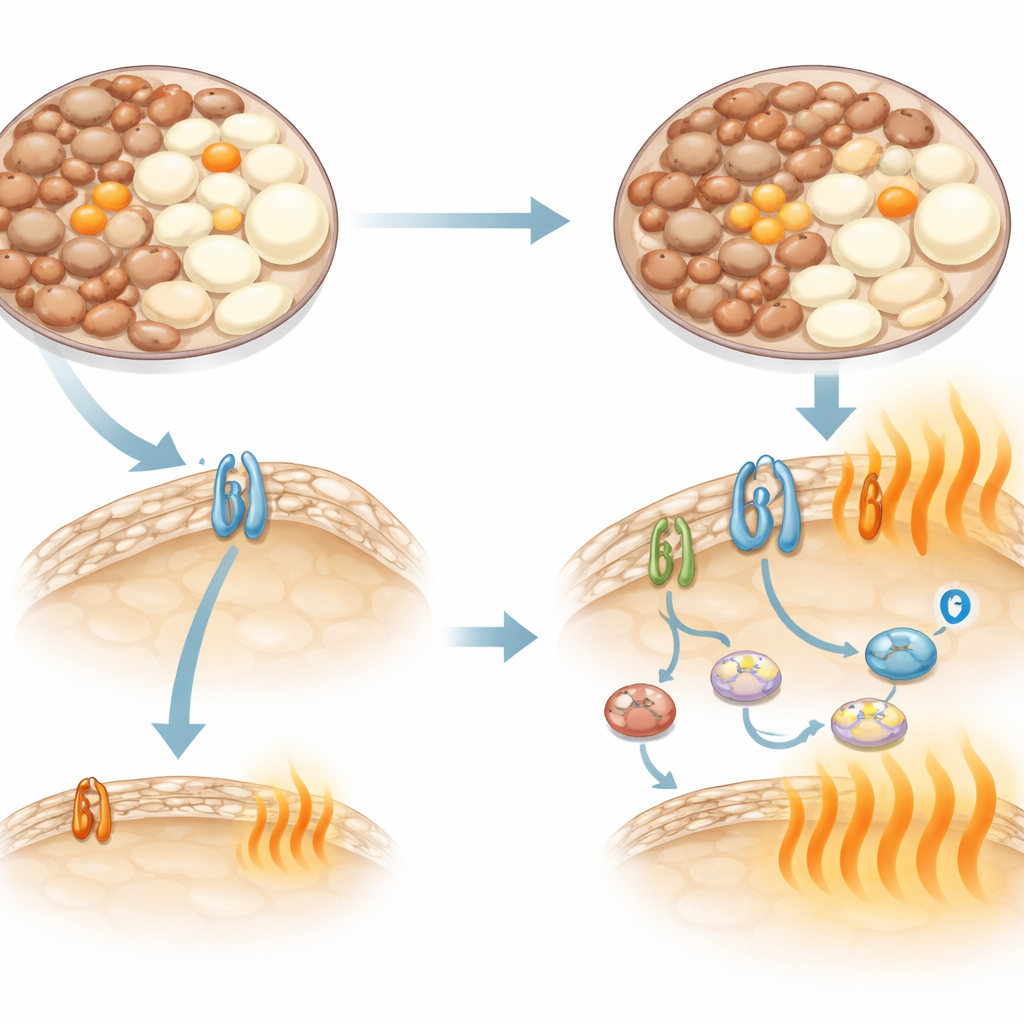
A Different Wiring of Nerve Signals to Fat
Heat production in fat is normally driven by signals from the nervous system that act through beta-adrenergic receptors on fat cells. In standard C57 mice, a receptor called beta-3 plays a major role, and drugs that stimulate it strongly boost energy use. The researchers confirmed this: a selective beta-3–targeting compound caused a large, sustained rise in energy expenditure in C57 mice. But in C3H mice, the same drug had only a weak, brief effect. Gene tests showed why—these mice barely expressed the beta-3 receptor in their fat. Yet when both strains received noradrenaline, a natural signal that activates several related receptors, C3H mice still increased their energy use. Blocking beta-1 and beta-2 receptors largely erased the strain differences, indicating that C3H mice rely on these alternative receptors and other non-classical heat-producing pathways instead of beta-3.
What This Means for Studying Human Metabolism
Humans, like C3H mice, depend mostly on beta-1 and beta-2 receptors in their brown fat, not beta-3. This may explain why drugs aimed at beta-3 receptors worked in typical mouse strains but disappointed in clinical trials. By showing that C3H mice can mount strong cold-induced heat production with almost no beta-3 signaling, this study highlights them as a more human-like model for investigating how fat burns energy. For readers, the takeaway is that not all mice are created equal: choosing the right strain and the right housing temperature can make preclinical research far more relevant to real-world human health and to future therapies for obesity and metabolic disease.
Citation: Beji, S., Mouchiroud, M., Gélinas, Y. et al. Thermoregulatory adaptations to cold in C3H/HeJ mice are independent of ADRB3 signaling. Sci Rep 16, 7859 (2026). https://doi.org/10.1038/s41598-026-38538-z
Keywords: brown fat, cold adaptation, adrenergic signaling, mouse models, energy expenditure