Clear Sky Science · en
Performance of wall mesh encased stone columns using recycled rubber concrete and asphalt aggregates for sustainable geotechnics
Turning Trash into Stronger Ground
Every year, cities around the world produce mountains of broken concrete, old asphalt, and worn-out tires. Most of this waste is buried or burned, even as builders keep digging up fresh rock and gravel to support roads, bridges, and buildings on weak, muddy ground. This study asks a simple but powerful question: can we safely swap some of that natural stone for carefully processed waste and still keep structures standing firm?
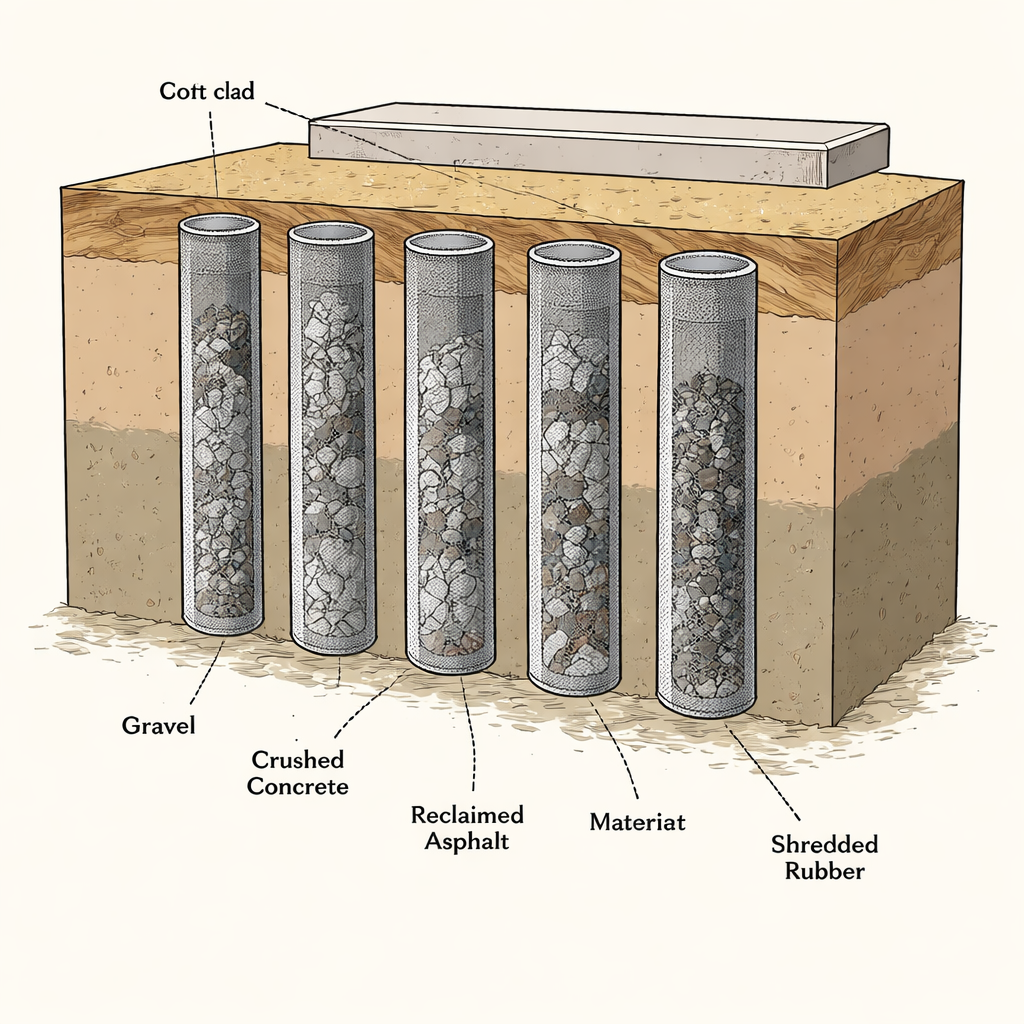
How Rock Columns Help Buildings Stand on Soft Soil
Many modern projects are built on soft clays that would normally squeeze and slump under heavy loads. One popular remedy is to install “stone columns” – vertical shafts filled with compacted gravel or similar material. These columns act like stiff pillars inside the soil: they carry more of the weight, reduce how much the ground settles, and create easy drainage paths for water so the soil firms up faster. Wrapping the columns in a strong plastic or fabric mesh adds an extra benefit. The mesh hugs the column and stops it from bulging sideways, allowing it to carry more load with less deformation.
From Demolition Debris to Useful Building Material
The authors set out to test whether waste streams from construction and the tire industry could safely replace some of the natural gravel inside these mesh-encased columns. They used three main recycled ingredients: crushed concrete from demolished structures, ground-up chunks of old road asphalt, and shredded tire rubber cut into small pieces. In a large steel test box filled with soft clay, they built 34 model columns with different recipes. Some used only gravel, concrete, or asphalt; others blended these with 10% or 20% rubber by volume. All columns were wrapped in the same wall-like geosynthetic mesh, kept at the same length-to-diameter ratio, and then loaded from above until they either failed or settled significantly.
What the Tests Revealed About Strength and Settling
To judge performance, the researchers focused on three measures: how much maximum stress each column could carry (its bearing capacity), how far it sank under that load (its settlement), and the ratio of stress to displacement, which captures how stiff yet manageable the deformation is. They found that material choice mattered far more than column size. Columns filled mostly with natural gravel, especially when blended with a modest amount of recycled concrete, showed the best combination of high strength and low settlement. In some cases, recycled mixtures slightly outperformed pure gravel, with up to about 2% more bearing capacity and a notably higher stress-to-displacement ratio, meaning they were both strong and relatively resistant to movement.
Finding the Sweet Spot for Rubber and Asphalt
Shredded tire rubber played a more delicate role. When just 10% rubber was mixed into gravel or recycled concrete, it often improved performance by making the column a bit more flexible without giving up much strength. This produced smoother, more controlled movement under load and could raise the stress-to-displacement ratio by around 16%. But when rubber content climbed to 20%, the columns generally became too soft: capacity dropped and settlements increased, especially in mixtures already made from more flexible materials. Columns made purely of recycled concrete tended to be the weakest and settled the most, while those built mainly from reclaimed asphalt pavement showed only moderate performance. Asphalt–rubber blends were the least suitable where high strength and low movement are critical, though they may still work where loads are lighter and sustainability is a top priority.
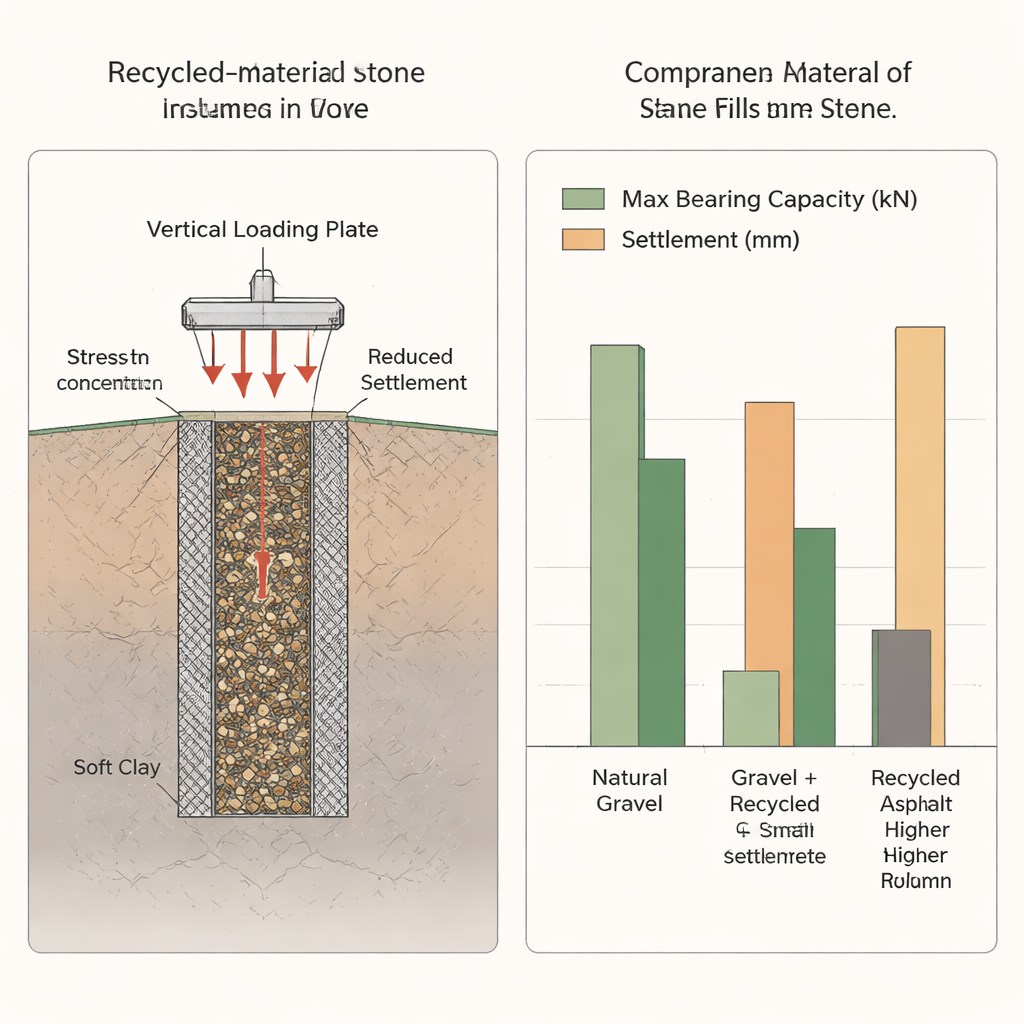
What This Means for Greener Building Foundations
For non-specialists, the takeaway is clear: with thoughtful mix design, parts of a building’s underground support system can be built from what would otherwise be landfill waste. Stone columns wrapped in mesh and filled with a blend of gravel, some recycled concrete, and a small amount of tire rubber can match or even slightly exceed the performance of traditional gravel columns while reducing the need to quarry new stone. Go too far with rubber, though, and the ground becomes too squishy. The study shows that recycled materials can be safely integrated into ground-improvement systems, as long as engineers respect the limits and test their designs. Done right, this turns yesterday’s debris into tomorrow’s support for safer, more sustainable infrastructure.
Citation: Hassanzadeh, M., Zad, A., Ramesht, M.H. et al. Performance of wall mesh encased stone columns using recycled rubber concrete and asphalt aggregates for sustainable geotechnics. Sci Rep 16, 6941 (2026). https://doi.org/10.1038/s41598-026-38535-2
Keywords: stone columns, recycled aggregates, waste tire rubber, ground improvement, sustainable geotechnics