Clear Sky Science · en
A study on user innovative behavior of AI painting tools integrating SOR and Self-Determination theory
Why smart art tools matter to everyday creators
Digital tools that can paint, sketch, and design at the click of a button are no longer science fiction. From hobbyists making posters to professionals shaping product concepts, AI painting tools promise that “everyone can create.” But they also raise unsettling questions: Will relying on algorithms dull our own imagination, or can these systems actually help us become more inventive? This study digs into how people really use AI painting tools and what makes some users go beyond simple prompts to produce genuinely original work.
From outside signals to inner spark
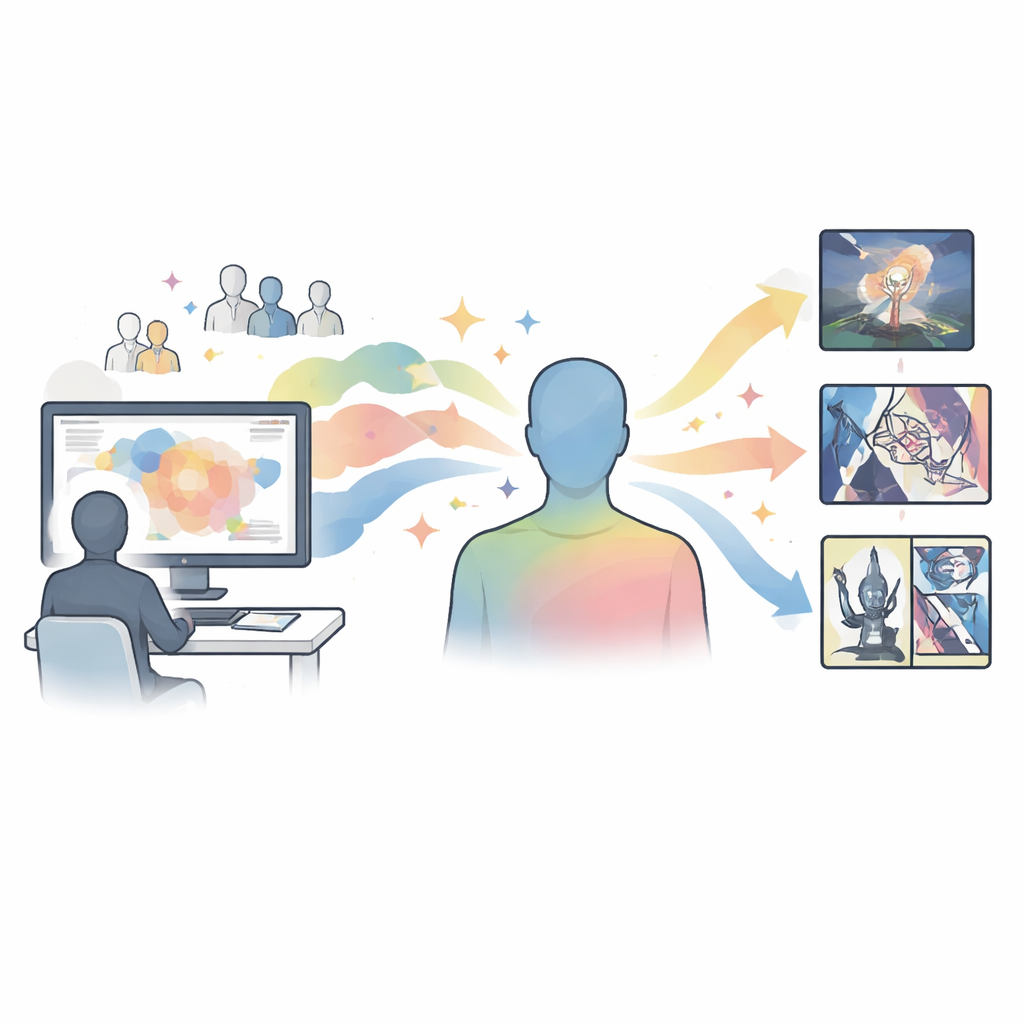
The researchers start with a simple question: how do outside factors turn into inner motivation and, finally, visible creative action? They frame AI painting tools as a kind of “stimulus” from the environment: the quality of the tool, the design of its interface, and the encouragement (or doubt) users feel from people around them. These signals flow into the user’s thoughts and emotions—things like confidence in their creative ability, how strongly they see themselves as an “innovator,” and whether using the tool feels fun and playful. Together, these inner states shape a key “response”: whether users stick to routine outputs or push the tool in new directions to explore unusual ideas and applications.
How the study was carried out
To untangle these relationships, the team surveyed 305 people who use AI painting tools, including students, designers, and other professionals. Participants answered detailed questionnaires about how they interact with AI (guiding it closely or letting it automate the work), how powerful and easy to use they find the tools, how much social support they feel, how playful the experience seems, and how innovative their own behavior is. The researchers applied three complementary methods: structural equation modeling to test how factors relate overall, a “necessary condition” analysis to see which ingredients are impossible to do without, and a configuration method that looks for multiple, equally successful paths to innovation rather than a single one-size-fits-all route.
What really drives inventive use of AI painting
The results show that three forces consistently nudge people toward more innovative use of AI painting tools. First, users who stay “in the driver’s seat” during human–AI interaction—treating the system as a collaborator they guide and correct, rather than a machine that fully takes over—are more likely to experiment and refine bold ideas. Second, creative self-confidence matters: people who believe they can shape and improve AI outputs tend to explore more unusual features and workflows. Third, seeing oneself as an innovator, not just a tool operator, strongly predicts whether people push AI toward fresh styles and real-world applications. The study also finds that strong tool performance, a sense of playful enjoyment, and this creative role identity are all “must-haves”: when any one of them is missing, high levels of innovative behavior rarely appear.
Different routes to the same creative goal
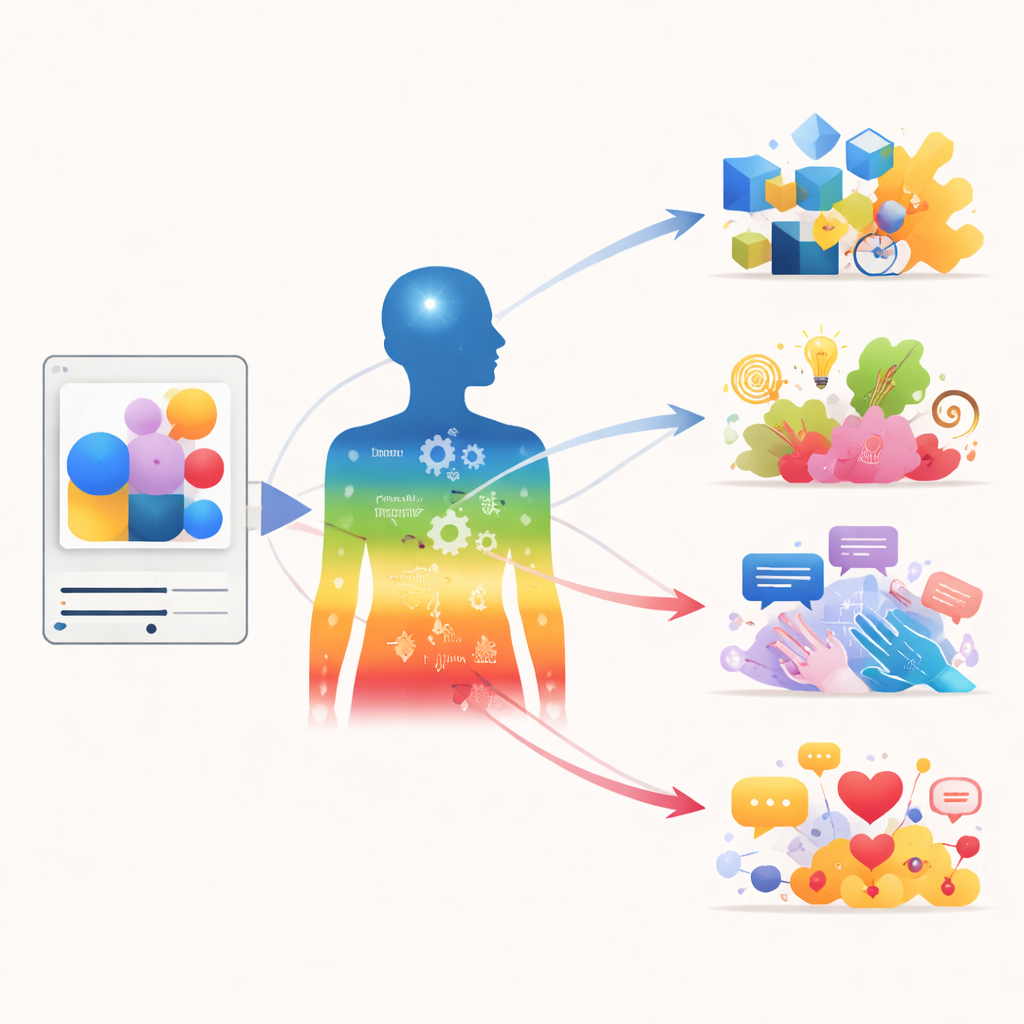
Rather than a single magic formula, the study uncovers four typical “recipes” for innovation. In a technology–efficiency path, powerful, easy-to-use tools combine with users’ confidence, playful enjoyment, and strong innovator identity to produce a reinforcing loop of progress. In a cognition-centered path, inner drive and enjoyment carry more weight, so even moderately capable tools are enough to spark fresh work. An interactive empowerment path highlights rich back-and-forth between human and AI, where constant prompting, feedback, and adjustment turn the tool into a true creative partner. Finally, a social compensatory path shows that for some users, strong encouragement and recognition from peers can offset low confidence, helping them keep experimenting until they internalize a new, more innovative identity.
What this means for future creative work with AI
For non-specialists, the takeaway is reassuring: AI painting tools do not automatically stifle human creativity, nor do they guarantee breakthroughs on their own. Innovation flourishes when good tools are paired with thoughtful design that gives users control, invites playful exploration, and supports a sense of “this is my creative role.” The study suggests that developers should shape AI painting platforms less as automatic art machines and more as responsive partners that help people feel skilled, autonomous, and inspired. Under those conditions, AI can become a springboard rather than a substitute for human imagination.
Citation: Fan, L., Lai, S., Zhang, S. et al. A study on user innovative behavior of AI painting tools integrating SOR and Self-Determination theory. Sci Rep 16, 8741 (2026). https://doi.org/10.1038/s41598-026-38532-5
Keywords: AI painting tools, human–AI collaboration, creative behavior, digital art, user motivation