Clear Sky Science · en
Nano-enabled plant fortification: green-synthesized SiO2 and emamectin benzoate nanoparticles synergistically boost maize defense and agronomic performance against Spodoptera frugiperda infestation
A New Way to Help Maize Fight Back
Maize, or corn, feeds people and livestock around the globe, but in recent years a voracious caterpillar called the fall armyworm has been carving through fields and threatening harvests. This pest spreads quickly, shrugs off many conventional insecticides, and can devastate smallholder farms in a single season. The study summarized here explores a cutting‑edge idea: using tiny, environmentally friendly particles to both strengthen maize plants from the inside and make a modern insecticide work better, so farmers can protect their crops with less chemical input.
The Pest That Won’t Go Away
The fall armyworm originated in the Americas but has rapidly invaded Africa and Asia, where it now ranks among the most damaging pests of maize. It feeds on more than 350 plant species, but maize is its favorite target, and heavy infestations can slash yields and threaten food security. Traditional chemical control has grown less reliable because the insect has evolved resistance to many compounds and even to some genetically engineered crops. The insecticide emamectin benzoate remains potent, but it breaks down quickly in the field and still poses risks when used at high doses. Farmers need a way to keep armyworm numbers low without repeatedly drenching their fields in chemicals.
Tiny Particles with a Double Job
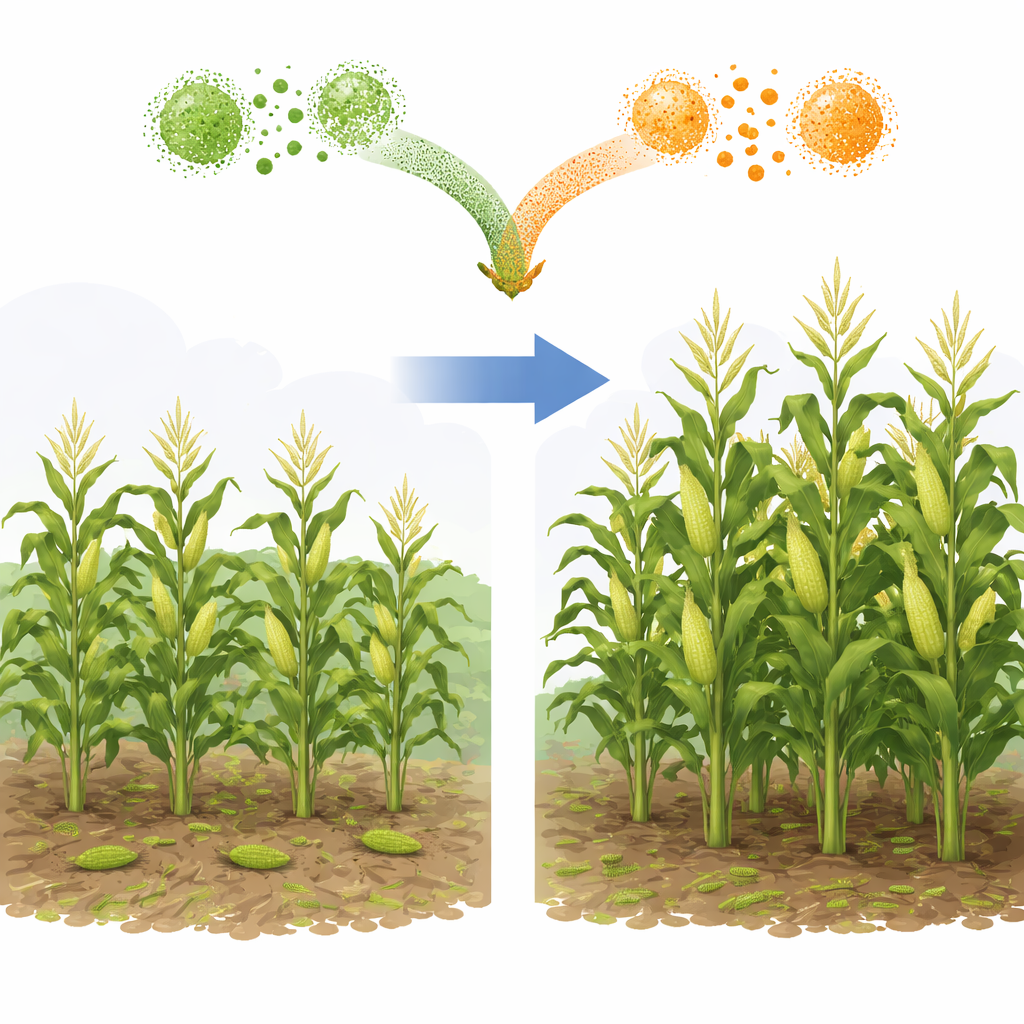
The researchers designed a “nano‑enabled” system that combines two kinds of microscopic particles sprayed onto maize leaves. One is made of silicon dioxide, a mineral form of silicon produced here by a green method using plant extracts instead of harsh chemicals. These silica nanoparticles act as a beneficial nutrient source: once taken up by the plant, silicon is laid down in leaf tissues, making them tougher and less appetizing to hungry caterpillars. The second component is emamectin formulated as nanoparticles, created by carefully grinding the insecticide into extremely small, stable particles. At this scale, the active ingredient can stick to leaves better, penetrate insect bodies more efficiently, and release gradually rather than all at once.
From Lab Bench to Farmer’s Field
In laboratory tests, the team compared ordinary emamectin, nano‑emamectin, silica nanoparticles, and mixtures of emamectin (bulk or nano) with silica. They fed treated leaves to fall armyworm larvae and measured how much of each treatment was needed to kill half or nearly all of the insects, and how the treatments affected key detoxification enzymes in the caterpillars. Nano‑emamectin alone was more toxic than the conventional form, and silica nanoparticles on their own could also kill larvae. Most striking, however, were the mixtures: combining silica with either form of emamectin killed more larvae at lower doses and strongly suppressed the enzymes insects use to break down toxins, revealing a genuine synergistic effect.
Stronger Leaves, Healthier Plants, Bigger Harvests
The researchers then tested ten spray programs in a real maize field in Egypt during the 2024 season. Some plots received only water, some received silica or emamectin alone, and others got different dose combinations of silica with bulk or nano‑emamectin. Across treatments, all insecticide‑containing sprays knocked down existing larvae within 24 hours. But the mixtures that paired silica with reduced doses of nano‑emamectin did more than simply kill caterpillars. Plants in these plots had thicker leaf blades and veins, sturdier cuticles, and higher silicon content in their tissues. They maintained greener leaves, better photosynthetic performance, and larger leaf area. As a result, cobs were fuller and overall grain yield rose sharply compared with untreated, infested plants.
Why a Reduced‑Dose Mix Matters
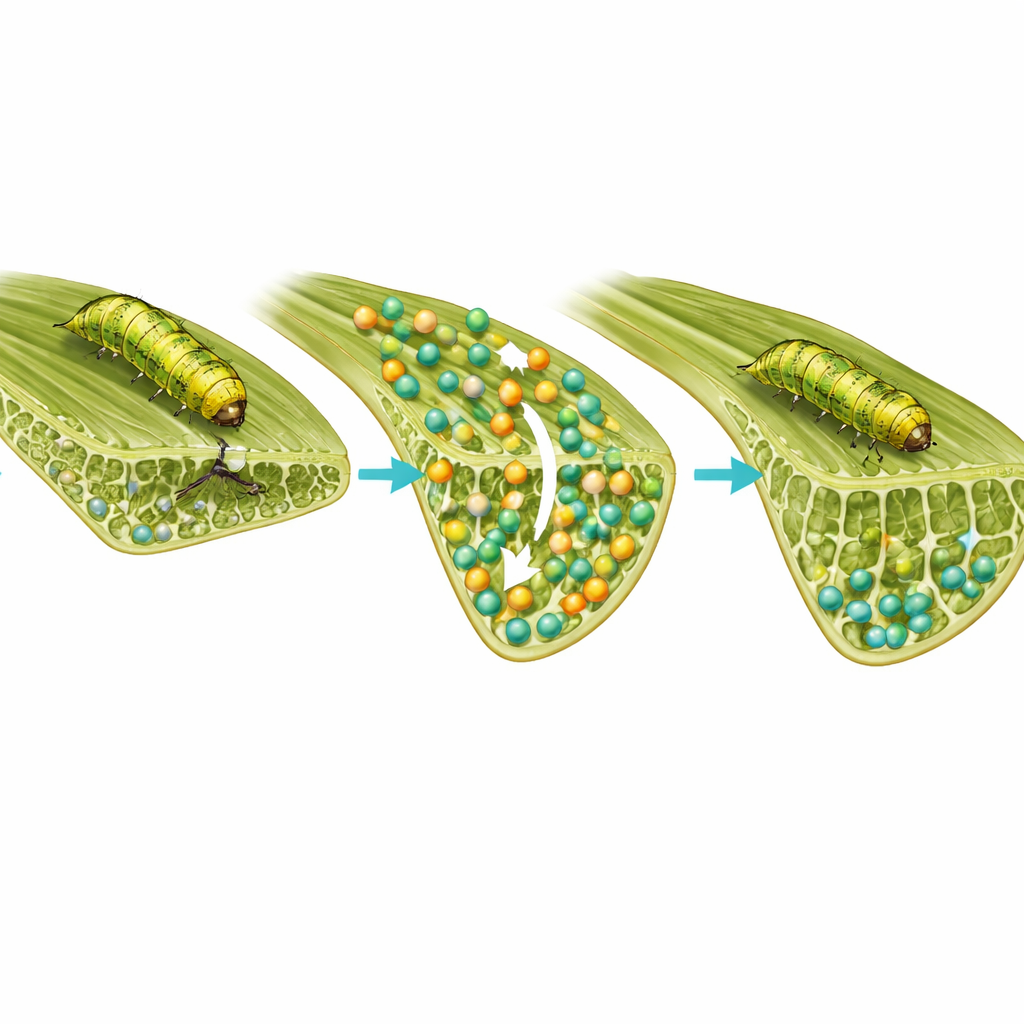
One treatment in particular—three‑quarters of the usual nano‑emamectin dose combined with silica nanoparticles—stood out. It achieved the same or better fall armyworm control as full‑dose insecticide, while cutting leaf damage by more than 80 percent after the second spray and boosting grain yield by about 55 percent. Because the silica strengthens the plant and interferes with the caterpillar’s ability to detoxify the insecticide, less chemical is needed to get the job done. At the same time, silicon is a well‑established beneficial element for many crops, so its presence improves plant health rather than adding another stress.
A Step Toward Smarter Pest Control
To a non‑specialist, the message is straightforward: by pairing a modern insecticide with plant‑friendly mineral nanoparticles, it is possible to help maize defend itself while using lower pesticide doses. The silica particles roughen and harden leaf tissues and seem to sap the caterpillar’s internal defenses, while the nano‑scaled insecticide reaches its target more efficiently and persists longer. Together, they keep fall armyworm levels low, preserve green leaf area, and deliver more grain from the same field. Although longer‑term safety and field tests are still needed, this work points toward a future in which pest control relies less on brute‑force chemistry and more on amplifying the plant’s own resilience with precisely engineered, greener materials.
Citation: Shaaban, A., Abdelbaky, A.S., Sherif, D.F.E. et al. Nano-enabled plant fortification: green-synthesized SiO2 and emamectin benzoate nanoparticles synergistically boost maize defense and agronomic performance against Spodoptera frugiperda infestation. Sci Rep 16, 8266 (2026). https://doi.org/10.1038/s41598-026-38530-7
Keywords: fall armyworm, nano pesticides, silicon in crops, maize protection, sustainable pest management