Clear Sky Science · en
Cocaine induced astrocytic activation was associated with its vasoconstricting effects independent of its neuronal effects in the prefrontal cortex
Why this research matters
Cocaine is often seen only as an addictive drug, but it also has powerful effects on the brain’s blood vessels. Those changes in blood flow can raise the risk of strokes, cognitive problems, and long-term brain damage. This study looks at a little-known group of brain cells called astrocytes to ask a simple question with big consequences: do these support cells help drive cocaine’s dangerous tightening of blood vessels in the thinking region of the brain?
The brain’s quiet helpers and blood flow
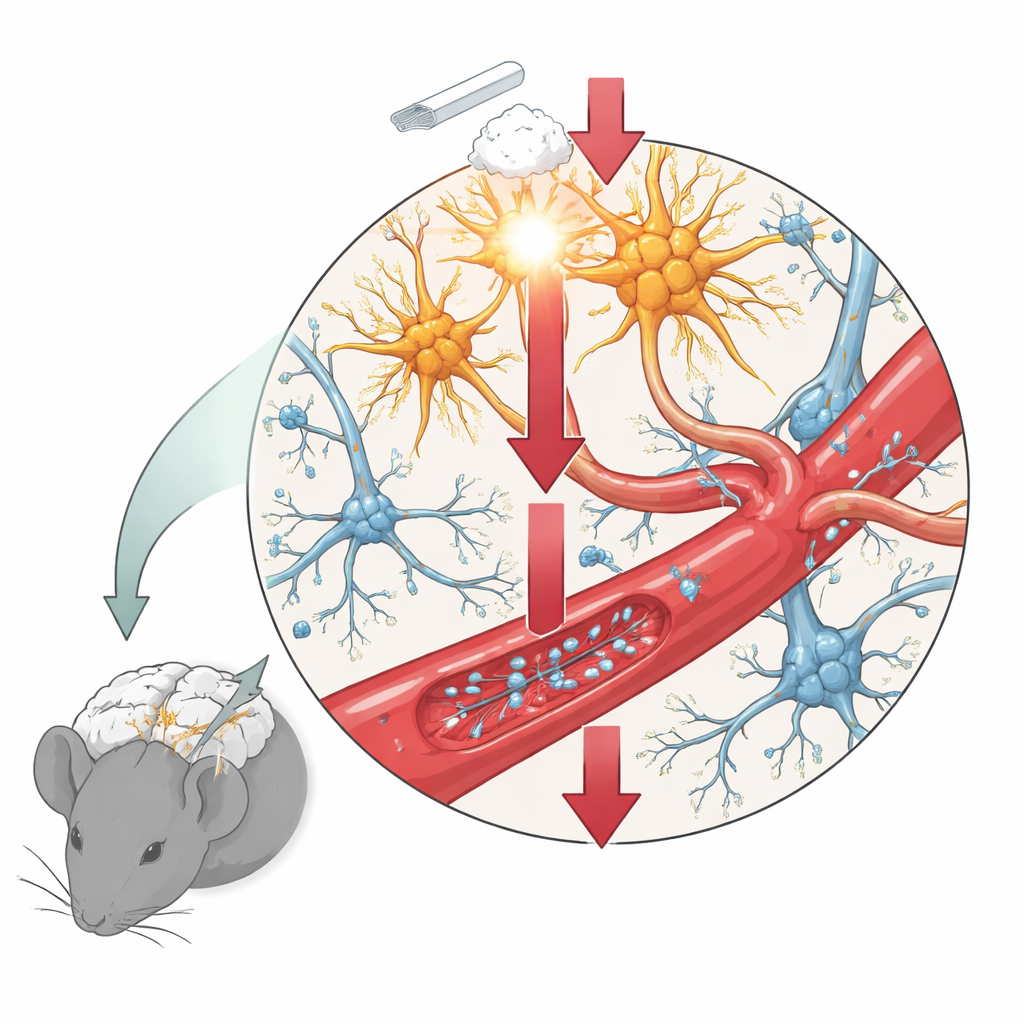
Neurons usually get the spotlight, but they do not work alone. Astrocytes are star-shaped cells that sit between neurons and blood vessels, wrapping tiny “feet” around nearly all the small vessels in the brain. When neurons become active and need more energy, astrocytes help adjust local blood flow, a partnership known as neurovascular coupling. Cocaine disrupts both nerve signaling and blood circulation, especially in the prefrontal cortex, a region involved in decision-making and self-control. Because astrocytes talk to both neurons and vessels, the authors suspected these cells might be key players in how cocaine cuts blood supply to this critical area.
Watching brain cells and blood vessels in real time
To probe this, the researchers used mice and a sophisticated optical setup that let them look through a tiny window in the skull directly into the prefrontal cortex. They made either neurons or astrocytes glow brighter when calcium levels inside the cells rose, a common sign of activation. At the same time, they tracked the diameter of blood vessels and changes in oxygen-rich hemoglobin, a marker of how much oxygenated blood reached the tissue. In some mice they also equipped astrocytes with a special designer receptor that can be switched on with a small dose of the drug clozapine, letting them selectively “turn up” astrocyte activity without directly changing neurons.
What cocaine does to astrocytes, neurons, and vessels
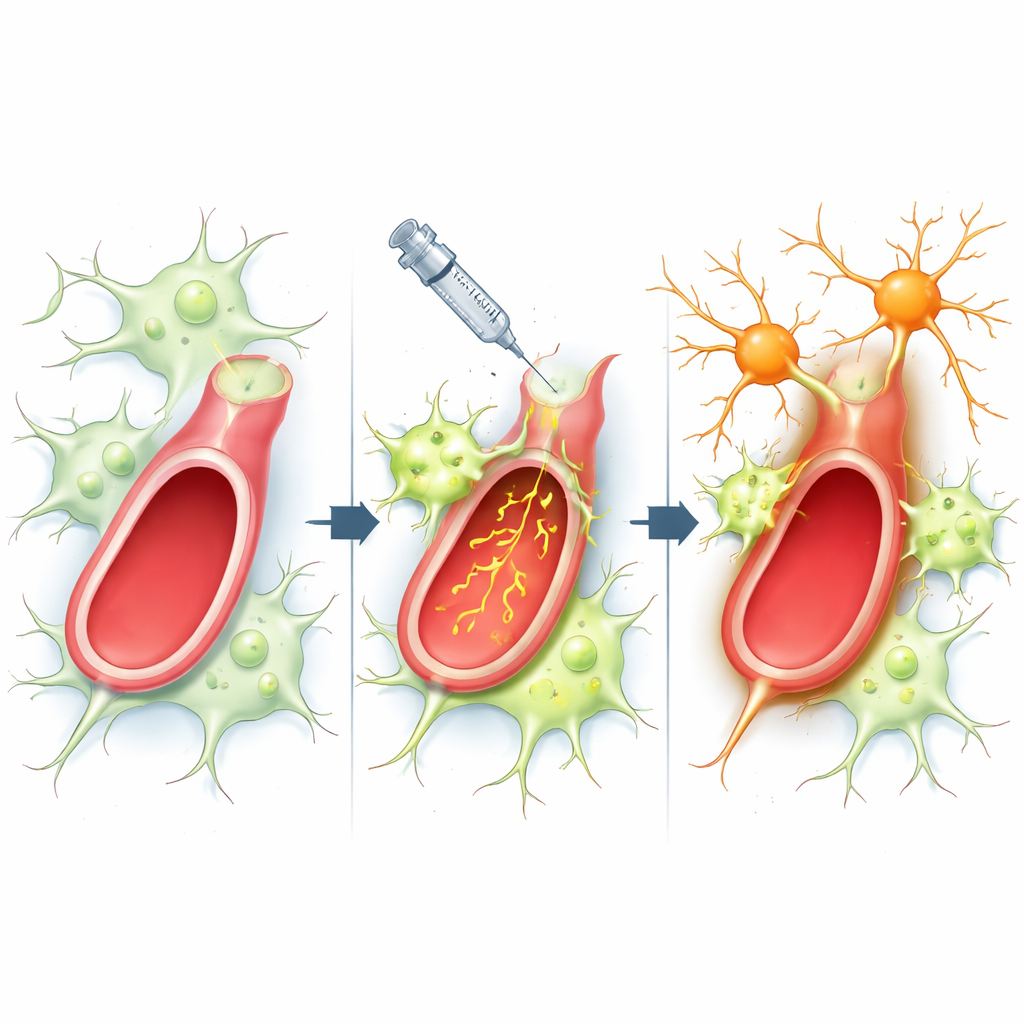
In untreated animals, a single intravenous dose of cocaine quickly boosted calcium signals in both astrocytes and neurons. As this cellular activity rose, nearby blood vessels constricted and oxygenated blood levels in the cortex dropped. Turning on astrocytes alone—using the designer receptor and clozapine—also caused a long-lasting, moderate increase in astrocyte activity and a clear narrowing of vessels, but without changing neuronal activity or overall oxygen levels by itself. When cocaine was then given on top of this artificially heightened astrocyte state, vessel constriction and astrocyte activation increased only slightly more, as though they had hit a ceiling. In contrast, the neuronal response to cocaine stayed just as strong as before, regardless of astrocyte activation.
Untangling who controls blood flow
By comparing how closely different signals rose and fell together, the team found that astrocyte activity was strongly linked to how much the vessels narrowed, while neuronal activity was more closely tied to changes in tissue oxygen. Before astrocytes were artificially activated, higher astrocyte calcium reliably came with tighter vessels, and higher neuronal calcium lined up with bigger drops in oxygen. After astrocytes were pre-activated, these relationships were weakened or altered, suggesting that the system’s normal balance between nerve activity and blood supply had been disturbed. In simple terms, cocaine made neurons work harder while at the same time, through astrocytes and vessels, it starved them of blood.
What this means for people who use cocaine
Overall, the study shows that astrocytes are not just passive bystanders; they actively help drive cocaine’s tightening of brain blood vessels in the prefrontal cortex, and they do so largely independent of how strongly neurons respond to the drug. Once astrocytes are highly activated, vessels may already be as constricted as they can get, limiting further change but also keeping blood flow dangerously low. These findings suggest that targeting astrocyte signaling, or the pathways by which they control vessel tone, could offer new ways to protect the brain’s circulation in people with cocaine use disorder. While this work was done in anesthetized mice and with single, acute doses, it lays the groundwork for therapies aimed at the brain’s support cells to reduce the vascular damage caused by cocaine.
Citation: Liu, Y., Clare, K., Jetalpuria, Y. et al. Cocaine induced astrocytic activation was associated with its vasoconstricting effects independent of its neuronal effects in the prefrontal cortex. Sci Rep 16, 8663 (2026). https://doi.org/10.1038/s41598-026-38521-8
Keywords: astrocytes, cocaine, brain blood flow, neurovascular coupling, prefrontal cortex