Clear Sky Science · en
Development of a sustainable Cu-nano-cutting fluid based on rice bran oil for superior heat management and wear reduction
Turning Waste into a High-Tech Helper
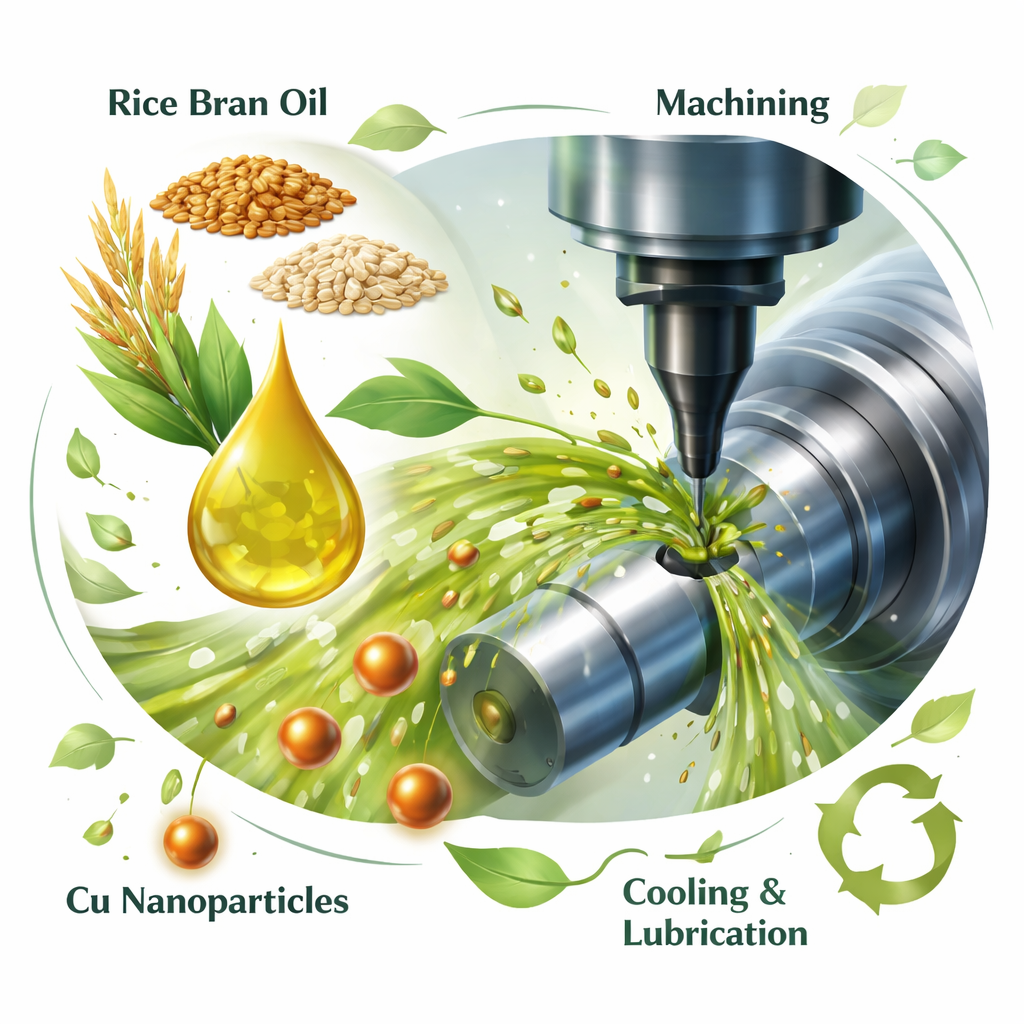
Modern factories rely on cutting fluids—liquids that cool and lubricate metal-cutting tools—to keep machines fast, precise, and long‑lasting. Most of these fluids are made from petroleum, can irritate workers’ skin, and create disposal headaches. This study explores a cleaner option: turning rice‑milling waste into a “green” cutting fluid and boosting its power with copper nanoparticles so it can manage heat better and sharply reduce tool wear.
Why Cutting Fluids Need a Makeover
Turning, drilling, and grinding metal generate intense heat and friction where the tool meets the workpiece. Traditional mineral‑oil fluids help, but they bring health and environmental problems, from oil mist and microbial growth in workshops to difficult waste treatment. Vegetable oils are biodegradable and naturally slippery, so they are attractive replacements. Rice bran oil, a by‑product of rice processing, has a good mix of fatty acids and forms a thin, protective film on metal surfaces. However, by itself it conducts heat poorly, which limits its performance in high‑speed machining. The researchers set out to keep rice bran oil’s eco‑friendly nature while upgrading its cooling and anti‑wear abilities.
Designing a Smarter Green Oil
The team combined rice bran oil with tiny copper particles, each tens of nanometers across—far smaller than a speck of dust. To make a uniform “nanofluid,” they carefully dried the copper particles, coated them with components already present in the oil to help them mix, and then used powerful sound waves to break up clumps and spread them evenly. The resulting liquid looked like ordinary oil but carried a suspension of metal particles at low volume fractions (up to 0.5%). Measurements showed that particle clusters stayed small and well dispersed, and chemical tests confirmed that adding copper did not alter the basic structure of the rice bran oil. In other words, the fluid was both physically and chemically stable over time.
How Tiny Copper Particles Tame Heat and Friction
Tests revealed that even a small amount of copper nanoparticles dramatically changed how the oil behaves. At 0.5% copper by volume, the thermal conductivity—the fluid’s ability to move heat—rose by about half compared with pure rice bran oil, making it far more effective at pulling heat away from the cutting zone. The viscosity, or thickness, also increased modestly, which helped the fluid form a stronger film between tool and metal. When the researchers considered both properties together, they found that the gain in heat transfer outweighed the added resistance to flow as copper content increased, indicating a favorable overall performance window.
Smoother Sliding, Gentler Wear
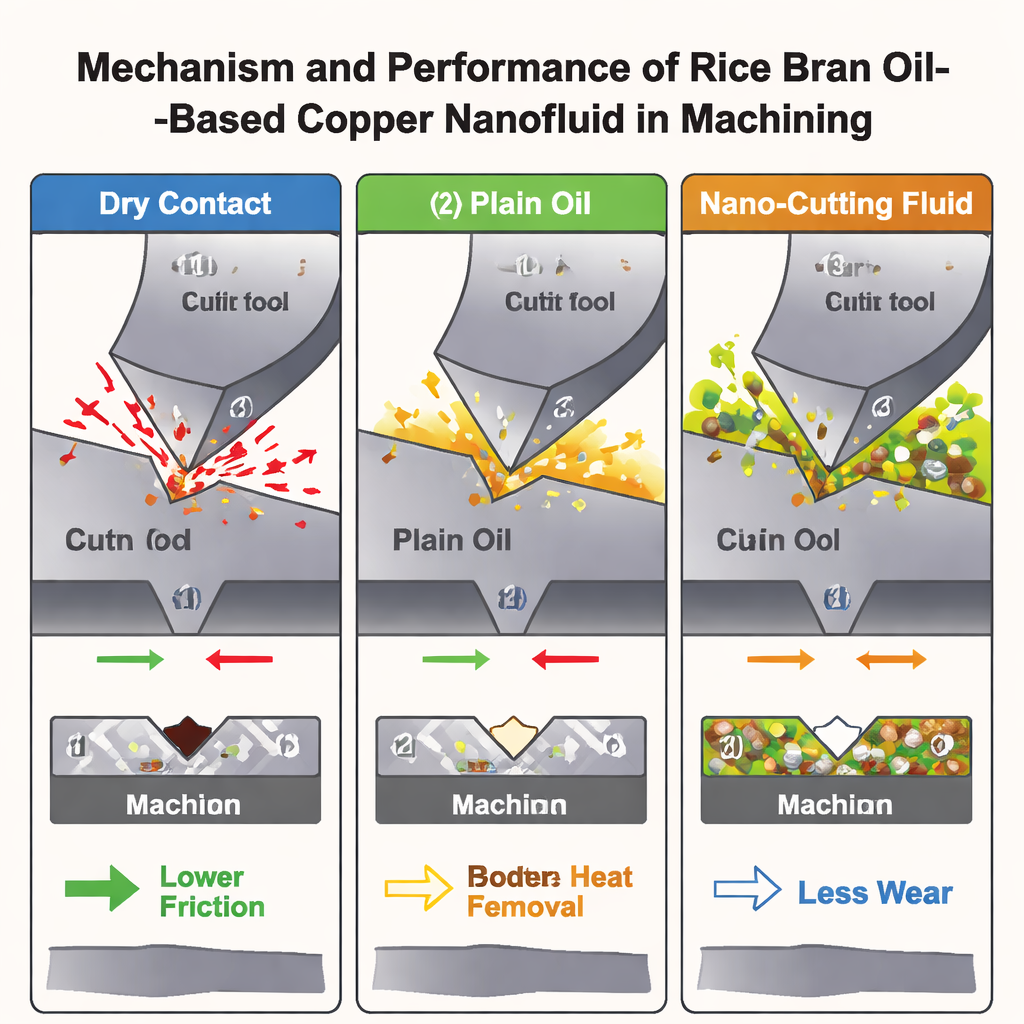
To see how the new fluid behaves under sliding contact like that in real machining, the team ran controlled friction tests: a hard ball moved back and forth against a metal disc while different versions of the fluid were present. With plain rice bran oil, the sliding pair experienced the highest friction. As more copper nanoparticles were added, the friction steadily dropped, reaching nearly half the original value at 0.5% copper. At the microscopic level, the nanoparticles roll and slide between surfaces, smoothing rough spots, filling tiny valleys, and building a thin protective layer together with the oil molecules. This sacrificial “tribo‑film” bears the brunt of contact, cutting down metal‑to‑metal rubbing, wear, and local overheating.
What This Means for Cleaner Manufacturing
For a non‑specialist, the takeaway is straightforward: the study shows that waste‑derived rice bran oil, when fortified with a small dose of copper nanoparticles, can act as a powerful yet environmentally friendly cutting fluid. It carries heat away more efficiently, keeps tools cooler and better lubricated, and roughly halves friction compared with the plain oil, all while remaining stable and biodegradable. Such a fluid could help factories reduce dependence on petroleum‑based oils, extend tool life, improve surface quality of parts, and cut down on both health risks and waste—pushing metalworking a step closer to genuinely green manufacturing.
Citation: Yadav, S.K., Kannan, K.R. & Tilahun, W. Development of a sustainable Cu-nano-cutting fluid based on rice bran oil for superior heat management and wear reduction. Sci Rep 16, 7248 (2026). https://doi.org/10.1038/s41598-026-38520-9
Keywords: sustainable machining, rice bran oil, nano-cutting fluid, copper nanoparticles, green lubrication