Clear Sky Science · en
Assessment of radiological risks in soils from different land use types within southwest Nigeria
Hidden risks beneath our feet
Most of us walk, work, and build on soil without thinking about what lies inside it. Yet soils naturally contain tiny amounts of radioactive elements, and human activities can quietly raise those levels. This study looks at how everyday land uses in parts of Abeokuta, southwest Nigeria—such as abattoirs, mechanic workshops, textile dyeing yards, and block-making sites—may be increasing radiation in the soil and what that could mean for the health of workers and nearby residents.
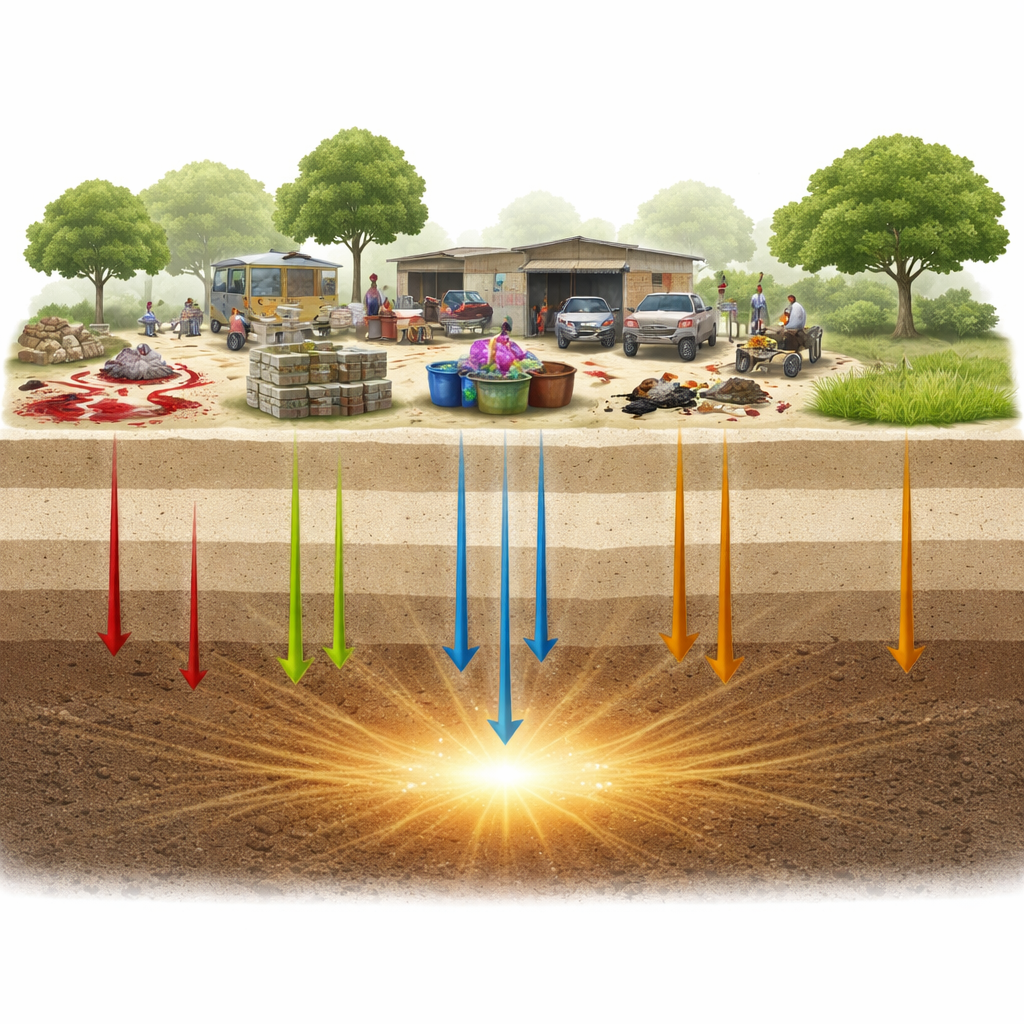
Busy land, busy soil
The researchers focused on six common types of sites: an abattoir waste dump, a cement block making yard, a textile dye–contaminated area, an automobile mechanic village, a welding and fabrication area, and a relatively undisturbed grassland. All locations sit on the same underlying rock type, so differences in soil radioactivity could be tied mainly to how the land is used rather than geology alone. At each site, they collected surface soil from a shallow depth—about the top 30 centimeters, where people are most likely to come into contact with dust and where building materials are often sourced.
Measuring invisible signals
In the laboratory, the team dried, crushed, and sealed the soil samples, then used a sodium iodide detector to measure three key naturally occurring radionuclides: potassium-40, radium-226, and thorium-232. These elements emit gamma rays that can be picked up by sensitive instruments even at very low levels. Using internationally accepted formulas, they converted the raw measurements into a range of “hazard indices” that estimate how much radiation a person outdoors might receive in a year, how much might reach sensitive organs such as bone marrow and reproductive organs, and what the added lifetime cancer risk could be.
Where the numbers are highest
The results showed a clear pattern. Across all six land uses, the average amounts of radium-226 and thorium-232 in the soil were well above the worldwide average values reported for typical soils, while potassium-40 tended to stay below the global mean. Sites affected by strong human activity—especially the textile dye area and the abattoir—generally showed the highest radiation-related values, with the mechanic village and welding area also elevated. Even the grassland, which served as a more natural reference, had radium and thorium levels above global norms, suggesting that the broader region’s soils are naturally enriched and further influenced by local practices.
What this means for people
When the scientists translated the soil measurements into practical exposure estimates, they found that several key indicators were higher than international guideline values across nearly all non-agricultural sites. Annual outdoor dose estimates, indices related to external and internal exposure, and measures of dose to the reproductive organs all exceeded recommended averages. The calculated excess lifetime cancer risk for people spending long periods at these sites was roughly two to three times the commonly used global reference value. Detailed statistical analyses pointed to thorium-232 as the single largest contributor to the overall radiological hazard, with radium-226 playing a strong supporting role.
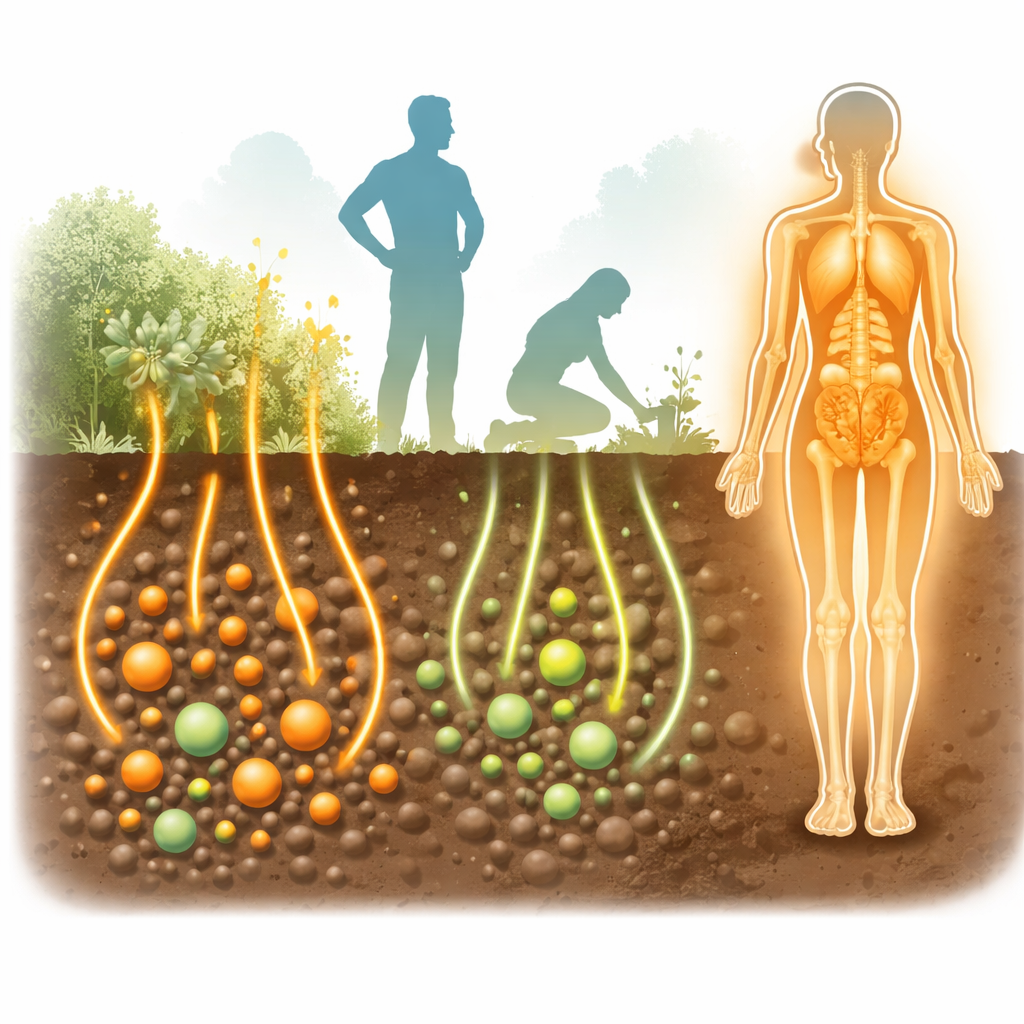
Steps toward safer ground
To a layperson, the main message is that many everyday work sites in the study area are sitting on soil that, while not acutely dangerous, carries a noticeable long-term radiation burden above global norms. The textile dyeing area and abattoir waste site pose the greatest concern and warrant priority monitoring and control measures. The authors recommend raising awareness among local artisans, improving handling of waste and wastewater—especially from dyeing operations—and considering soil conditions when sourcing materials for building. Their findings provide a baseline map of radiological conditions that regulators and communities can use to better manage land use and protect public health over the long term.
Citation: Ganiyu, S.A., Alabi, C.A., Adekanle, O.J. et al. Assessment of radiological risks in soils from different land use types within southwest Nigeria. Sci Rep 16, 8057 (2026). https://doi.org/10.1038/s41598-026-38510-x
Keywords: soil radioactivity, environmental radiation, land use pollution, Nigeria, occupational exposure