Clear Sky Science · en
Modeling and optimizing the delamination factor in Agave americana L. biowaste fiber-reinforced biocomposite drilling: a study using RSM and ANN methods
Turning Plant Waste into Useful Materials
Imagine if the tall flower stalks of an ornamental desert plant could help build lighter, greener car parts or furniture. This study explores exactly that idea, by transforming biowaste from the plant Agave americana into strong composite boards and then figuring out how to drill clean, precise holes in them. Clean drilling is essential if these eco-friendly materials are to replace conventional plastics and metals in real products.
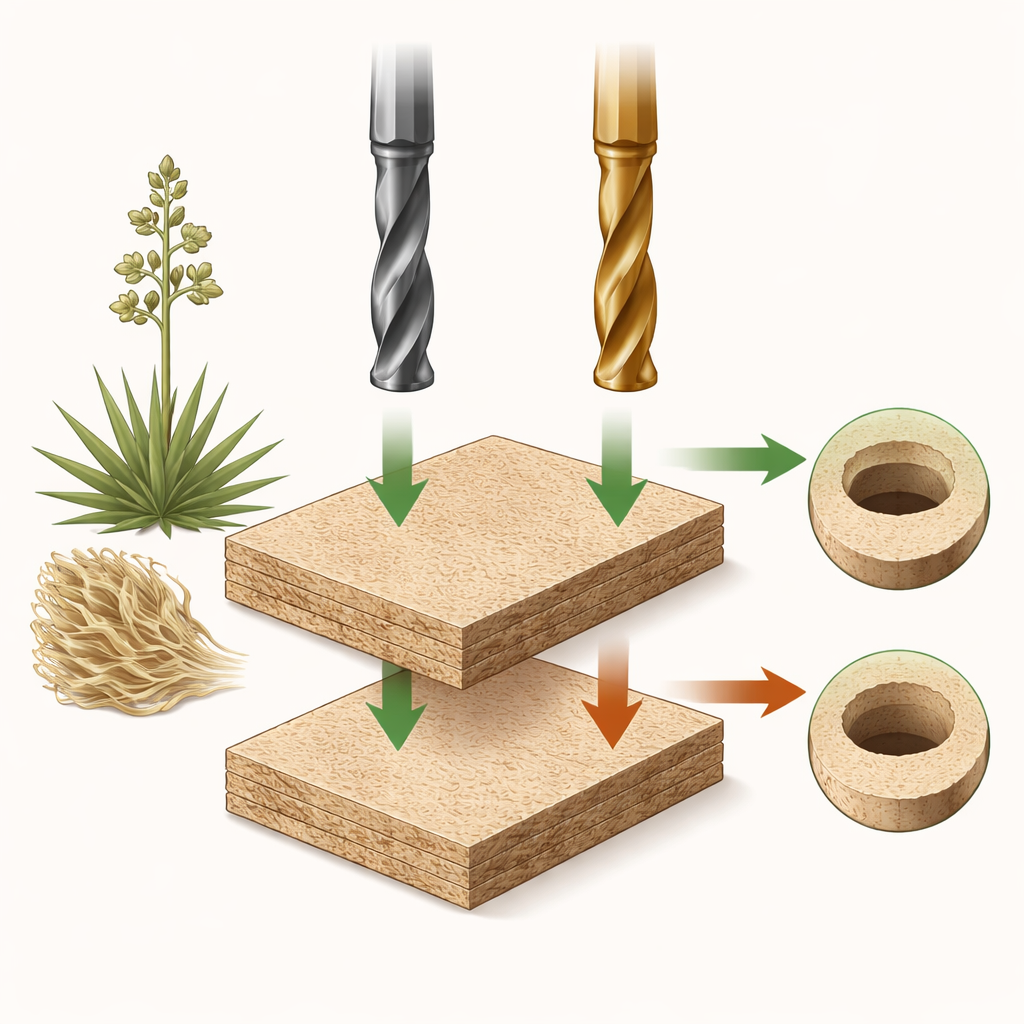
From Desert Plant to Engineered Board
The researchers began with fibers extracted from the flower stalk of Agave americana, a part of the plant that is usually discarded. They mixed these fibers with a clear, bio-based epoxy resin and cast flat plates that look much like particleboard, but are lighter and made from renewable feedstock. After curing, the plates were ready to be machined. In real-world use, such composite parts need many bolt holes for assembly, so understanding how they behave during drilling is crucial for safety and durability.
Why Hole Damage Matters
When a rotating drill bit pierces layered or fiber-filled materials, it can cause the layers to peel apart or crack around the hole, a type of damage known as delamination. Instead of a crisp circle, the exit side of the hole may show a ragged halo of torn material, which weakens the part and can lead to failure under load. The team quantified this damage using a “delamination factor,” essentially the ratio between the damaged zone and the intended hole size: values just above 1 mean a neat hole, while higher numbers signal more severe tearing.
Testing Drills and Settings
To see what causes more or less damage, the team systematically varied three everyday drilling settings: how fast the drill spins, how quickly it is fed into the material, and how wide the drill is. They compared a standard high-speed steel bit to an otherwise similar bit coated with a thin layer of titanium nitride, which reduces friction and wear. After drilling dozens of holes under different conditions, they scanned the samples at high resolution and used image analysis software to measure the damaged areas around each hole.
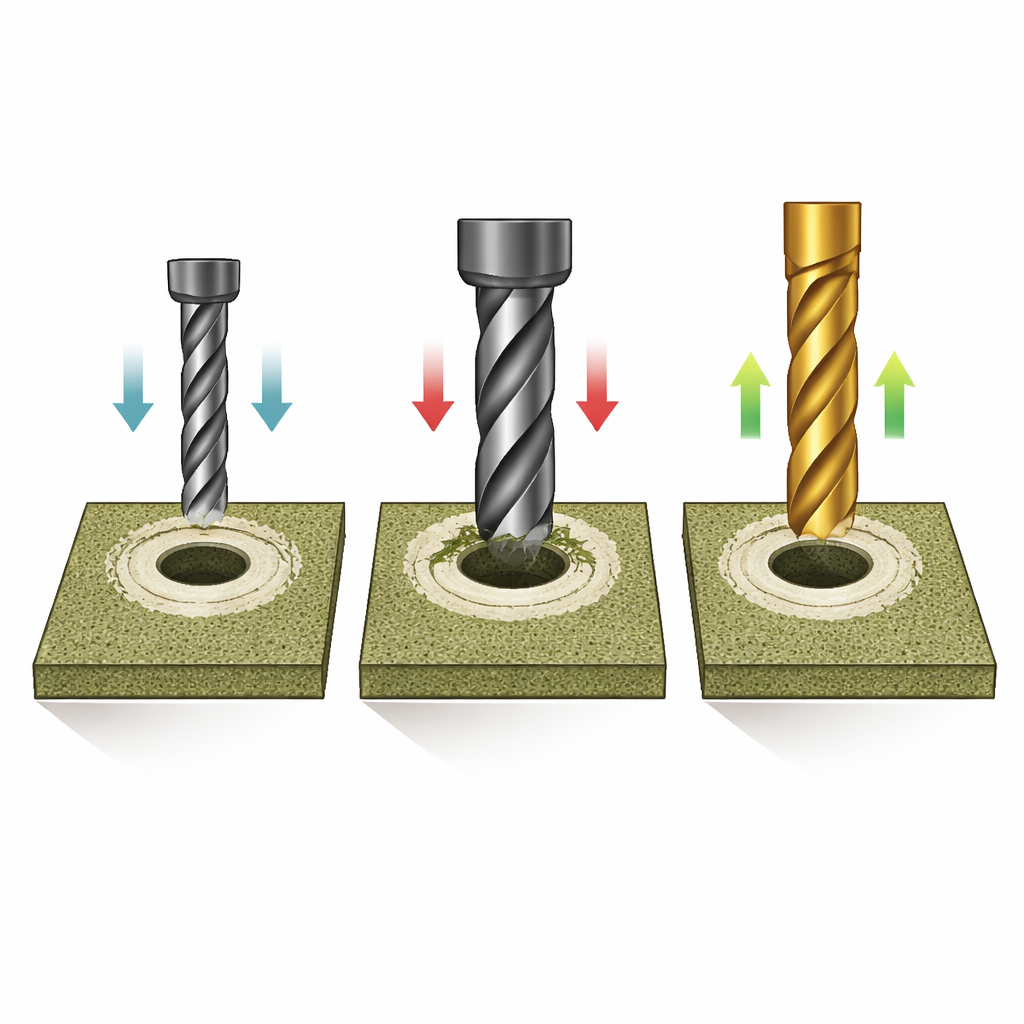
Letting Algorithms Learn from the Data
Instead of relying only on simple plots, the researchers turned to two powerful analysis tools to make sense of the results. One, called response surface methodology, fits smooth mathematical surfaces through the data, helping to reveal trends and interactions—for example, how spinning speed and drill size together affect damage. The other, an artificial neural network, is a computer model loosely inspired by brain cells that “learns” complex patterns from examples. After training the neural network on part of the drilling data and validating it on the rest, they found it could predict delamination with very high accuracy, slightly better than the traditional statistical model.
Finding Sweet Spots for Clean Holes
The experiments showed that the titanium-coated drill consistently produced cleaner holes than the uncoated bit, cutting delamination by nearly a fifth in some cases thanks to lower friction and sharper cutting action. The analysis also revealed combinations of settings that balance speed and quality: moderate spinning speeds, carefully chosen feed rates, and an optimized drill diameter led to the smallest damaged zones. Using their models, the team identified conditions where the delamination factor was barely above 1, meaning the damaged region around the hole was minimal.
What This Means for Greener Manufacturing
For non-specialists, the takeaway is straightforward: waste from a common ornamental plant can be turned into useful structural panels, and with the right drill bit and machine settings, these bio-based materials can be drilled almost as cleanly as conventional composites. The study shows that surface-coated tools and data-driven modeling can work together to tame a key source of damage during machining. That kind of know-how is essential if industry is to adopt more sustainable materials without sacrificing reliability or performance.
Citation: Lalaymia, I., Belaadi, A., Boumaaza, M. et al. Modeling and optimizing the delamination factor in Agave americana L. biowaste fiber-reinforced biocomposite drilling: a study using RSM and ANN methods. Sci Rep 16, 8089 (2026). https://doi.org/10.1038/s41598-026-38508-5
Keywords: biocomposites, agave fibers, drilling, delamination, neural networks