Clear Sky Science · en
Instability of cooperation based on fictitious belief: an experiment with artificial supernatural punishment
Why fear of unseen punishment matters
People often behave well partly because they believe that bad deeds will somehow be punished, perhaps by a watchful god or by “karma.” This idea has been proposed as one way human societies keep selfishness in check when sharing common resources like money, clean air, or fisheries. But what happens when such a belief is purely fictitious and quietly tested in a controlled setting? This study builds an artificial version of “supernatural punishment” to see whether a fear of invisible penalties can really keep cooperation going—and whether that effect lasts.
Sharing a common pot
The researchers used a classic setup called a public goods game, which mimics real-world situations where people decide how much to give to a common project. In groups of three, each person received points and chose how many to put into a shared pot. The pot was increased and then split equally, so everyone gained when others were generous. Yet each person also had a selfish reason to hold back points for themselves, creating a tension between individual gain and group benefit. A separate “no-reduction” group played this sharing game without any risk that points would later be taken away, serving as a simple baseline for comparison. 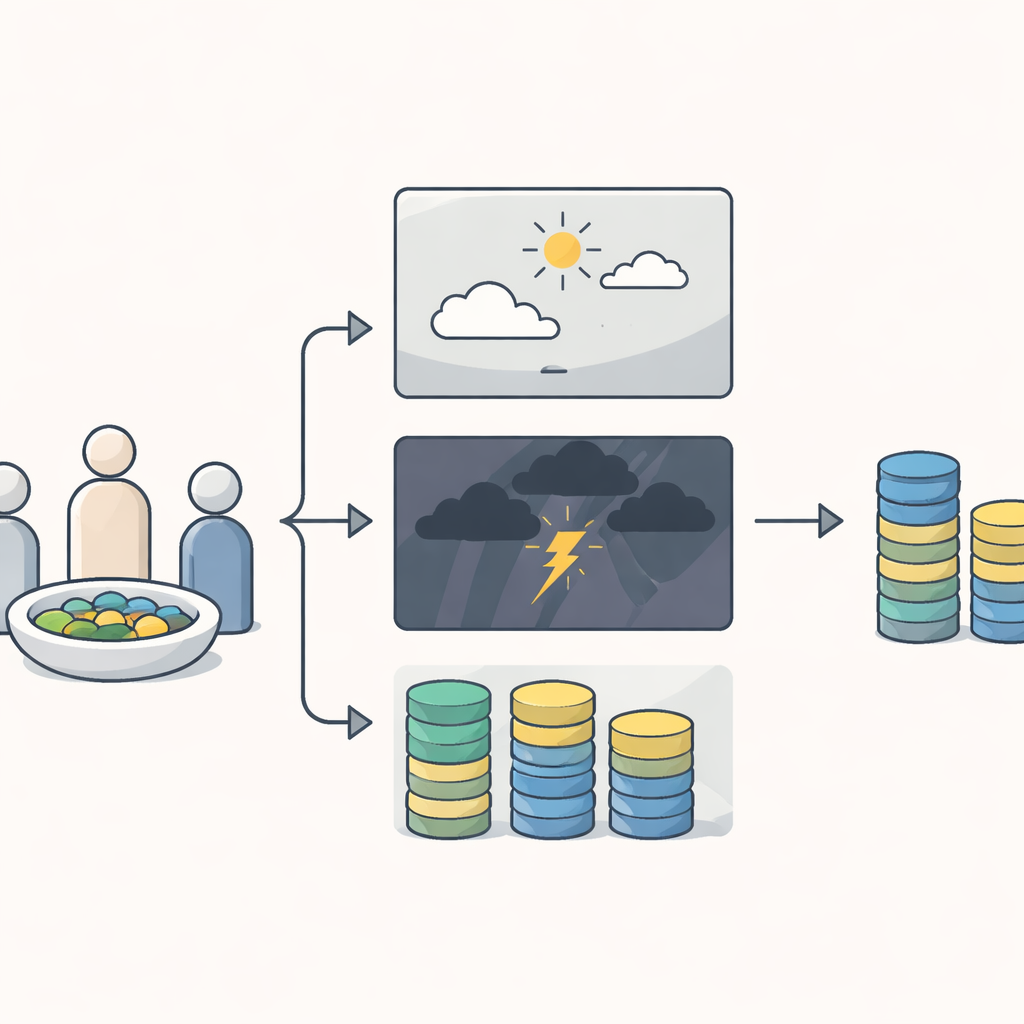
A made-up rule that feels real
The key twist was a new idea the authors call artificial supernatural punishment. After every round, there was a chance that one player would lose some points at random. Some participants were simply told that these losses were entirely random. Others received more suggestive instructions: they were told that either a random rule or a rule linking low contributions to a higher chance of losing points would apply, and that the same unseen rule would stay in place throughout the game. In reality, the computer always chose the loss target at random in every condition. What differed was only what people were led to expect—whether they believed that selfishness might secretly attract bad luck. 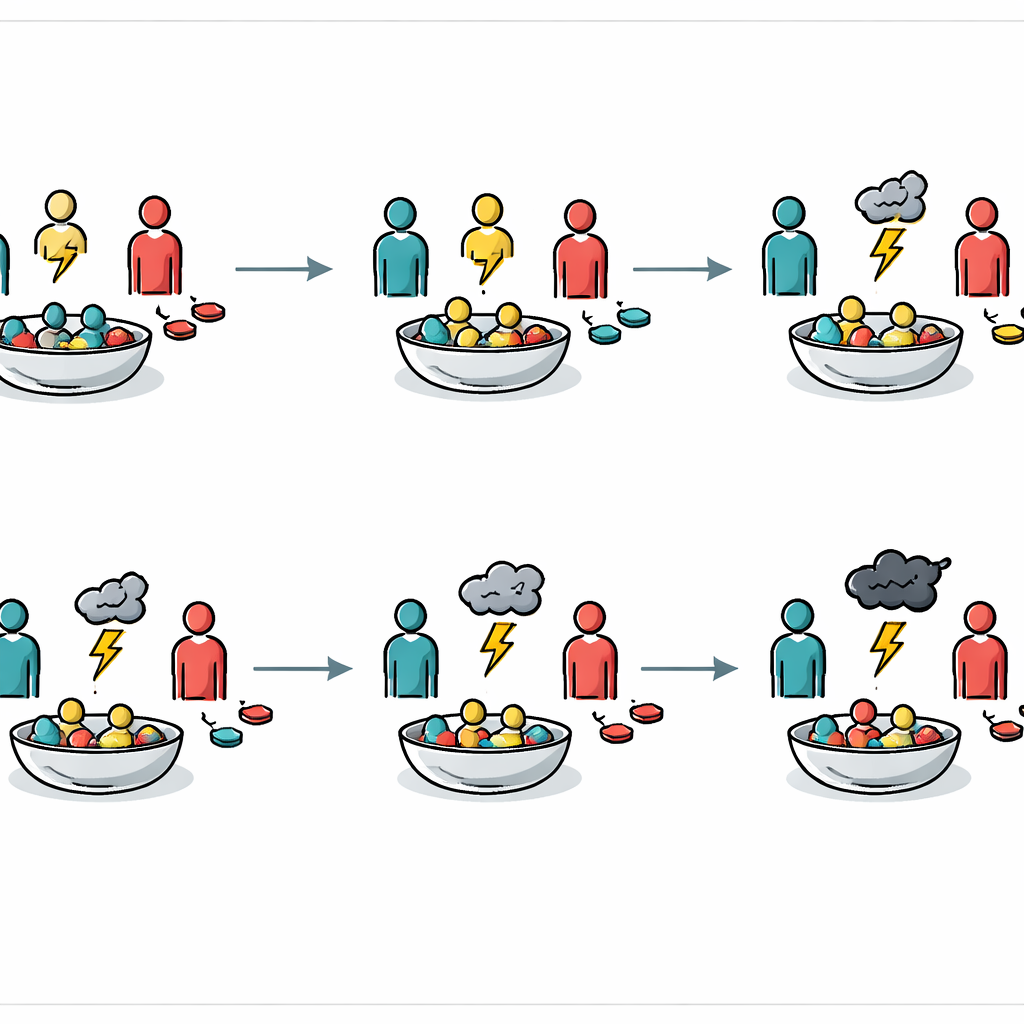
First a boost, then a letdown
The artificial belief worked—briefly. In the very first round, people who had been told that low contributors might be more likely to lose points gave more to the common pot than those told the losses were purely random. Simply hinting at a hidden connection between selfishness and later misfortune made players start out more cooperative. However, as the game continued over 20 rounds, cooperation declined in all groups. The overall amount of giving in the belief-based condition ended up no higher than in the random-loss or no-loss conditions. Careful statistical analyses confirmed that the downward slide in cooperation was similar across all versions of the game.
Beliefs that crumble under experience
The study also tracked what people believed about the link between their behavior and later losses. Before playing, those in the artificial punishment condition clearly expected that contributing nothing would make them more likely to be “chosen” for a loss than contributing everything. After many rounds of experiencing reductions that in fact struck randomly, this expectation faded: players increasingly recognized that the pattern of losses did not match their initial belief. In other words, when experience repeatedly contradicted the suggested rule, the fictitious belief eroded—and with it, the extra push toward cooperation.
What this means for real-world faith and fairness
These findings suggest that a bare, experience-driven belief that “bad behavior brings bad luck” may give only a short-lived boost to cooperation. In the controlled lab world of this experiment, where outcomes arrive quickly and patterns are easy to spot, people learned that the implied link between selfishness and punishment was not real, and their generosity waned. The authors argue that, in everyday life, beliefs in gods or cosmic justice are supported by time delays, complex stories, cultural rituals, and human punishment that can be reinterpreted as divine. Those richer settings may help such beliefs persist and shape behavior far more strongly than the fragile, artificial version tested here.
Citation: Ozono, H., Nakama, D. Instability of cooperation based on fictitious belief: an experiment with artificial supernatural punishment. Sci Rep 16, 8244 (2026). https://doi.org/10.1038/s41598-026-38499-3
Keywords: cooperation, public goods, supernatural punishment, belief and behavior, experimental psychology