Clear Sky Science · en
Ultrasensitive on-site detection of aflatoxin M1 in milk using a chitosan-MWCNT-graphene nanocomposite aptasensor with sub-regulatory limit capability
Why Hidden Toxins in Milk Matter
Milk is a daily staple for many families, but it can sometimes carry an unwelcome hitchhiker: a cancer‑causing toxin called aflatoxin M1. This substance slips into milk when dairy animals eat moldy feed, and it can survive pasteurization and normal cooking. Regulators strictly limit how much aflatoxin M1 is allowed, yet current laboratory tests are often slow, expensive, and far from farms. This study introduces a compact, highly sensitive sensor that can spot this toxin on the spot in milk, potentially making everyday dairy products safer and easier to monitor around the world.
A Toxic Threat from Farm to Fridge
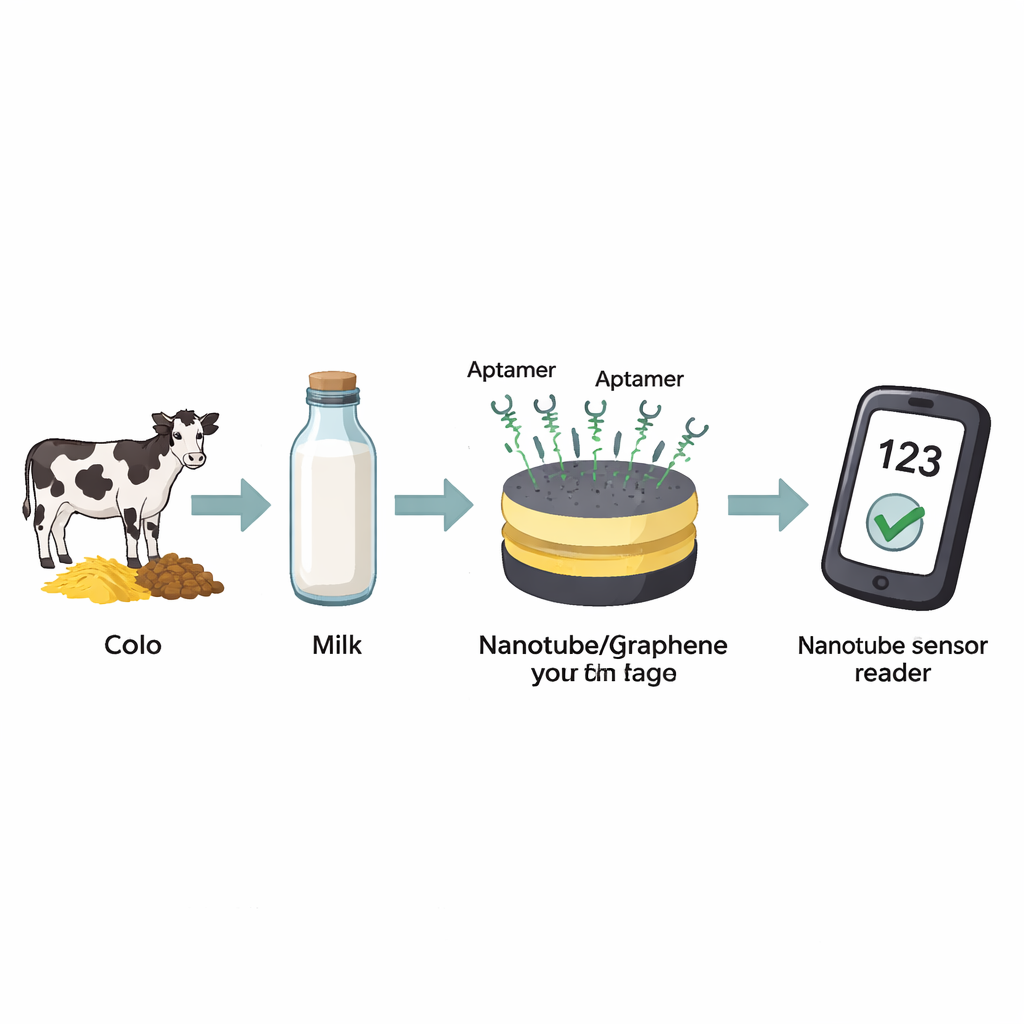
Aflatoxins are poisonous chemicals produced by certain molds that grow on grains and animal feed. One of the most dangerous, aflatoxin B1, is converted in the cow’s liver into aflatoxin M1, which is then passed into the milk. Even at very low levels, aflatoxin M1 has been linked to cancer, genetic damage, and weakened immune systems. Because of these risks, agencies in Europe and the United States have set very strict limits on how much of this toxin can be present in milk. Conventional methods like high‑performance liquid chromatography and mass spectrometry can detect it, but they require complex instruments, trained staff, and significant time—factors that make routine, on‑farm testing difficult.
Building a Tiny Milk Watchdog
The researchers designed an electrochemical “aptasensor” to tackle this problem. Instead of using antibodies, they used aptamers—short strands of DNA that act like molecular Velcro, recognizing only the toxin they are designed for. These aptamers were attached to a small gold electrode coated with a special nanocomposite made from carbon nanotubes, graphene, and a natural polymer called chitosan (derived from shellfish shells). The carbon materials provide a large, conductive surface to carry electrical signals, while the chitosan forms a gentle, biocompatible film that helps hold the DNA in place. Together, they create a sturdy platform that can host many aptamer strands, increasing the chances of catching aflatoxin molecules in a drop of milk.
How the Sensor Reads the Toxin
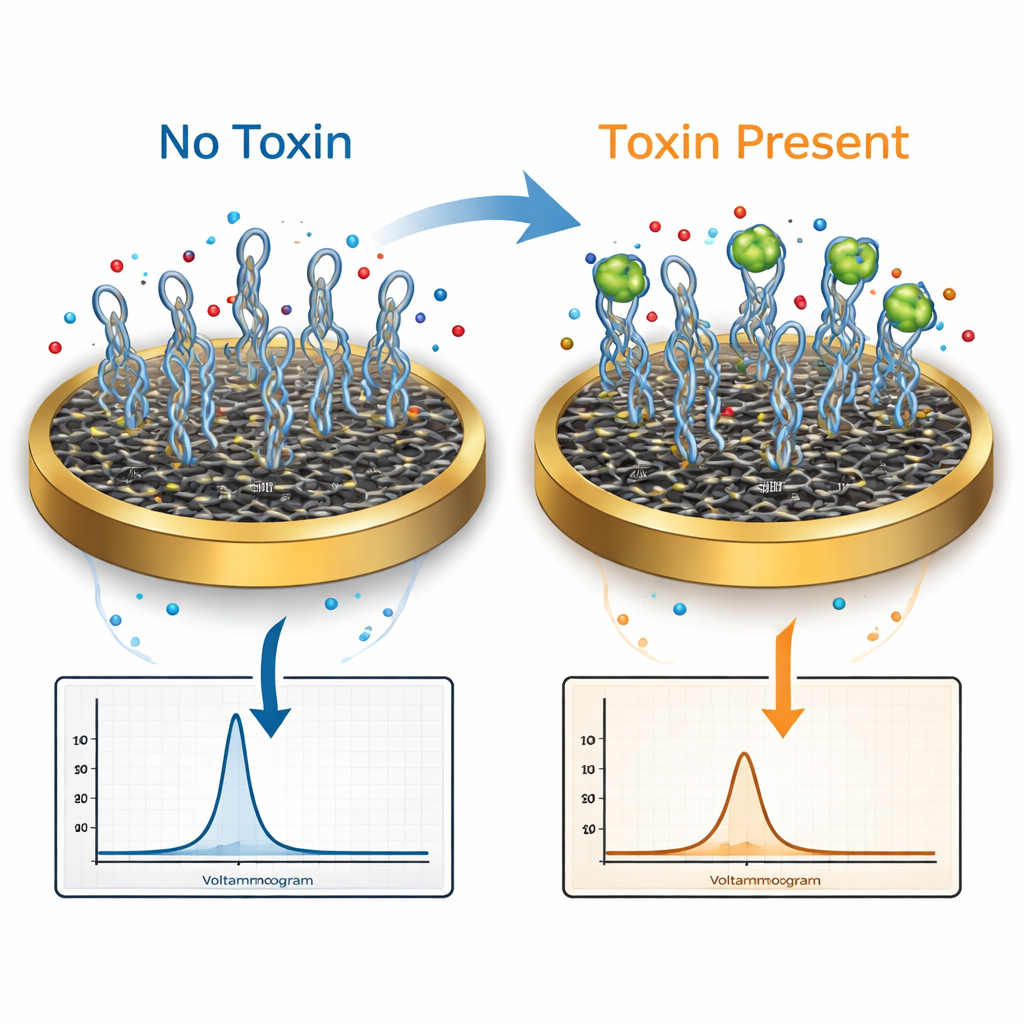
The sensor works by tracking how easily electrons move between the electrode and a harmless probe chemical in solution. When no toxin is present, the DNA strands on the surface are loose and extended, leaving the surface relatively open, and electrons flow freely—producing a strong current signal. When aflatoxin M1 in a milk sample binds to the aptamers, the DNA folds up and changes shape, partly covering the surface and blocking the electron traffic. Instruments then measure the drop in current, and the size of this drop reveals how much toxin is in the sample. By carefully tuning the ratio of nanotubes to graphene, the thickness of the films, the amount of DNA, and the binding time, the team maximized this signal change while keeping the test time practical.
From Lab Bench to Real Milk
Under optimized conditions, the sensor could reliably measure aflatoxin M1 over a very wide span of concentrations—from levels well below regulatory limits up to amounts far above them—while detecting quantities as low as a few parts per trillion. It showed strong selectivity: closely related toxins and other natural contaminants in milk barely affected the signal. Multiple sensors prepared in the same way gave nearly identical results, and the devices kept over 90% of their performance after two weeks in cold storage. When tested with actual commercial milk samples that were spiked with known amounts of aflatoxin M1, the sensor recovered almost exactly what had been added, matching or surpassing the accuracy and precision of more complicated reference methods.
What This Means for Everyday Milk Safety
To a non‑specialist, the key message is that this study delivers a small, inexpensive sensor that can detect a dangerous milk toxin at levels below what regulators allow, using only a tiny amount of milk and relatively simple equipment. By combining smart DNA “locks” with advanced carbon materials and a natural polymer film, the device turns subtle molecular events into clear electrical signals. With further engineering—such as integrating it into portable, possibly handheld systems—this technology could help farmers, dairies, and inspectors check milk safety quickly and on site, reducing reliance on distant laboratories and adding an extra layer of protection for consumers.
Citation: Zadeh, R.V., Sani, A.M., Hakimzadeh, V. et al. Ultrasensitive on-site detection of aflatoxin M1 in milk using a chitosan-MWCNT-graphene nanocomposite aptasensor with sub-regulatory limit capability. Sci Rep 16, 7362 (2026). https://doi.org/10.1038/s41598-026-38492-w
Keywords: milk safety, aflatoxin M1, electrochemical sensor, aptamer, nanocomposite