Clear Sky Science · en
The effects of climate change water dependency and policy solutions on food security in Egypt
Why Egypt’s Dinner Table Matters to the World
Egypt, home to more than 110 million people and almost entirely dependent on the Nile River, offers a revealing case study of how climate change, water scarcity, population growth, and new energy choices collide around something very basic: having enough to eat. This paper examines more than three decades of data to understand what truly drives food security in Egypt and which policies can keep households from going hungry in a hotter, more crowded, and politically fragile future. 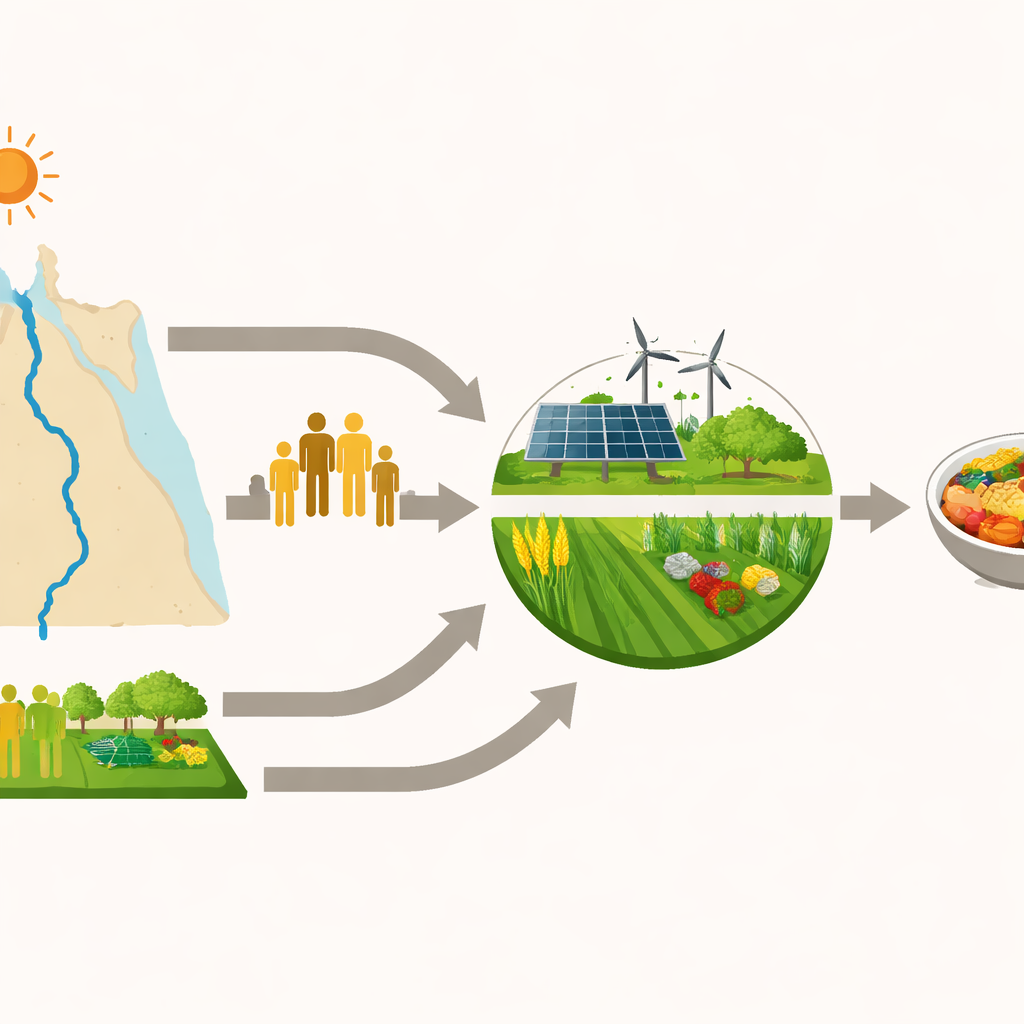
A Country Fed by One River
Egypt’s food supply is unusually vulnerable because most of its farmland hugs the Nile and its delta. The authors track a simple but powerful measure of food security: average daily calories available per person. They then study how this indicator moves with changes in temperature, political stability, use of renewable energy, population growth, the share of water drawn from the Nile, and farm productivity between 1990 and 2023. Advanced statistical tools let them separate short-term shocks—like a hot year or a political crisis—from slower-moving, long-term shifts in the system.
Heat, Crowds, and a Double-Edged River
The results show that climate change already bites into Egypt’s food supply. In the short run, hotter years slightly reduce the calories available per person; stretched over time, persistent warming cuts more deeply into harvests. Population growth adds further strain: as the number of mouths to feed rises faster than farm output, average calories per person fall. The Nile itself behaves like a mixed blessing. In the short term, having more river water clearly helps: extra irrigation boosts crops and improves food availability. Yet, when the authors look over several decades, a surprising pattern emerges—greater long-run dependence on Nile water is linked to worse food security, pointing not to a lack of water, but to how poorly it is managed.
Powering Fields with New Energy
One of the strongest bright spots in the analysis is renewable energy. As Egypt has invested in solar and wind, food security has improved both in the near term and over the long haul. Cheaper, cleaner power can lower the cost of pumping and delivering water, support cold storage and food processing, and make it easier for farmers to adapt to harsher weather. Agricultural productivity—growing more food on the same land—emerges as the single most powerful positive force. Even modest gains in yields translate into substantial increases in calories available per person, cushioning the blows from climate change and population growth. 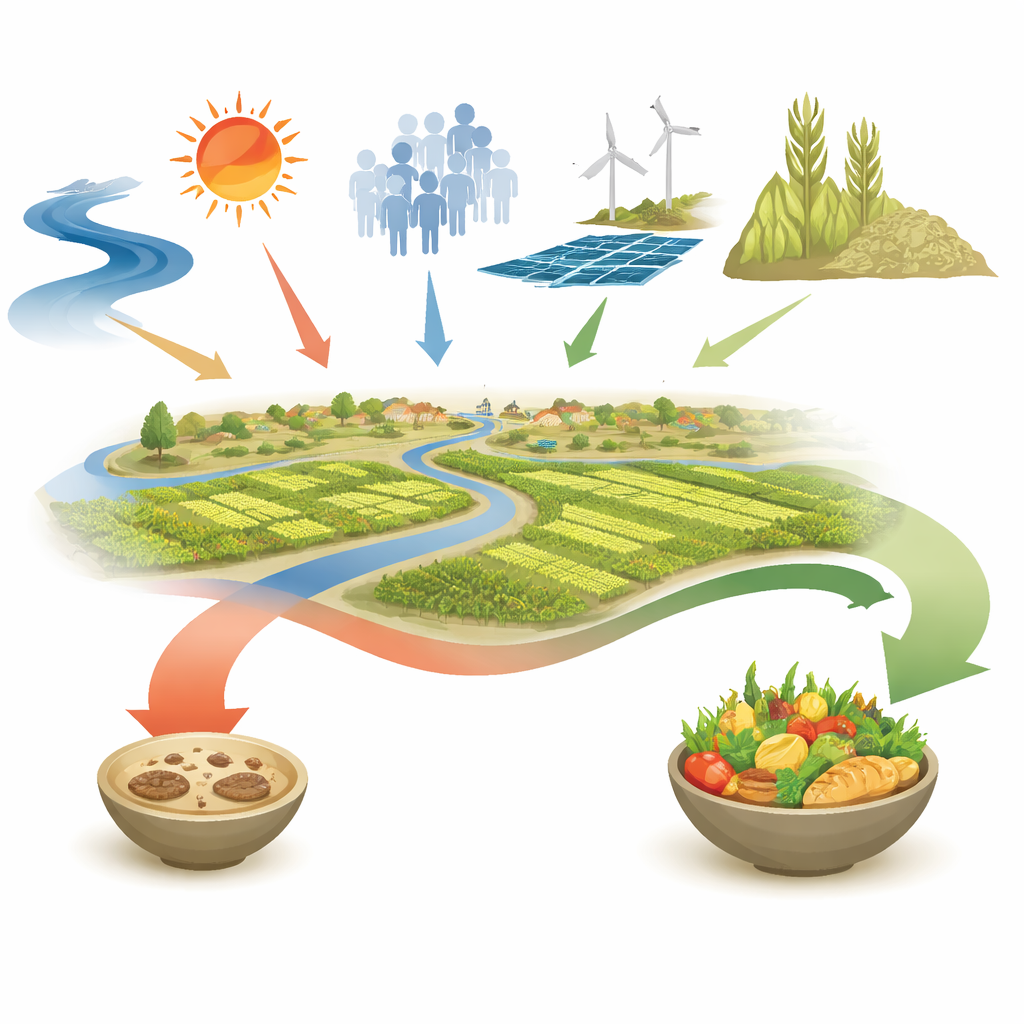
Untangling a Web of Cause and Effect
Because many of these forces influence each other, the authors also examine causal links rather than simple correlations. They find feedbacks between food security, farm productivity, and renewable energy: better harvests and expanding clean power go hand in hand with more reliable food supplies. Climate change, in contrast, ripples through multiple channels, damaging crops directly and indirectly affecting water and population pressures. Political stability appears helpful but its long-run impact is harder to pin down, suggesting that stable institutions may be a necessary backdrop for reform rather than a quick fix by themselves.
Turning Risk into Resilience
For a lay reader, the central message is clear: Egypt’s food security will not be saved by any single lever, but by coordinated changes in how it uses water, energy, and land. The study concludes that rising temperatures and unchecked dependence on the Nile—under outdated canals, leaky infrastructure, and unfair allocation—gradually turn a life-giving river into a liability. At the same time, smarter irrigation, better seeds and farming practices, rapid expansion of renewable energy, and policies that slow population growth can more than offset these dangers. In plain terms, Egypt can keep its dinner tables full in a warming world, but only if it treats water as a precious resource to be managed carefully, not simply pulled from the river; invests heavily in clean energy and productive farms; and plans its population and institutions around the limits of its landscape.
Citation: Derouez, F., Ifa, A., Alrawad, M. et al. The effects of climate change water dependency and policy solutions on food security in Egypt. Sci Rep 16, 8433 (2026). https://doi.org/10.1038/s41598-026-38489-5
Keywords: food security, climate change, Nile River, renewable energy, Egypt agriculture