Clear Sky Science · en
Time trends in psychosomatic symptoms among Hungarian youth using repeated cross sectional HBSC data from 2002 to 2022
Why this matters for teenagers and families
More and more teenagers say they feel exhausted, anxious, or plagued by headaches and stomach aches with no clear medical cause. This study tracks how such "psychosomatic" complaints have changed among Hungarian schoolchildren over 20 years, from 2002 to 2022. Because these symptoms can foreshadow later mental and physical health problems, the trends offer a warning signal not only for Hungary, but for any country wondering how modern life is affecting its youth.
Tracking aches, worries, and exhaustion
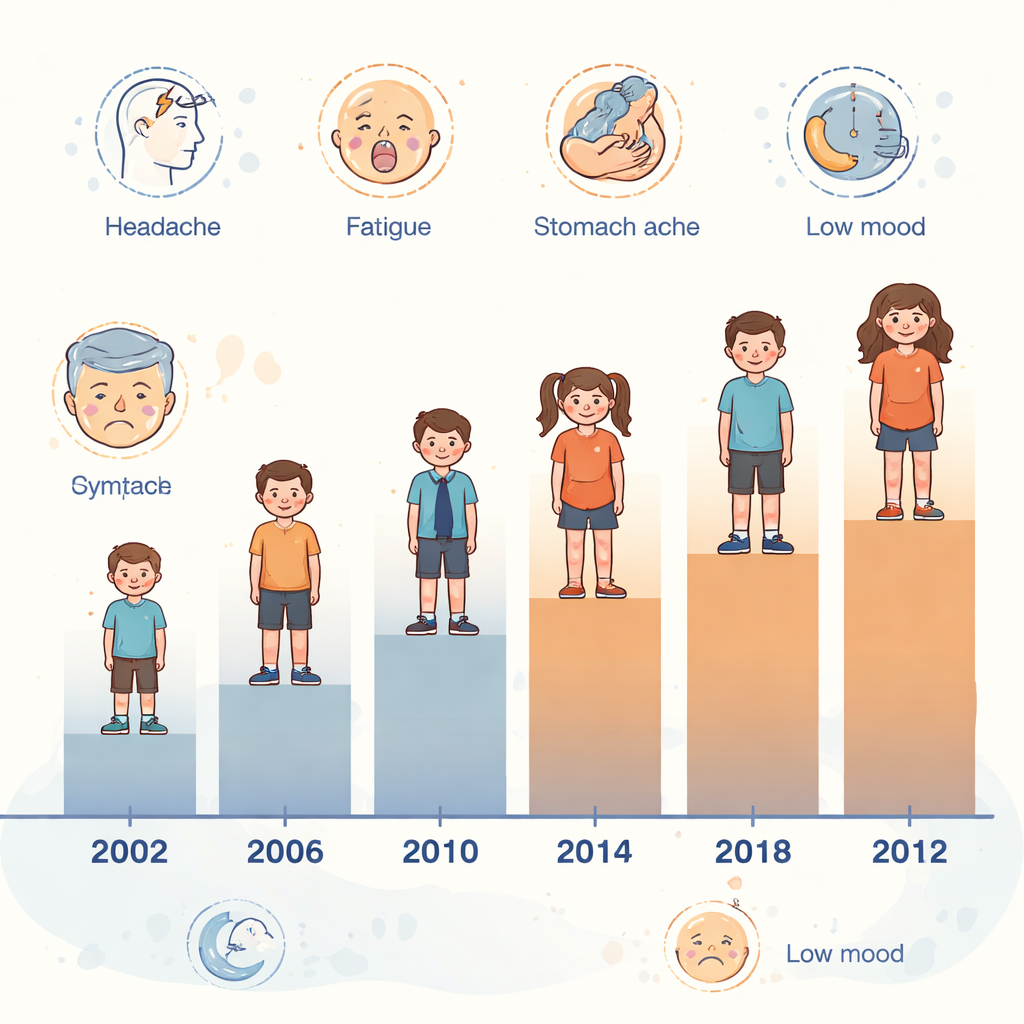
The researchers drew on a large, nationally representative survey of Hungarian students called Health Behaviour in School-aged Children (HBSC). Every four years, more than 5,000 pupils in grades 5, 7, 9, and 11 filled in anonymous questionnaires in school, reporting how often they experienced problems such as headaches, stomach aches, back pain, low mood, irritability, nervousness, sleep difficulties, dizziness, and fatigue. In total, nearly 38,000 students aged 9 to 21 participated across six survey waves (2002, 2006, 2010, 2014, 2018, and 2022), allowing the team to compare generations of teenagers at the same ages over two decades.
What kinds of problems are most common?
Across all years and both boys and girls, fatigue stood out as the single most common complaint. By 2022, almost half of boys (47.5%) and more than two thirds of girls (67.6%) said they felt tired at least several times a week. Sleep difficulties, headaches, stomach aches, back pain, and dizziness also became more frequent over time. Dizziness remained the rarest symptom but still roughly doubled in prevalence. Emotional complaints such as feeling nervous, irritable, or low also rose, especially among girls. When the researchers looked at how these different symptoms cluster together, they found strong links between irritability, low mood, and nervousness, suggesting that emotional strain often shows up in several ways at once.
From single complaints to heavy symptom load
The study did not just count individual symptoms; it also examined how many pupils were experiencing several complaints at the same time. The team defined “multiple health complaints” as having at least two different symptoms more than once a week. Between 2010 and 2022, the share of girls meeting this threshold (without counting fatigue) jumped from 40.6% to 65.6%; for boys it rose from 30.2% to 42.0%. When fatigue was added to the index, half of boys and nearly three quarters of girls in 2022 reported multiple problems. Older adolescents—those in the upper grades—were especially affected. By 2022, almost half of 11th grade boys and more than three quarters of 11th grade girls had multiple frequent complaints, pointing to a heavy burden just as young people are preparing for exams and choices about their future.
Boys, girls, and the pressure of growing up
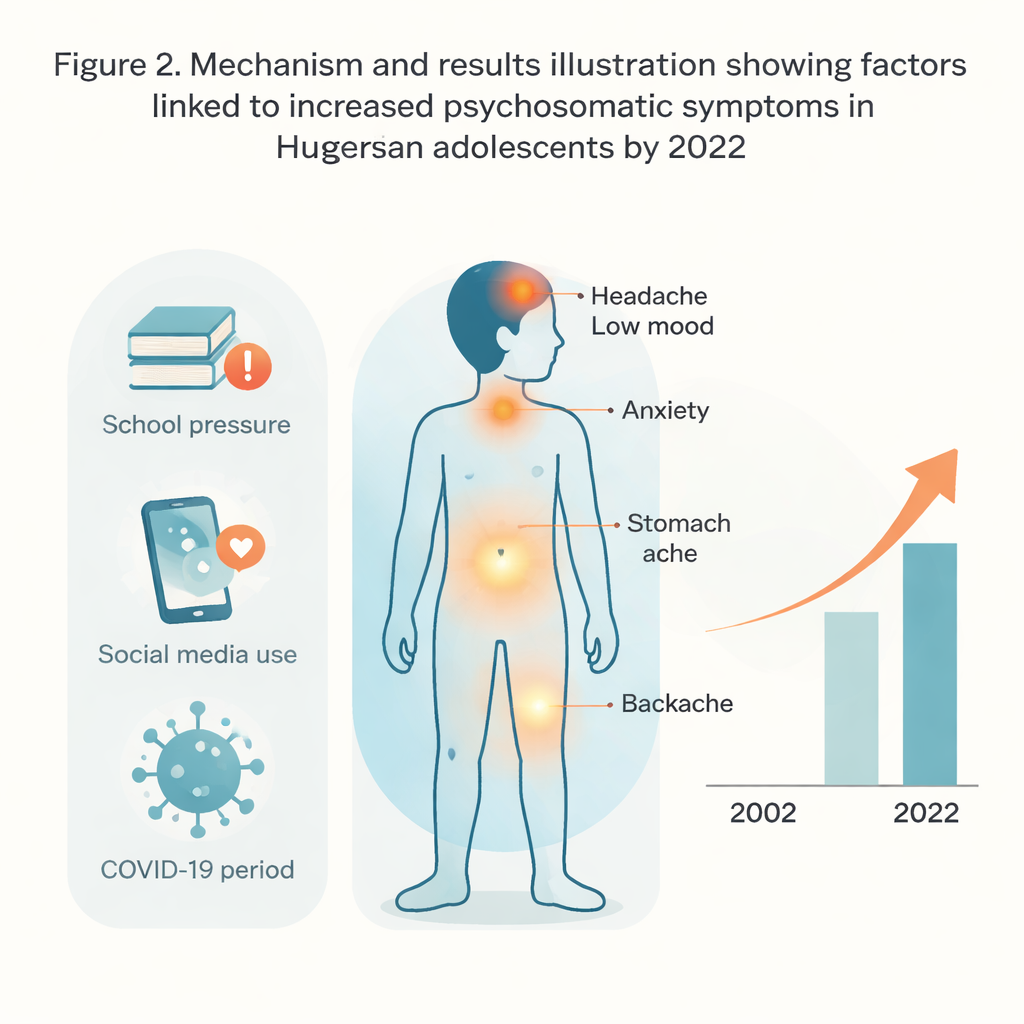
Throughout the entire 20-year period, girls reported more psychosomatic symptoms than boys. In 2022, Hungarian teenagers were more than twice as likely as those in 2002 to report multiple health complaints, and this increase was strongest among girls. The gap between genders widened over time, suggesting that changes in school demands, social expectations, and online life may be weighing more heavily on girls. The results also hint at links with broader pressures: perceived school stress rose, especially after 2018; social media use and bullying have become more common; and the 2022 survey captured the period following the COVID-19 pandemic, when many international studies documented worsening mental health among adolescents.
What these findings mean for everyday life
To a layperson, the message is clear: headaches, stomach aches, sleep problems, bad moods, and constant tiredness are no longer occasional complaints among Hungarian teenagers—they are everyday experiences for a large share of young people, especially older girls. While these reports do not equal a medical diagnosis, they signal a growing strain on youth well-being. The study calls for stronger prevention and support in schools and communities, including better stress management, attention to sleep and screen habits, and easier access to mental health help. Monitoring these symptoms over time, and understanding what drives them, can help societies act before temporary teenage troubles harden into long-term health problems.
Citation: Klein, M., Várnai, D., Németh, Á. et al. Time trends in psychosomatic symptoms among Hungarian youth using repeated cross sectional HBSC data from 2002 to 2022. Sci Rep 16, 7569 (2026). https://doi.org/10.1038/s41598-026-38472-0
Keywords: adolescent mental health, psychosomatic symptoms, school stress, fatigue and sleep problems, Hungarian youth