Clear Sky Science · en
Differences in AUTOS- and FTND-assessed dependence on various tobacco products among Chinese current tobacco/nicotine users
Why this study matters to everyday smokers and vapers
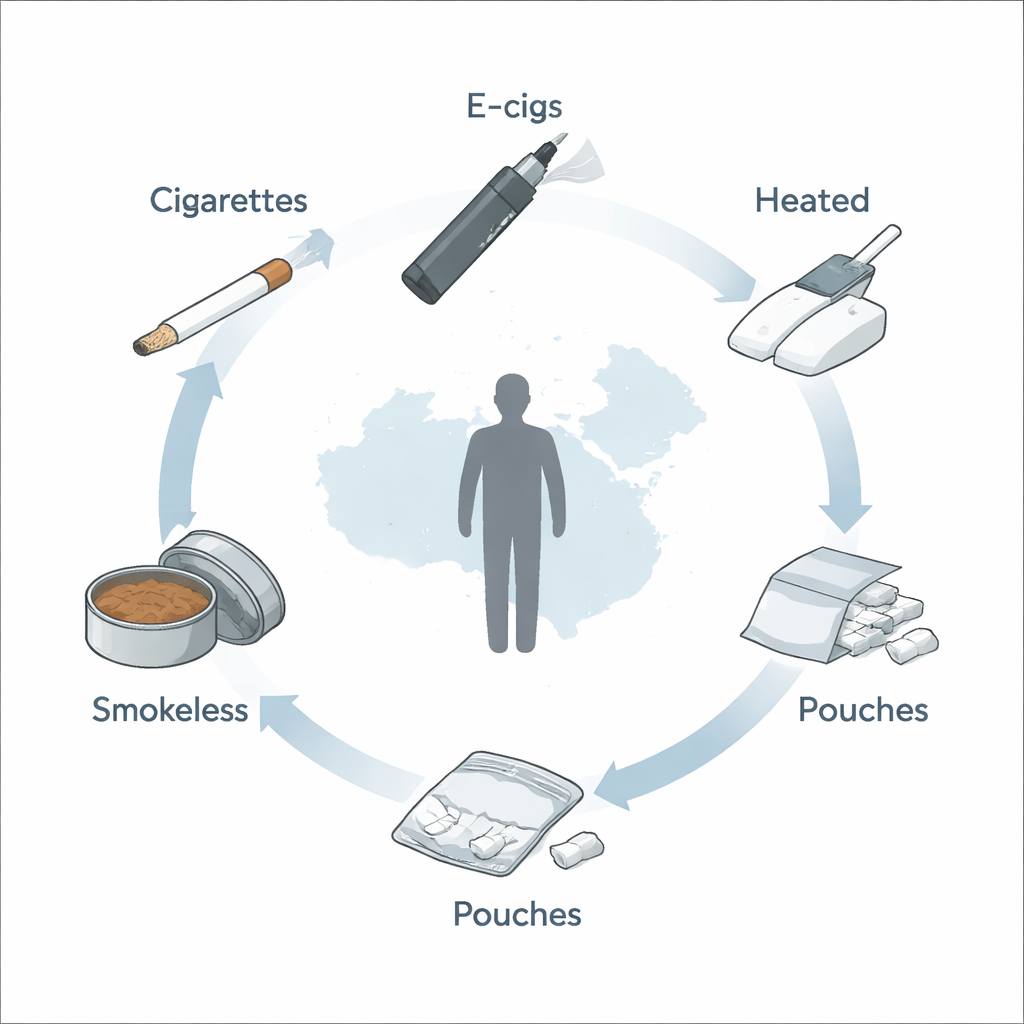
As new nicotine products like e-cigarettes, heated tobacco sticks, smokeless tobacco, and nicotine pouches spread across China, many people wonder how addictive they really are compared with traditional cigarettes. This study followed nearly six thousand adult users across major Chinese cities to see how strongly people felt hooked on different products, and what personal beliefs and social factors went along with that dependence.
A changing landscape of nicotine use
The researchers surveyed 5,901 adults from six large cities, chosen to represent different regions of China. All participants had used at least one nicotine or tobacco product in the past month. Despite the buzz around newer products, cigarettes still dominated: almost half used only cigarettes, and about one in three used both cigarettes and e-cigarettes. Very few people used heated tobacco, smokeless tobacco, or nicotine pouches by themselves; instead, these were mostly combined with cigarettes or e-cigarettes, showing that new products are often added on rather than replacing smoking.
Two ways of measuring feeling “hooked”
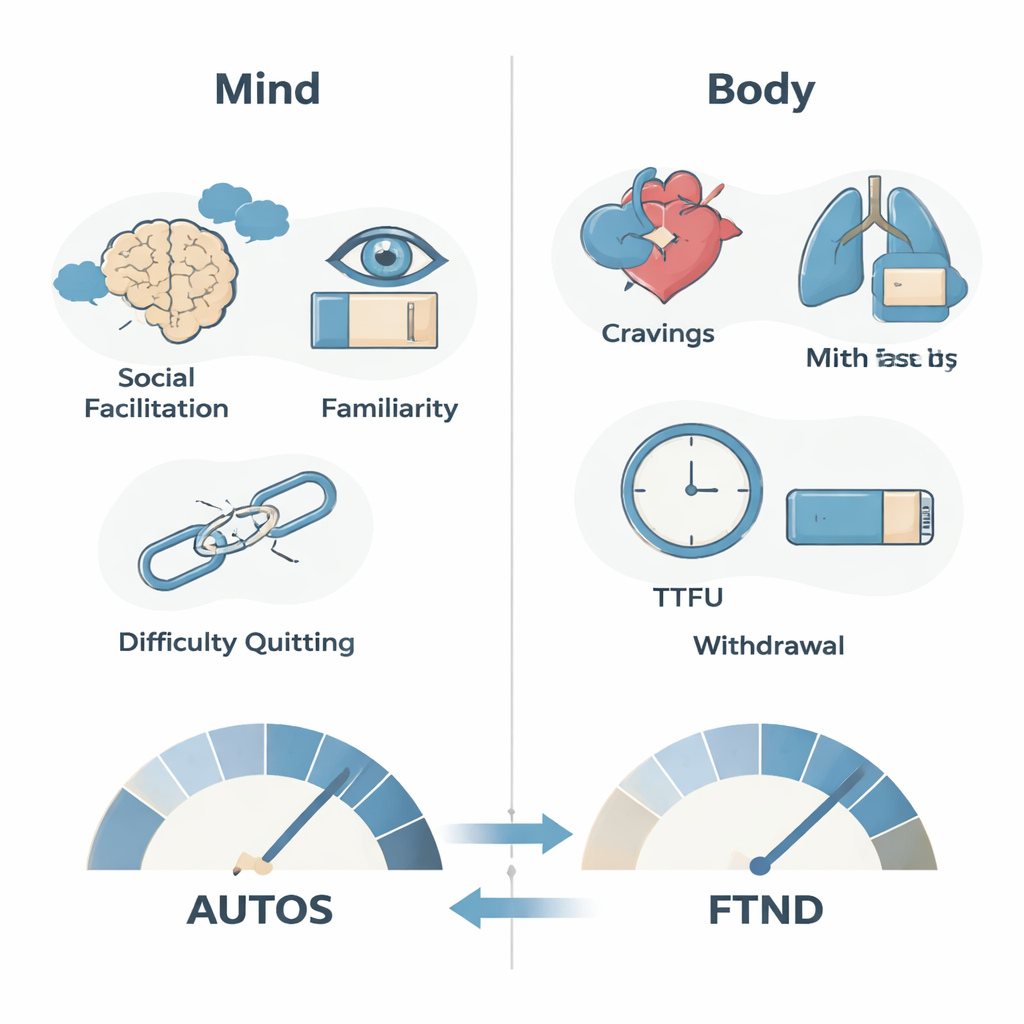
To capture different sides of addiction, the team used two established questionnaires. One, called AUTOS, focused on the “mind” side—how much control people felt they had over their tobacco use, including withdrawal feelings, psychological dependence, and cravings triggered by cues. Higher AUTOS scores meant less autonomy and stronger psychological pull. The other, FTND, looked at the “body” side—behavioral and physical signs such as how soon after waking someone used nicotine and how frequently they used it. Together, these tools gave a broad picture of both mental and physical dependence.
How dependence varied by product and mixing
People who used only e-cigarettes generally showed lower psychological dependence than those who smoked cigarettes only: they reported fewer withdrawal symptoms, less emotional reliance, and better control over cravings. However, this was not the case for people who combined products. Those who used both cigarettes and e-cigarettes—and especially those who mixed cigarettes, e-cigarettes, and heated tobacco or other products—tended to have higher dependence scores, particularly on the FTND measure of physical dependence. In other words, layering products together often went hand-in-hand with feeling more, not less, tied to nicotine.
Beliefs, social life, and who is most at risk
The study also tracked what people thought and felt about each product. Cigarettes were by far the most familiar, and were rated highest for health risk, addictiveness, quitting difficulty, and social usefulness—for example, helping with socializing. Newer products were seen as less familiar, less risky, and easier to quit. Yet, higher familiarity with products and stronger beliefs that they helped in social situations were linked to greater dependence on both the psychological and physical scales. People who believed products were addictive, hard to quit, and harmful also tended to have higher psychological dependence. On the physical side, older age, being male, and having fewer years of education were associated with stronger nicotine dependence.
What this means for people trying to understand their risk
For lay readers, the main message is that nicotine addiction is not just about one product or how much nicotine it contains. It has a mental side—how much you feel you need nicotine to cope or fit in—and a physical side—how strongly your body reacts and how quickly you reach for your first cigarette or vape. This study suggests that exclusive e-cigarette use may be tied to somewhat lower dependence than cigarette smoking, but using several nicotine products at once is linked to stronger addiction overall. Familiarity, social environments, and personal beliefs all shape how hard it is to cut back or quit. Understanding these layers can help smokers, vapers, and health professionals make more informed choices in a rapidly changing tobacco market.
Citation: Yan, D., Fei, T., Liu, X. et al. Differences in AUTOS- and FTND-assessed dependence on various tobacco products among Chinese current tobacco/nicotine users. Sci Rep 16, 7406 (2026). https://doi.org/10.1038/s41598-026-38470-2
Keywords: nicotine dependence, e-cigarettes, dual use, China smoking, tobacco products